1. Introduction
Oryza sativa Bran Oil, sometimes referred to as rice bran oil (RBO), is a vegetable oil that is extremely high in nutrients, including vitamin E, important fatty acids, and bioactive substances like tocotrienol and γ-oryzanol (Krisna et al., 2006). A percentage of oil extracted from the rice germ and aleurone layer, RBO is reported to be high in bioactive substances like phytosterol, tocopherol, γ-oryzanol, and unsaturated fatty acids. According to Daisuk et al. (2024), the γ-oryzanol content in RBO reaches 1.5%, making it superior to conventional vegetable oils. The advantage of γ-oryzanol is that it creates better thermal stability for cooking and cardiovascular health benefits, such as effectively functions as a free radical scavenging activity (Sofi and Munaza, 2017; Vardhani et al., 2024) and also significantly improves oxidative stability during repeated frying cycles (Ribas et al., 2025) compared to conventional vegetable oils.
However, due to high lipase enzyme activity, rice bran is highly susceptible to hydrolysis, which causes an increase in free fatty acids (FFA) and a decrease in oil quality, especially in conventional RBO extraction. Therefore, biotechnology approaches such as fermentation are promising alternatives to overcome this problem and improve the quality of RBO extract naturally.
In the food fermentation process, various types of microbes such as fungi (molds), lactic acid bacteria (LAB), and yeast have been used to improve the quality, nutritional value, and functionality of the resulting products. Fungi such as Rhizopus oligosporus and Aspergillus oryzae have the ability to produce proteases and lipolytic enzymes that can break down complex parts of rice bran, while LAB such as Lactobacillus plantarum have the ability to stop fat oxidation by producing antioxidants. Yeast such as Saccharomyces cerevisiae has the ability to increase the amount of bioactive substances through secondary metabolism (Abduh et al., 2025b). Biological fermentation using microorganisms has been proven to improve the quality of food ingredients, including reducing FFA levels and increasing the bioactive components of oil, and these various types of microbes are known to play an important role in modifying the chemical components of the substrate during fermentation (Abduh et al., 2025a). There has been no comprehensive and specific research comparing these three groups of microbes in rice bran fermentation to produce high-quality oil.
The quality of RBO after fermentation can be assessed using several main parameters. FFA content, which refers to the level of unbound fatty acids, indicates oil stability; lower FFA means better stability (Alauddin et al., 2029). Peroxide value (PV), a measure of the amount of peroxide compounds formed during fat oxidation, acts as an early indicator of oxidation; a low PV suggests resistance to oxidative damage. Total bioactive compounds–such as γ-oryzanol (a phytochemical found in RBO), tocopherol (a form of vitamin E), and polyphenols (plant-based antioxidants)–function as natural antioxidants and indicate functional value. Oxidative stability, measured by devices like Oxitest or Rancimat, refers to the oil’s resistance to rancidity and helps determine shelf life.
It is important to compare the effectiveness of these three fermentation microorganisms and the fermentation times. Each microbe degrades compounds using different metabolic pathways and produces enzymes that affect oil stability and extraction. Fungi, for example, make lipase and protease, which help break down rice bran’s lipids and proteins (Holker et al., 2004). LAB lower pH and inhibit contaminants. Yeast produces volatile metabolites, affecting the oil’s sensory properties and quality (Li et al., 2022; Liang et al., 2014). A study showing that microbes during fermentation produce organic acids that lower pH, thereby inhibiting the activity of natural lipase enzymes in rice bran by Noureen et al. (2021) explored the stabilization of RBO using probiotic isolates such as L. delbrueckii, L. casei, and L. plantarum to inhibit natural lipase, prevent oxidation, and maintain nutritional value. Another study related to increased oxidative stability due to fermentation breaking down complex bonds in bran cell walls, releasing previously bound antioxidants, was reported by Mahmound et al. (2022). There has been no systematic comparison of fungi, LAB, and yeast in terms of their effects on RBO quality. Selecting the right microbes is therefore crucial to ensuring a smooth fermentation process that produces oil with ideal nutritional quality, stability, and yield. To address this gap, this study aims to assess how effectively these three types of microbes improve RBO quality. It analyzes the comparative effectiveness of fungi, LAB, and yeast as fermenters at several fermentation times, with evaluation based on key quality parameters including FFA content, peroxide value (PV), pH, and moisture content. The results are expected to contribute to the optimization of fermentation technology for diversifying high-value-added agricultural products.
The results of this research will help develop more efficient and effective rice bran fermentation methods. It will also produce higher-quality RBO. This discovery will help the food industry select the best microbial cultures. It can also serve as a basis for the development of high-value-added RBO products. In addition, these findings can enrich the literature on food biotechnology about using fermentation microbes to improve product quality.
The need for this research comes from industry demand for fermentation that is both efficient and able to produce RBO with optimal physical and bioactive qualities. Choosing the right fermentation microbes determines process success at both laboratory and mass production scales. While previous studies have evaluated individual microbes in RBO processing, comparative approaches using all three microorganism types are rare. According to Fadel et al. (2020) and Li et al. (2022), A. oryzae fermentation gave oil with high antioxidant activity. Zhao et al. (2017) found that combining yeast and fungi increased yield and organoleptic quality. Still, there has not been a systematic comparison of all three. Empirical studies are needed to determine the most effective and practical fermentation approach for agricultural product processing.
Fermentation of rice bran serves as a dual-purpose stabilization method: it inactivates lipolytic enzymes to maintain low FFA levels and enzymatically degrades cell wall complexes to enhance the bioavailability of bioactive compounds, so fermentation is a microbial process that changes chemical components and improves nutritional quality and safety in agriculture. Chen et al. (2024) reported that rice bran fermented with specific microbes increased total antioxidants in oil by up to 30%. Fermentation also breaks down compounds like hemicellulose and protein, helping oil extraction and keeping the final product stable during storage. Each microorganism type has unique physiological and enzymatic features, which affect fermentation outcomes.
Fungi like R. oryzae and A. niger produce lipase, amylase, and protease, which hydrolyze substrate components, including lipids. Studies show filamentous fungi can boost oil yield by up to 15% after 72 h of fermentation (Chen et al., 2024; Holker et al., 2004; Shin et al., 2019). LAB such as L. plantarum are known to be able to lower the pH of the environment to <4.5, which plays a role in inactivating destructive enzymes and preventing oil oxidation. In addition, LAB also produces antimicrobial compounds (bacteriocins) that support the microbiological stability of the product (Gao et al., 2008; Wang et al., 2025).
Yeasts such as S. cerevisiae have high fermentative capacity and produce alcohol and esters that affect the organoleptic characteristics of oil. Yeasts are also capable of producing β-glucosidase enzymes that modify the structure of phenolic compounds in rice bran (Baek et al., 2024).
Because rice bran contains a lot of unsaturated fatty acids, lipid oxidation is still a significant processing difficulty. Shahidi and Zhong (2026) claim that the development of secondary oxidation products, such as aldehydes and ketones, as determined by the p-anisidine value (p-AV), directly leads to the decline of oil’s nutritional value and sensory qualities. The international standard Codex Alimentarius (Hishamuddin et al., 2020) stipulates that high-quality vegetable oils must maintain strict oxidative stability to prevent rancidity during storage.
Comparative studies between microorganisms are highly relevant because each type of microorganism has a different effect on these parameters. Research by Zhang et al. (2022) shows that fermentation with fungi yields the best results in terms of oil yield and stability, while LAB fermentation excels in reducing FFA, and yeast excels in enhancing sensory characteristics. Assessment and analysis of PV, p-AV, and total oxidation (TOTOX) will be very important in determining the quality of RBO.
2. Materials and methods
The main ingredient used in this study was rice bran of the Inpari-32 variety obtained from rice milling in Tabbaja Village, Kamanre District, Luwu Regency, South Sulawesi. The bran was processed through re-milling and sieving using a 0.25 mm sieve, then stored at 4°C to maintain its stability before use. For the fermentation process, biological agents in the form of yeast (S. cerevisiae), mold (R. oryzae), and LAB (Lactobacillus sp.) were used. Fermentation support materials included distilled water and sugar as additional carbon sources. In addition, chemicals were also used to analyze the FFA content, consisting of a 0.01 N NaOH solution, 96% alcohol, and 1% phenolphthalein (PP) indicator.
The fermentation process of RBO was modified from the existing approach (Zhao et al., 2017). Rice bran powder was procured through sieving at an 80 mesh particle size, defatted, and combined with water in a 1:1 weight/volume ratio for the culture medium. The fermentation medium was sterilized at a temperature of 110-121°C in an autoclave for 15 min and subsequently cooled to 30°C. Based on the amount of rice bran, 1.25% S. cerevisiae, R. oryzae and Lactobacillus starters were added (each 10% of 250 g of rice bran), and fermented at 30°C for 0, 72, and 144 h, respectively. The fermented rice bran (250 g) was macerated with 96% ethanol at a 1:2 ratio (w/v) for 48 h. The mixture was subjected to periodic stirring every 8 h for 15 min to ensure optimal extraction of bioactive compounds, then filtered to obtain the extract. After the maceration process, the oil extract in the solvent was filtered using a Buchner funnel to separate the extract from the rice bran. The oil extract in the ethanol solvent is evaporated using a vacuum rotary evaporator at a temperature of 50°C to evaporate the solvent until a concentrated RBO extract is obtained. Next, an analysis is carried out on the quality of the RBO produced.
The FFA content was determined according to the AOCS methodology, with modifications adapted from Untari et al. (2020) and AOAC (2019). A 5 g sample of RBO was weighed into a 250 mL Erlenmeyer flask and dissolved in 50 mL of an ethanol (95%) and n-hexane mixture (4:1 ratio). The mixture was heated on a hotplate at 80°C for 15 min and subsequently cooled to room temperature. Following the addition of 2-3 drops of PP indicator, the solution was titrated against a standardized 0.1 N NaOH solution until a persistent pinkish-purple endpoint was observed for at least 30 sec. The FFA concentration was calculated as a percentage based on lauric acid (MW = 200.3) using equation (1):
where % FFA = free fatty acid content; mL NaOH = volume titrant NaOH; M NaOH = molarity of the solution NaOH mol/L); MM = Fatty acid molar mass (lauric acid) 256 g/mol.
The pH of the fermented rice bran and the resulting mixtures was determined using a digital pH meter (Hanna Instruments, USA). Before measurement, the instrument was calibrated using standard buffer solutions at pH 4.0 and 7.0. For the solid samples, a 10% (w/v) suspension was prepared by mixing 5 g of rice bran with 45 mL of distilled water, followed by stirring for 30 min at room temperature. The electrode was then immersed into the supernatant to record the pH value. All measurements were conducted in triplicate.
The extraction yield of RBO was calculated to evaluate the efficiency of the maceration process using 96% ethanol. The yield is expressed as a percentage of the weight of the extracted oil relative to the initial dry weight of the rice bran. The yield of extracted oil from rice bran was calculated by Balegh et al. (2025) using the method as equation (2):
where, Wr = weight of rice bran (g) taken for extraction and Wo = weight of extracted oil (g).
The moisture content of the rice bran was determined using a Halogen Moisture Analyzer (Ohaus MB120, Ohaus Corp., USA). The determination of moisture content is based on the weight of the sample before and after heating, which is monitored by the device so that the percentage of moisture content in the sample can be determined and displayed on the monitor. The advantages of using a moisture analyzer are that it is not affected by human error when weighing samples, it only requires 3-15 min per sample, and it is easier to operate. To use a moisture analyzer, turn on the moisture analyzer and open the lid of the device, and then insert a clean, empty aluminum pan into the device in the correct position. The cover is closed again, at which point the device will automatically perform tare. The device cover is opened again. The refined sample is placed evenly on the aluminum pan. The device is closed again, and it will heat the sample until it shows a constant moisture content value (3-5 min).
To ascertain the PV, 5 g of RBO was introduced into a flask, then followed by the addition of 30 mL of an isopropanol-chloroform solution. The mixture was stirred for 10 min, after which 1 mL of saturated potassium iodide solution was added, followed by the addition of 50 mL of distilled water. The iodine released from the peroxides in the oil was titrated with a 0.01 N sodium thiosulfate solution. The objective was achieved upon the vanishing of the yellow tint. A starch solution was utilized as an indicator to ascertain the endpoint. The results were calculated following the AOCS approach (AOAC, 2019).
To evaluate the secondary oxidation stability of the extracted oil, the p-AV was measured. While the PV indicates early-stage oxidation, p-AV provides a more comprehensive assessment by detecting the presence of high-molecular-weight aldehydes and ketones, which are responsible for off-flavors and oxidative rancidity. The p-AV was determined according to the AOCS Official Method Cd 18-90, measuring the absorbance of the reaction products at 350 nm using a UV-Vis spectrophotometer, as determined in equation (3):
where A1 = Absorbance of the oil solution before reacting with the p-anisidine reagent, A2 = Absorbance of the oil solution after reacting with the p-anisidine reagent, and W = oil sample weight (g). The numbers 25 and 1.2 are the dilution and volume correction factors.
The overall oxidative deterioration of the oil was assessed using the TOTOX value. This parameter provides a more holistic view of oil quality by integrating both the primary oxidation state (PV) and the secondary oxidation products (p-AV), thereby representing the actual extent of lipid degradation. TOTOX can be calculated, which is determined as equation (4) based on the results of the PV and p-AV values:
A TOTOX value <20 is considered to be within the tolerance limit for crude oil.
To ensure reproducibility, all measurements were conducted in triplicate. The experimental data were expressed as the mean±standard deviation (SD). Significant differences between treatments were evaluated through a two-way analysis of variance (ANOVA), followed by Duncan’s multiple range test (DMRT) at the 5% significance level (p<0.05). The statistical analysis was performed using STAR (Statistical Tools for Agricultural Research), version 2.0.1 (International Rice Research Institute, IRRI).
3. Results and discussion
Data analysis indicated that there is an interaction between microbes and fermentation times to FFA. Comparison of fermentation microbes at each level of fermentation times shown in Table 1 indicated that fermentation by Lactobacillus microorganisms produced the highest FFA at a fermentation time of 0 h, while R. oryzae (mold) and S. cerevisiae (yeast) showed the highest FFA content at a longer fermentation time of 144 h.
Table 1 shows that the FFA values are generated by RBO from various microbial fermentations, with values between 2.17 and 4.42. FFA fermentation value >5% is considered acceptable for RBO raw materials or products, because the lipase enzyme in rice bran is highly active and must be immediately deactivated (by heating/sterilization) after rice milling, where rice bran is produced (Tian et al., 2024). The interaction between lipase enzymes and oil induces hydrolysis, resulting in the liberation of FFA and glycerol, hence significantly diminishing the quality of RBO (Li et al., 2022).
Yield and FFA value in mold show an important relationship, where it provides a high yield (16.20%) but also has the highest FFA value (4.42%). This may indicate that the lipase enzyme in mold is very effective at breaking down the cell walls of rice bran to extract oil, but the side effect is rapid fat hydrolysis, which increases the % FFA.
Through the statistical analysis for pH, the value indicated that there is no interaction between microbes and fermentation times on the pH of RBO. The effect of fermentation microbes on pH, as shown in Table 1, indicated that the highest pH value appears to be 6.30 in the control samples at 72 h and 144 h, and the smallest was found in LAB treatment with 4.10. Relevant pH measurements are performed on solutions or water extracts from oil. These measurements reveal two main things, namely, indications of contamination or process cleanliness and the importance of pH in the RBO refining process. An acidic pH value below 7 indicates a high level of FFA and oxidized compounds (such as formic acid or acetic acid) that have migrated into the water. In other words, an acidic pH correlates directly with high FFA values and advanced oxidation levels. This means that the quality of the RBO is poor (Phan et al., 2018).
In contrast, the pH value decreased across all treatments, with LAB showing the most significant drop to 4.1 after 72 h. The rapid acidification by LAB, primarily due to the production of organic acids, creates an environment that can modify the solubility of proteins associated with lipid bodies. However, its effect on yield was less pronounced than that of mold.
The statistical analysis results demonstrated an interaction between the microbes treatment and fermentation periods as shown in Table 1. The extraction yield of different fermentation microorganisms ranged from the lowest at 12.45% at kefir (control) to the highest at 16.20% at 144-h fermentation by mold (Rhizopus sp). All treatments with different microbes fermentation of RBO gave the highest extraction yield at 144 hs fermentation duration. The fermentation process significantly influenced the extraction yield of RBO. As shown in Table 1, the highest yield was achieved by mold (Rhizopus sp.) fermentation at 72 h (17.20%±0.28), compared to the control (12.80%±0.15). This enhancement is attributed to the strong cellulolytic and pectinolytic activities of molds, which effectively degrade the complex lignocellulosic matrix of the rice bran, thereby facilitating the release of entrapped lipids.
Fermentation by various microbes can significantly affect RBO extraction yield, both positively and negatively. With good control, fermentation carried out with specific microbes and selected conditions can increase the RBO extraction yield produced. Fermentation, specifically designed using certain microbes such as R. oryzae or LAB, can be used to increase the extraction yield. The mechanism of yield increase occurs due to the softening of cell walls and the breakdown of oil bonds by microbes during fermentation or the production of enzymes such as cellulase, hemicellulase, and pectinase. These enzymes degrade the hard plant cell walls and fiber matrix in rice bran. This degradation releases oil that was previously strongly trapped in the rice bran fiber structure. The oil becomes easier to produce during the extraction process. Because more oil is released from its bonds, the oil yield obtained from the extraction process will be higher (Mayamol et al., 2009).
The statistical analysis indicated that there is an interaction between microbes and fermentation times on the moisture content of RBO (%). The result of the DMRT-0.05 test (MSE=0.0092) for comparison of fermentation microbes at each level of fermentation times shown in Table 2 indicated that the highest moisture content of the RBO was 3.15 % on kefir in 0 h of fermentation time. The smallest was found in 144 h of fermentation time.
Basically, RBO products contain naturally active lipase enzymes. This enzyme breaks down triglycerides (oil) into FFA and glycerol in a hydrolysis reaction. This reaction requires water as a medium, so that high RBO moisture content provides fuel for the lipase enzyme to break down the oil and reduce RBO quality. The recommended moisture content standard for crude RBO is less than 0.2% to help stabilize the crude RBO before the purification process, while the ideal standard for RBO consumption products is less than 0.1% (Hoed et al., 2006). A moisture content of ≤0.1% is a high standard for RBO that can guarantee stability, neutral taste, long shelf life, and protection against increased rates of RBO deterioration. Table 2 shows a downward trend in moisture content over the incubation period, except for Rhizopus sp.
The analysis for PV indicated that there is an interaction between the fermentation microbes and Fermentation times presented in Table 3. The PV value of different fermentations by microbes ranged from 4.72 to 5.64 meq O2//kg. The treatment with different microbial fermentation of RBO gave the highest PV with 5.64 meq O2/kg in LAB microbes at 144 h of Fermentation. PV is a main quality index used in the industry product, indicating the deterioration of RBO, respectively. The Value indicates that its processing negatively impacted the oil quality. Microbial fermentation treatment does not cause degradation of the extracted oil (Phan et al., 2018). The value of FFA content is Lower, indicating better oil stability, and PV is an early indicator of fat oxidation. A low PV value indicates resistance to oxidative damage.
With an average p-AV between 1.15 and 5.45, the resulting RBO qualification is quite good and meets industry standards (AOCS, 2019)—general reference for RBO based on p-AV values as shown in Table 4.
1) Source: Hishamuddin et al. (2020), AOAC (2019).
The results demonstrate that while p-AV values rise throughout fermentation, they still fall short of the industry-recognized cutoff point (good category). Suggests that p-AV levels can be maintained by the production of natural antioxidants by microbial fermentation. Another piece of information that can be disclosed is that the duration of fermentation (the incubation period) may actually be detrimental to the quality of RBOs. An extended incubation period may cause oxidation or lipase enzyme activity, which raises p-AV levels. Because of the acidic environment that inhibits pro-oxidant activity, RBO demonstrated the best stability through fermentation by yeast with the average lowest TOTOX value (Table 3). The greatest p-AV value was obtained from mold fermentation, suggesting that Rhizopus sp. possesses extremely high lipase enzyme activity. This enzyme breaks down triglycerides into FFA. According to p-AV, high FFA accelerates the synthesis of carbonyl compounds (aldehydes/ketones) since it is more vulnerable to oxygen attack. The longer the fermentation time, the higher the p-AV value. This suggests that auto-oxidation is taking place.
Fig. 1 shows how the upward trend in PV and p-AV seen in the control (kefir) is a natural increase due to temperature/air, and in mold, there is a sharp upward trend, triggered by strong lipase enzymes that cause oxidation. while LAB shows the most stable upward trend, due to the acidic conditions of LAB inhibiting the rate of oxidation. Meanwhile, Yield shows a moderate upward trend, possibly due to the metabolic activity of Saccharomyces sp. not being too high.
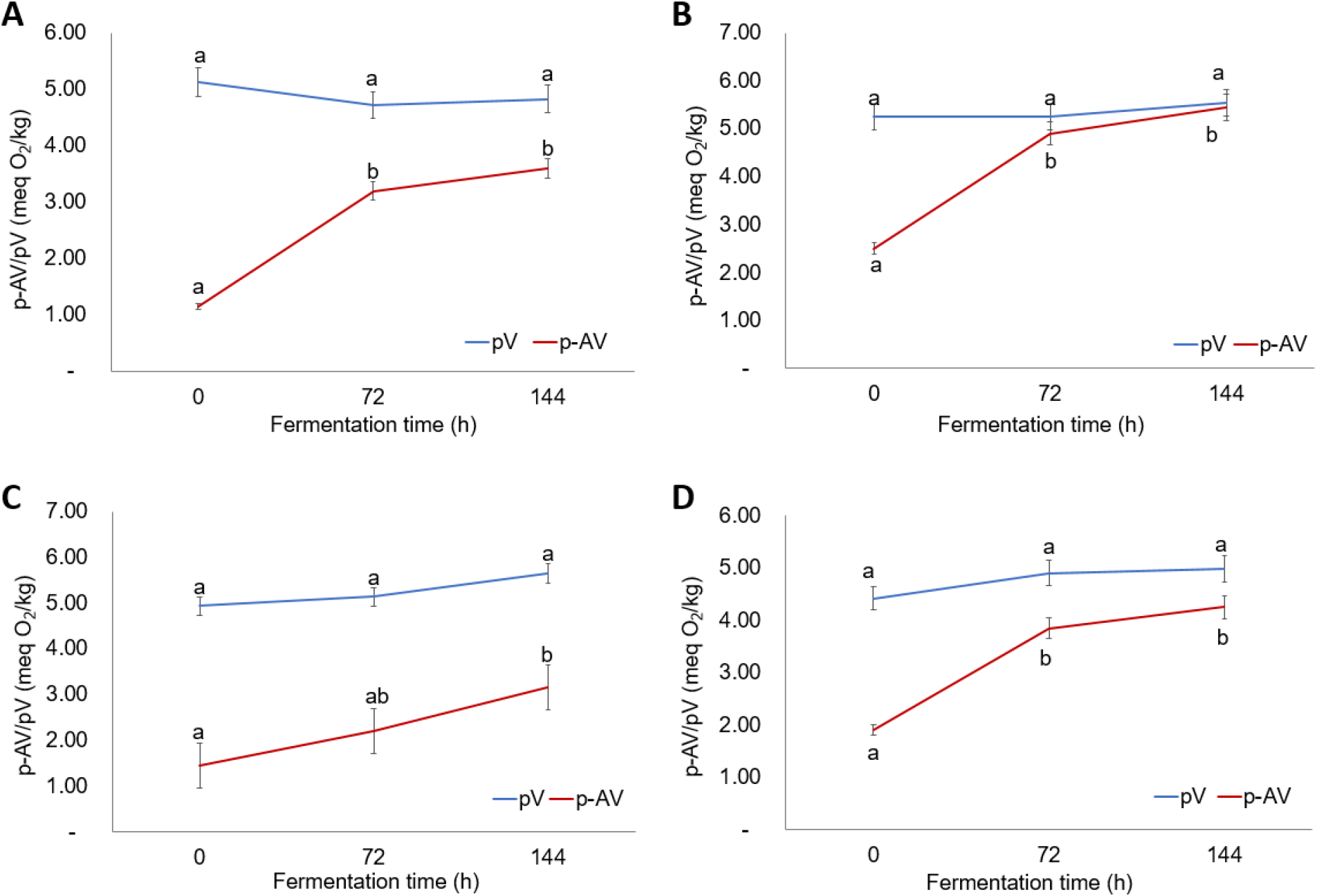
This study found that fermentation using LAB consortia was able to produce good RBO stability with fairly low p-AV values (1.45-3.15). This phenomenon is consistent with findings stating that symbiosis between LAB creates a stable metabolic environment. Furthermore, Kondo et al. (2016) explained that fermentation of rice bran with S. cerevisiae and LAB can increase the lipid fraction through endogenous antioxidant protection.
The analysis shows that the quantity and quality of oil are clearly traded off. Although mold fermentation is better at increasing yield, it raises FFA and reduces oxidative stability. However, LAB fermentation offers a more consistent oil profile with reduced rates of oxidation, which makes it a viable option for generating premium RBO with little hydrolytic rancidity. Between the severe destruction by molds and the protective acidification by bacteria, yeast demonstrated a middling level of performance in terms of both yield and stability.
4. Conclusions
This study demonstrates that microbial selection and fermentation duration are critical determinants in optimizing the yield and oxidative stability of RBO. The findings reveal a significant synergy between microbe types and incubation periods: R. oryzae at 72 h and S. cerevisiae at 144 h are the most effective treatments for maximizing extraction yield. While the FFA levels remained within the acceptable commercial range of 2-5%, and PV stayed between 4-6 meq/kg, the use of LAB proved superior in maintaining oil quality, evidenced by lower p-AV and TOTOX values. These results highlight that a microbial consortium approach, with strategically timed fermentation, offers a robust biotechnological pathway for producing high-quality RBO while effectively stabilizing its physicochemical properties.