1. Introduction
Wine is an alcoholic beverage that is widely consumed and plays an important social and economic role all over the world (Azcarate et al., 2015; Huang et al., 2017; Shen et al., 2013). Wine authenticity and traceability have become critical concerns in the food and beverage industry, particularly due to rising consumer demand for product quality and safety (Azcarate et al., 2015; Kruzlicova et al., 2013; Tian et al., 2017). Among various indicators of wine authenticity, geographical origin plays an important role in its commercial value (Rodrigues et al., 2020; Tian et al., 2017). Therefore, robust methods to classify geographical origin and prevent adulteration and mislabeling are highly required (Hopfer et al., 2015; Taylor et al., 2003).
Elemental profiling has emerged as a powerful tool for verifying the geographical origin of food and beverages, including wine (Geana et al., 2013). The elemental composition of wine is influenced by several factors, such as soil, climate, grape variety, agricultural practices (pesticides, fungicides, fertilizers) and various stages of the winemaking process (machinery, barrels, additives like bentonite) (Kruzlicova et al., 2013; Woldemariam and Chandravanshi, 2011). Among the analytical techniques available, inductively coupled plasma mass spectrometry (ICP-MS) offers exceptional sensitivity, accuracy, and the ability to simultaneously quantify a wide range of elements. As such, ICP-MS has been widely applied in wine authentication studies across Europe, South America, and other wine-producing regions (Coetzee et al., 2005; Mazarakioti et al., 2022; Popîrdă et al., 2021; Taylor et al., 2003; Versari et al., 2014).
The elemental profile generated from ICP-MS analysis, utilized for the authentication and meticulous characterization of wine products, inherently yields a multivariate dataset. This chemical information, referred to as first-order data, consists of an array of quantified elemental concentrations. To get meaningful scientific conclusions from this complex information, specialized data treatment methodologies known as chemometrics are routinely applied. These chemometric approaches are generally segregated into two fundamental categories: unsupervised methods and supervised methods. Unsupervised methods employed for exploratory analysis to reveal underlying data structure and natural sample groupings without prior knowledge of class membership, such as principal component analysis (PCA) (Rodrigues et al., 2011; Serapinas et al., 2008; Šperková and Suchánek, 2005; Villagra et al., 2012) and cluster analysis (CA) (Pasvanka et al., 2021). Supervised methods are applied when the classes or categories (such as geographical origin or grape variety) are known in advance, with the objective of developing a robust classification model, such as linear discriminant analysis (LDA) (Martin et al., 2012; Rodrigues et al., 2011; Villagra et al., 2012), partial least square discriminant analysis (PLS-DA) (Bronzi et al., 2020; Shen et al., 2013).
Vietnam, while a relatively young player in the global wine industry, has seen rapid development in wine production, especially in Ninh Thuan, Lam Dong and Son La Provinces. However, limited research has been conducted to characterize the elemental profile of Vietnamese wines or to explore the potential for using elemental fingerprints to verify their geographical origin. This lack of scientific data hinders the development of effective traceability and quality assurance systems for domestic wines, which are essential for promoting consumer confidence and protecting local producers against fraud.
In this study, we employed ICP-MS to determine the elemental composition of Vietnamese wines collected from major wine-producing regions. Multivariate statistical analyses were then applied to evaluate the potential of elemental fingerprints in distinguishing wines based on their geographical origin. The findings provide a scientific basis for origin authentication and contribute to the broader efforts of improving traceability and quality control in the Vietnamese wine industry.
2. Materials and methods
Forty commercial red wines were purchased from local supermarkets. Samples were selected based on a clear designation of geographical origin, resulting in a set from Vietnam (number of samples n=11), France (n=16), and Italy (n=13) (See Table S1 in the Supplementary materials for more information). All wines were stored at 3-4°C until analysis to maintain chemical stability.
The wine samples were taken from freshly opened bottles and prepared by using nitric acid digestion, where 4 mL of wine was weighed into a vessel and digested with 4 mL of concentrated nitric acid. The digestion was carried out in 1,000 W microwave with a 30 min ramp, and 20 min hold at 180°C, followed by 20 min cooling. The digest was then transferred to a 25 mL volumetric flask and diluted to volume with ultrapure water, ready for elemental analysis. Multi-element determinations were carried out using an ICP-MS (NexION 2000, Perkin-Elmer Co., Shelton, CT, USA) employing the Kinetic Energy Discrimination technique with oxygen gas. The optimization of sample preparation, and operating conditions for elemental analysis are reported in Supplementary material (see Tables S2 and S3).
Multivariate analysis, consisting of principal PCA as unsupervised chemometric methods and LDA as supervised chemometric methods, was employed for wine classification according to geographical origin. The classification results were validated through a full cross-validation procedure. One-way ANOVA was employed to assess significant differences in elemental concentrations among wine samples. All statistical analyses were performed by means of the statistical software OriginPro 2024 (OriginLab Corp., Northampton, MA, USA).
3. Results and discussion
Average concentration with standard deviations, and range for the three wine countries Vietnam, France, and Italy along with method limits of detection of each element are depicted in Table 1. The major elements in wine samples among 20 elements evaluated are B, Mn, Fe, Zn, and Sr. The analysis revealed the highest mean boron concentration in Italian wines (7,210.89 μg/L), followed by French wines (5,279.14 μg/L) and Vietnamese wines (3,487.97 μg/L). The elevated B levels in wine primarily reflect the geochemistry and physicochemical properties of vineyard soils (Coetzee et al., 2005; Kruzlicova et al., 2013; Rodrigues et al., 2020). In contrast to elements such as K, Na, and Cu, which can be introduced or modified through fertilizers, fining agents, or winemaking equipment, B concentrations appear less influenced by anthropogenic inputs during vinification. Therefore, B can serve as a distinctive “fingerprint” of a wine’s terroir. Besides, Boron uptake by grapevines increases in alkaline soils (Di Paola-Naranjo et al., 2011; Padbhushan and Kumar, 2017), which may explain the lower boron content of Vietnamese wines produced from grapes grown in Lam Dong’s basaltic red soils of low pH (Lam et al., 2023; Thi and The Anh, 2017).
The concentration of Iron (Fe) in Vietnamese, French and Italian wines are 2,617.11 μg/L, 2,199.94 μg/L, and 3,017.31 μg/L, respectively. Manganese (Mn) concentrations in Vietnamese, French and Italian wines are 1,460.58 μg/L, 1,140.27 μg/L, and 1,482.23 μg/L, respectively. Zn concentrations in Vietnamese, French and Italian wines are 470.33 μg/L, 1,236.43 μg/L, and 1,233.36 μg/L, respectively. The elements of Fe, Mn and Zn concentrations in wine arise from both natural and anthropogenic inputs, with contamination during vinification often exerting the greatest influence. Endogenously, vineyard soil and underlying geology determine a baseline elemental profile; as a geogenic element, Fe, Mn, and Zn reflects the mineral composition of the terroir. Grape variety, ripening stage, and prevailing climatic conditions further modulate elemental uptake. Exogenous sources, however, frequently account for higher Fe, Mn, and Zn concentrations. Contact between wine and metallic surfaces including pipes, pumps, casks, barrels, and especially stainless-steel vats can leach Fe, Mn, and Zn indicating a shared anthropogenic origin. Agricultural inputs such as fertilizers, fungicides, and pesticides may also introduce Fe, Mn and Zn while oenological practices, including the use of clarifying agents like bentonite, can alter mineral composition during processing (Azcarate et al., 2015; Fermo et al., 2021; Gajek et al., 2021). Collectively, these data suggest that although vineyard geology sets the natural baseline, anthropogenic factors particularly metal contact during winemaking are the predominant drivers of elevated Fe, Mn and Zn in finished wines.
The Strontium (Sr) concentrations in Vietnamese, French and Italian wines are 1,184.58 μg/L, 382.33 μg/L and 987.41 μg/L, respectively. Sr ratios in wine reflect the ratios of the soil. Sr has high geochemical mobility and is easily absorbed by all parts of the vine, including grapes, and it is then transferred into wine without being altered during the winemaking process (Geana et al., 2013; Hao et al., 2021). Therefore, Sr in wine directly originates from the soil, and it could be an excellent marker for determining the geographical origin and authenticity of wine.
On the other hand, toxic elements such as As, Cd, Cr, and Pb are generally low in concentration, falling into the category of trace or ultra-trace elements. The data show that As, Cd, Cr, and Pb concentration in all samples comply with the permissible limits set by international health standards (OIV, 2025) (See Table S4 in the Supplementary materials for more information).
Basic unsupervised chemometric technique for wine samples is conducted by using PCA. The PCA is widely utilized to identify the direction that retains the most information in the multidimensional space of variables to reduce the dimensionality of the system. PCA works by reducing a large number of original, often correlated, variables, in this study they are concentrations of various elements obtained by ICP-MS, into a smaller set of principal components (PC). These PCs are uncorrelated linear combinations of the original variables, optimized to explain the maximum amount of total data variance.
In order to verify a potential correlation between the geographical origin and the element content, PCA at first considers the original data of all 20 elements as input variables. Fig. 1A is the scatter plots obtained considering the first two components of 40 wine samples using the original data of 20 elements. The first two principal components (PC1 60.19%, PC2 25.67%) accounted for 85.86% of the total variance contribution. Major elements including B, Fe, Sr, Mn and Zn were the dominant variables in the first PC (Table S5). However, the results show that there are no obvious groupings observed based on geographical origin. Instead, wine samples were grouped based on the concentrations of some elements, as the PCA on untreated concentration reflects which metals dominate the elemental composition and where high concentrations occur.
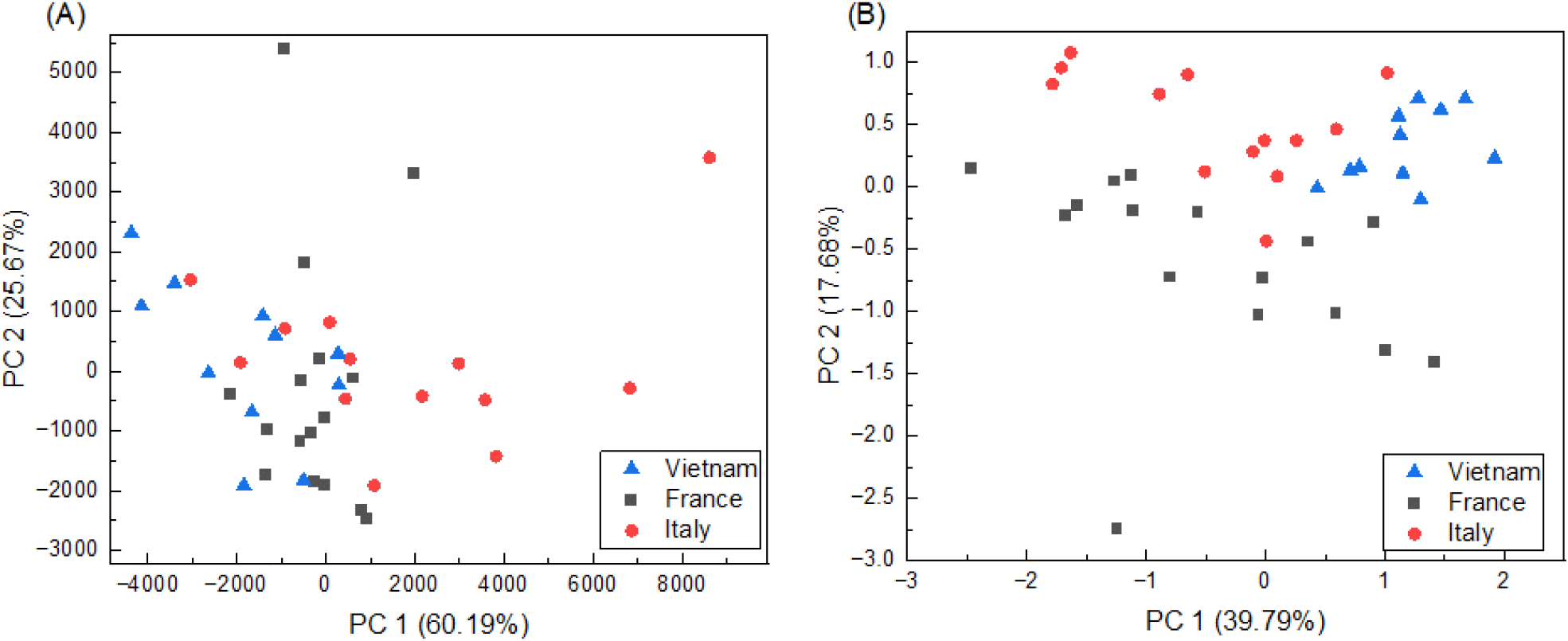
Considering that some elements are 4-5 orders of magnitude larger than the others (10−3-10−2 μg/L), PCA again was applied on the log transformed elements concentrations allowing all major and trace elements to contribute comparably and reveals relative geochemical patterns rather than mere concentration magnitude. The results of PCA from log transformed data show informative geographical distinction between wine samples from Vietnam, France, and Italy (Fig. 1B).
Too many characteristic elements obtained from PCA increase the cost and reduce the efficiency of origin traceability. Therefore, the correlation analysis combined with LDA was employed to obtain fewer elements for origin recognition, which is also convenient for practical application.
Predictors for LDA were selected based on PCA loadings of log-transformed data. The LDA was subsequently performed by using the log transformed data from 9 elements with the highest loading values on the first principal component (Table S5), including As, Li, Be, Ti, V, Cr, Mo, Cd, and Tl. Elements such as B, Sr, and Mn, which are major elements in wine samples, and exhibit high loading values on the PCA of raw concentrations, were not selected because variable selection for LDA was based on multivariate statistical criteria rather than univariate differences alone. When PCA is performed on raw concentrations, elements with large absolute concentrations dominate the principal components, potentially masking patterns associated with trace-level discriminating elements. In contrast, PCA on log-transformed data emphasizes relative (multiplicative) differences rather than absolute magnitudes, allowing the model to better capture subtle but meaningful compositional differences among wines of different geographical origins. Discriminant functions (DF) were obtained from the training set using all 40 samples:
Table 2 shows that LDA achieved 100% of all samples correctly classified in the training and cross-validation sets. In Fig. 2 it could be clearly seen the separation among wine from Vietnam, France and Italy.
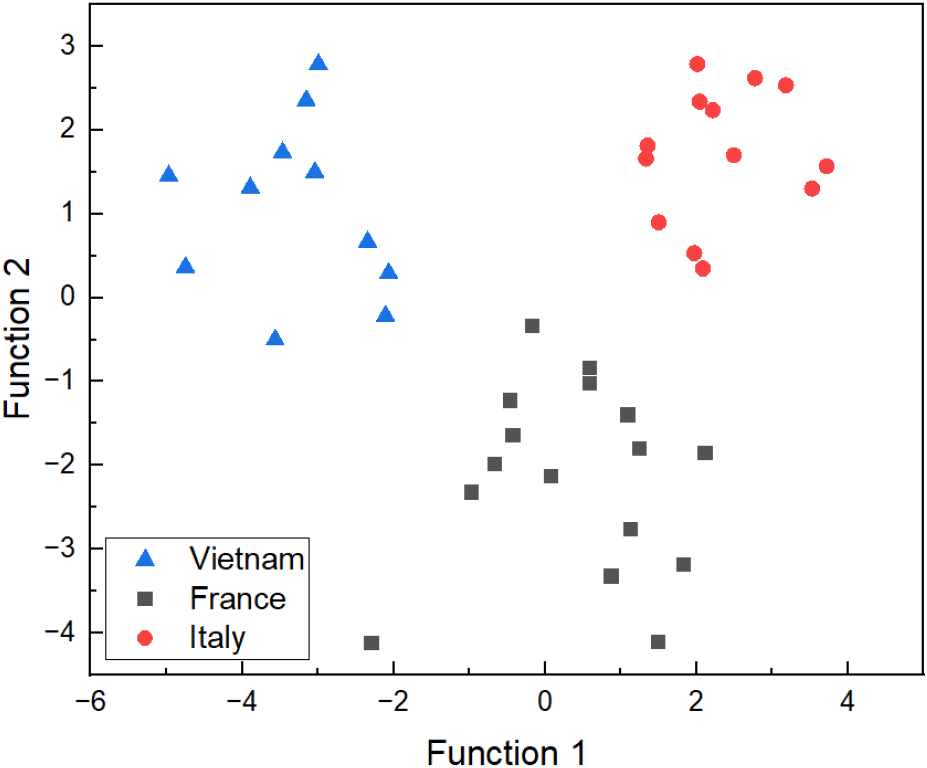
The fundamental assumption of elemental fingerprinting is that geographical origin exerts the strongest influence on the elemental profile, as it reflects the persistent natural signature of the soil (Versari et al., 2014). It is acknowledged, however, that not all elements are determined solely by geography; some are also affected by grape variety, wine style of production, and production year. Nevertheless, even when this heterogeneity is explicitly documented, the use of chemometric techniques and the strategic selection of geogenic elements enable the isolation of the geographical signal and ensure that the resulting classification accuracy is robust rather than misleading. In this study, the LDA model still achieved clear separation among countries, indicating that geographical origin imparts a measurable and discriminative elemental signature.
Robust LDA classification requires appropriate variable reduction, adherence to key statistical assumptions, balanced and well-characterized samples, and strong cross-validated performance to ensure model stability and generalizability (Brereton, 2007). Although wine classification studies, including this study, often face the challenge of relatively small sample sizes (Versari et al., 2014), a reduced dataset can still yield a reliable LDA model when dimensionality is minimized and rigorous validation is performed. In this study, log transformation and PCA-based variable selection helped stabilize variance and isolate the most discriminating elements. The consistently high classification accuracy observed across cross-validation suggests that the underlying geographical elemental differences are sufficiently strong to support a robust predictive model despite the limited number of samples. However, the limited number of wine samples per country may still restrict the generalizability of the discriminant functions. Future work with larger and more balanced datasets will be essential.
4. Conclusions
This study suggests that combining ICP-MS elemental analysis with PCA and LDA provides a reliable approach for classifying the geographical origin of wines. Using nine key elements (As, Li, Be, Ti, V, Cr, Mo, Cd, and Tl), the method achieved complete discrimination among Vietnamese, French, and Italian wines with 100% classification accuracy. These results confirm the potential of multi-elemental and chemometric analysis as an effective tool for authenticating and protecting the identity of Vietnamese wines.