1. Introduction
Traditional chemical synthesis techniques have given way to “greener” ones in the field of nanomaterials research because of the global movement towards sustainable and ecologically friendly solutions. Because of their distinct physical, chemical, and biological characteristics, particularly their exceptional antibacterial and antifungal capabilities, silver nanoparticles (AgNPs) have become one of the most researched nanomaterials (Sivaraj et al., 2020). These characteristics have enabled a variety of applications across a broad range of industries, including biomedical (such as antibiotics and medical devices), industrial (such as packaging materials and water treatment), and agricultural (Osman et al., 2024).
Traditional methods of synthesizing AgNPs often involve the use of toxic chemicals, organic solvents, and harsh reaction conditions, which pose significant environmental and human health concerns (Joshi and Adhikari, 2019). Therefore, the development of green AgNPs synthesis methods, using readily available, safe, and renewable biomaterials, has become an urgent research focus. Green synthesis methods not only minimize negative environmental impacts but also provide cost and sustainability benefits, in line with the trend of modern science and technology development (Huston et al., 2021). Among the potential bioresources, orange peel (Citrus sinensis peel) stands out as an effective reducing and stabilizing agent for the synthesis of AgNPs (Yadav and Chauhan, 2022). In particular, the use of orange peels from Dong Nai, Vietnam, not only takes advantage of the abundant agricultural waste in the locality, where orange production is large, but also contributes to increasing the value of agricultural products. Orange peels, a byproduct often discarded, contain a significant amount of active biological compounds, including flavonoids, terpenoids, alkaloids, and ascorbic acid (Lai et al., 2024). These compounds serve not only as potent reducing agents, facilitating the bio-reduction of silver ions (Ag+) into elemental silver nanoparticles (Ag0), but also as stabilizing agents, conferring colloidal stability by suppressing nanoparticle agglomeration and ensuring their homogeneous distribution within the medium (Siswanto et al., 2024).
According to evaluations by the Scientific Panel on Food Additives, Flavourings, Processing Aids and Materials in Contact with Food in 2004, the restriction level of silver insoluble ions is up to 50 μg/kg of food; while the acceptable daily intake (ADI) is 0.9 μg silver ions/kg body weight per day, as established by the European Chemicals Agency (Lambré et al., 2021). However, the use of AgNPs in food-related applications remains controversial, with regulatory frameworks varying across countries. Moreover, different synthesis routes and plant-derived precursors may produce nanoparticles with distinct physicochemical properties, stability, and bioavailability, thereby influencing their safety profiles. Hence, further investigations into toxicity, persistence, and residue are essential to ensure safe application, and this study contributes to filling the knowledge gap.
In fact, the application of AgNPs in the food industry has demonstrated numerous benefits. For instance, Nguyen et al. (2023) reported that chitosan-based nano-silver film coatings effectively extended the shelf life of mangoes by suppressing respiration and ethylene production. Similarly, Gallocchio et al. (2016) tested nano-silver food packaging at concentrations of 10-20 μg/kg and observed inhibition of food spoilage bacteria in chicken meat. In another study, Jing et al. (2018) showed that chitosan/nano-silver coatings at 0.51 mg/mL significantly improved egg preservation. These examples underscore the potential of AgNPs in enhancing food quality and safety.
Although the synthesis of AgNPs using citrus peels or essential oils has been extensively reported, only a limited number of studies have employed Citrus sinensis peel essential oil as both a reducing and stabilizing agent. The novelty of the present work lies not only in the use of orange peel essential oil sourced from Dong Nai, Vietnam–a locally abundant but underutilized by-product–but also in the extraction method. Most previous studies have relied on cold-pressed oils (Ahmed et al., 2021), which yielded relatively large nanoparticles (e.g., 432.5 nm), whereas the hydro-distillation method applied here produced significantly smaller particles (74.1 nm). This difference underscores the impact of the extraction technique on the phytochemical composition and, consequently, on nanoparticle characteristics. In addition, Dat et al. (2020) synthesized AgNPs using orange peel essential oil via a nano-emulsion combined with ultrasound, resulting in distinct antibacterial properties. Compared with such approaches, the present study introduces a new source and extraction method, thereby contributing fresh insights into green synthesis strategies and expanding the application potential of essential oil-mediated AgNPs.
This approach not only addresses environmental concerns but also adds value to agricultural by-products, representing a novel contribution compared with prior reports. The specific objective of this work was to synthesize and comprehensively characterize properties of AgNPs synthesized from Dong Nai orange essential oil (CsEO)–including particle size, morphology, crystal structure, and optical properties–and to evaluate their antioxidant and antibacterial properties. Based on these findings, the anticipated applications of the biosynthesized AgNPs include their prospective use as natural antimicrobial and antioxidant agents in food preservation, as well as potential candidates for biomedical and environmentally friendly biomaterial development, thereby opening a new pathway for sustainable nanotechnology in Vietnam.
2. Materials and methods
The CsEO was extracted from the peel of Citrus sinensis fruits harvested in Dong Nai province, Vietnam, using the hydrodistillation method. GC-MS analysis revealed that the major components of CsEO were D-limonene (70.56%), α-pinene (24.81%), geranial (1.71%), and linalool (1.71%).
In the investigation, four bacterial strains were used: two Gram-negative species, Salmonella enteritidis (ATCC 13076) and Escherichia coli (ATCC 25922), and two Gram-positive species, Staphylococcus aureus (ATCC 33591) and Bacillus cereus (ATCC 11778). The Institute of Biotechnology and Food Technology at the Industrial University of Ho Chi Minh City supplied these bacterial strains.
The study employed silver nitrate (AgNO3, Shanghai Aladdin Biochemical Technology Co., Ltd., Shanghai, China), dimethyl sulfoxide (DMSO; purity ≥99.5%, Nanjing Chemical Reagent Co., Ltd., Nanjing, China), 2,2-diphenyl-1-picrylhydrazyl (DPPH; purity ≥97%, Sigma, St. Louis, MO, USA), and 2,2'-azinobis(3-ethylbenzothiazoline-6-sulfonic acid) (ABTS; ≥98%, Sigma). The study also included analytical-grade chemicals, culture media, and antibacterial testing media, such as Mueller-Hinton agar (HiMedia, Thane, India) and nutritional broth, among other components.
With some changes, Pervaiz et al. (2023) first detailed the production process for AgNPs. For quick system integration, the essential oils were first diluted in acetone (1:100 v/v). AgNO3 solutions with a concentration of 5 mM were prepared for the synthesis, and 2 M NaOH was used to adjust the pH to 8. Next, 50 mL of AgNO3 solution was heated to 50°C with magnetic stirring for 60 min at 600 rpm, and 5 mL of each diluted essential oil was added dropwise. The appearance of a golden-brown hue suggested the presence of AgNPs. Following preparation, the AgNPs from orange peel essential oil (AgNPs-CsEO) samples were stored at 6°C.
Characterization of AgNPs morphology, size, and chemical composition was achieved through the utilization of UV-VIS spectrophotometry (Genesys 20, Thermo Fisher Scientific, Waltham, MA, USA), wavelength range 300-700 nm. Scanning electron microscopy (SEM) (Apreo 2 SEM, Thermo Fisher Scientific), Dynamic light scattering (DLS) (Zetasizer Nano ZS, Malvern Panalytical, Malvern, UK), and Fourier-transform infrared spectroscopy (FTIR) (ALPHA II, Bruker, Billerica, MA, USA) were performed as described by Asif et al. (2022).
Its free radical scavenging capacity (RSC), which was derived from Hao et al. (2025a), was assessed using the DPPH assay to ascertain antioxidant capabilities. To make solutions with varying concentrations, the AgNPs were dissolved in 96% ethanol. Each solution was prepared by adding 0.3 mL to 2.7 mL of a 0.1 mM DPPH solution and then allowing the mixture to sit at room temperature in the dark for 30 min. After that, absorbance was measured at 517 nm with vitamin C serving as a reference. We calculated the IC50, the concentration at which 50% inhibition occurred, and the inhibition percentage. After that, the antioxidant capacity was determined by comparing the absorbance values of the sample and the control using a formula.
Acontrol represents the absorbance of the DPPH solution, while Asample corresponds to the absorbance of the reaction mixture containing both DPPH and AgNPs-CsEO.
Tseng et al. (2022) provided a modified procedure that was used to test the antioxidant potential. A 1:1 mixture of 7 mM ABTS and 2.45 mM potassium persulfate in water was used to create ABTS+ radicals, which were then incubated for 16 hours at room temperature, shielded from the sun. At 734 nm, the absorbance of the solution was diluted to 0.70±0.02. A final volume of 5 mL was then achieved by mixing 3 mL of the ABTS solution with 0.1 mL of AgNPs solutions (varying concentrations) and adding ethanol. Absorbance at 734 nm was measured after 6 minutes of dark incubation. Antioxidant capacity (AC), IC50, and inhibition percentage were computed using a specified formula.
Acontrol represents the absorbance of the ABTS solution, while Asample corresponds to the absorbance of the reaction mixture containing both ABTS and AgNPs-CsEO.
A modified disc diffusion method was used to evaluate antibacterial efficacy, as described by Hao et al. (2025b). Mueller Hinton Agar (MHA) plates were evenly covered with bacterial suspensions that were standardized to 0.5 McFarland, or approximately 1.5×10⁸ CFU/mL. Five microliters of AgNPs were placed on sterile 6 mm paper discs. The positive control was gentamicin (10 μg/disc), and the negative control was 5% DMSO. To assess antibacterial activity, inhibition zone diameters were determined after a 24-hour incubation period at 37°C.
By incubating bacterial cultures with AgNPs at a concentration of 5 mM, the impact of AgNPs on the growth rate of S. aureus was investigated, as described by Ceylan and Doğru (2025). Bacterial density was measured using absorbance measurements at 600 nm during a 10-hour period (0-10 h), which reflected the growth kinetics. To confirm the results, each experimental condition was examined three times.
Mean comparisons and ANOVA were performed using Statgraphics Centurion XIX (Statgraphics Technologies, Inc., The Plains, VA, USA). The least significant difference (LSD) method was used to determine a 95% confidence level (p<0.05). The results are shown as mean±SD or mean±standard deviation. Version 4.2.1 of the R software (R Foundation for Statistical Computing, Vienna, Austria) was used to conduct the analysis.
3. Results and discussion
The reduction of silver nitrate (AgNO3) to elemental silver under the reducing agent found in the CsEO extract is the fundamental step in synthesizing AgNPs. This transformation is often accompanied by a noticeable color change in the reaction sample, shifting from white to dark yellow-brown (Fig. 1). With continuous stirring for 60 min, the solution displays a distinct brown color, indicating an increase in the density of nanoparticles. The color change serves as an important indicator of the presence of AgNPs nanoparticles due to surface plasmon resonance (SPR) excitation (Le et al., 2023).
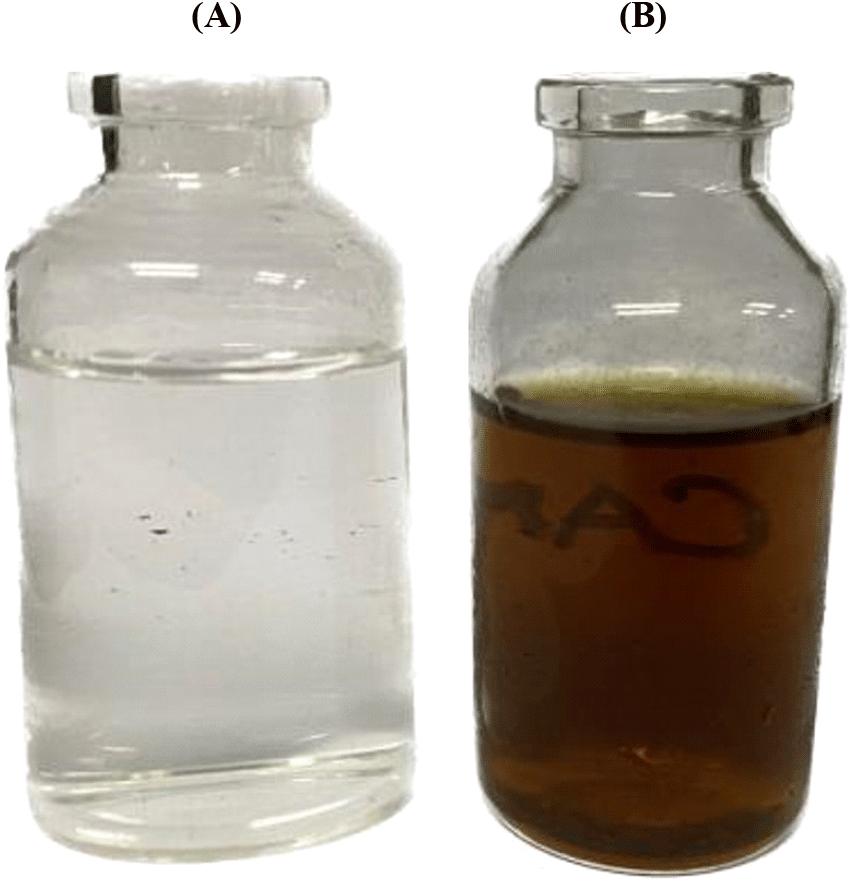
The appearance of brown color during the synthesis of AgNPs is a characteristic phenomenon, mainly due to the SPR excitation of AgNPs in the visible region (Iravani et al., 2014). However, changes in color intensity or the appearance of darker shades can also originate from nanoparticle agglomeration, partial oxidation of silver to silver oxide, or the presence of residual reactants from the synthesis medium (Ahmed et al., 2016). It should be noted that this color change only provides a qualitative indication of nanoparticle formation, whereas quantitative confirmation of particle size, distribution, and stability must rely on analytical techniques such as SEM, DLS, or UV-Vis spectroscopy.
The UV-Vis absorption spectrum of the AgNPs-CsEO was investigated in the wavelength range of 300-700 nm (Fig. 2). The results showed that a characteristic plasmon absorption peak appeared in the region of 400-405 nm, with a maximum absorption intensity of about 1.389, reflecting the SPR phenomenon of AgNPs. This result is consistent with the absorption spectra of other biosynthetic AgNPs systems, such as the study by Meva et al. (2016) with Megaphrynium macrostachyum extract, in which the SPR peak was also in the range of 400-450 nm. The appearance of this peak is a typical indicator of the formation of AgNPs with sizes in the nano region, near-spherical morphology, and uniform distribution (Mahmudin et al., 2015). According to research by Vijayaraghavan et al. (2012), AgNPs with SPR absorption spectra typically range in size from 2 to 100 nm, usually exhibiting SPR between 400 and 450 nm.

At the same time, during the reaction, a characteristic color change was also recorded: the initial colorless or light-yellow solution turned to dark yellow or light brown, consistent with the characteristic optical properties of AgNPs when formed. The agreement between the results of visual observation and UV-Vis spectral data indicates that the silver ion reduction process was effective under the influence of biological compounds in orange essential oil.
Compared with previous studies, the SPR peak of the orange essential oil sample is close to the 400 nm value recorded by Garibo et al. (2020) when synthesizing AgNPs from L. acapulcensis stems and roots. Meanwhile, the study by Awwad and Salem (2012) using mulberry leaf extract (Morus alba) recorded the SPR peak at a further position—around 425 nm, suggesting that the AgNPs in this system may be larger or have a different morphology. The difference in absorption peak positions between studies reflects the distinct influence of the type of biological raw material, active reducing-stabilizing agent, and reaction conditions on the optical properties and size of AgNPs.
FTIR spectrum of the biosynthesized AgNPs-CsEO showed the presence of many characteristic absorption bands at positions 3,444.26, 2,966.75, 1,639.99, 1,456.32, 1,376.27, 1,166.12, 972.89, and 673.98 cm−1 (Fig. 3).
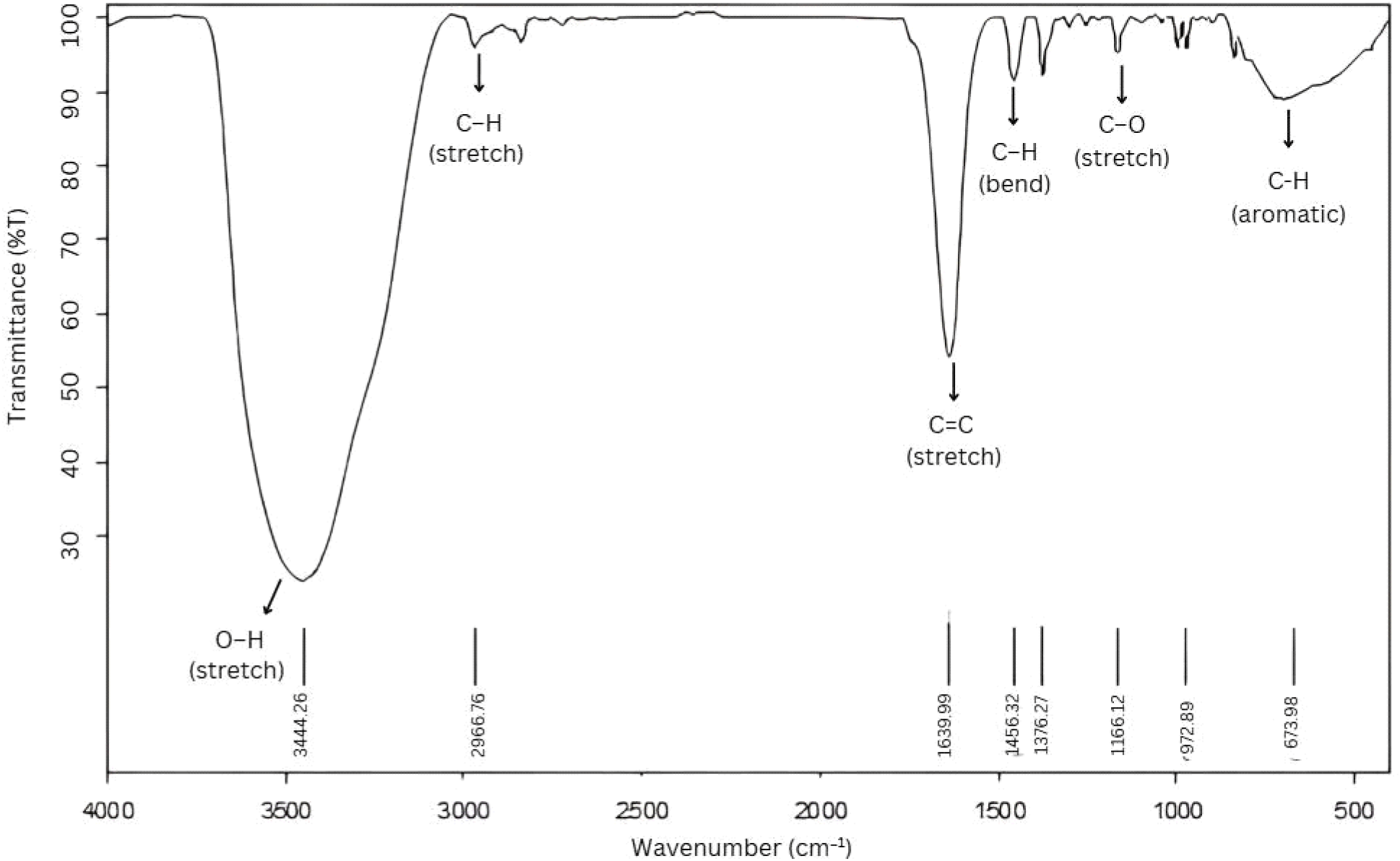
The broad band at 3,444.26 cm−1 is characteristic of the stretching vibration of the hydroxyl group (−OH), indicating the presence of alcohol and phenol compounds in the essential oil, which play an important role in the reduction of silver ions and the formation of AgNPs (Fathima et al., 2022). The peak at 2,966.75 cm−1 reflects the C-H vibrations in methyl and methylene groups, which are commonly found in monoterpene components such as limonene—the main compound in orange essential oil (Dumancas et al., 2023).
Notably, the absorption band at 1,639.99 cm−1 is assigned to the C=O stretching (carbonyl groups) or C=C stretching (aromatic/alkene structures), representing carbonyl groups or unsaturated double bonds present in flavonoid and terpenoid compounds. These compounds not only could reduce Ag+ but also form a stable bond with the particle surface, contributing to the protection and limitation of the aggregation of AgNPs (Sinkar et al., 2022). In addition, the peaks at 1,456.32 and 1,376.27 cm−1 correspond to the bending vibrations of the C-H bond in the open-chain hydrocarbon skeleton. The presence of an ether or ester group is confirmed by the band at 1,166.12 cm−1 (C-O-C or C-O stretching), while the lower bands at 972.89 and 673.98 cm−1 may be related to the out-of-plane vibrations of the aromatic C-H bond or vibrations characteristic of ring structures (Dumancas et al., 2023).
Overall, the FTIR spectra confirmed the presence of multiple bioactive functional groups in orange essential oil and showed that these groups play a dual role as both reducing and stabilizing agents for the synthesis of AgNPs. These results strongly corroborate the green and sustainable synthesis mechanism of AgNPs-CsEO. This mechanism effectively explains the successful formation of nanosized particles and their subsequent stability within the system.
DLS analysis showed that the AgNPs-CsEO sample had a uniform particle size distribution, with an average particle size of 74.1 nm, and distributed in the range of 270 to 280 nm (Fig. 4).
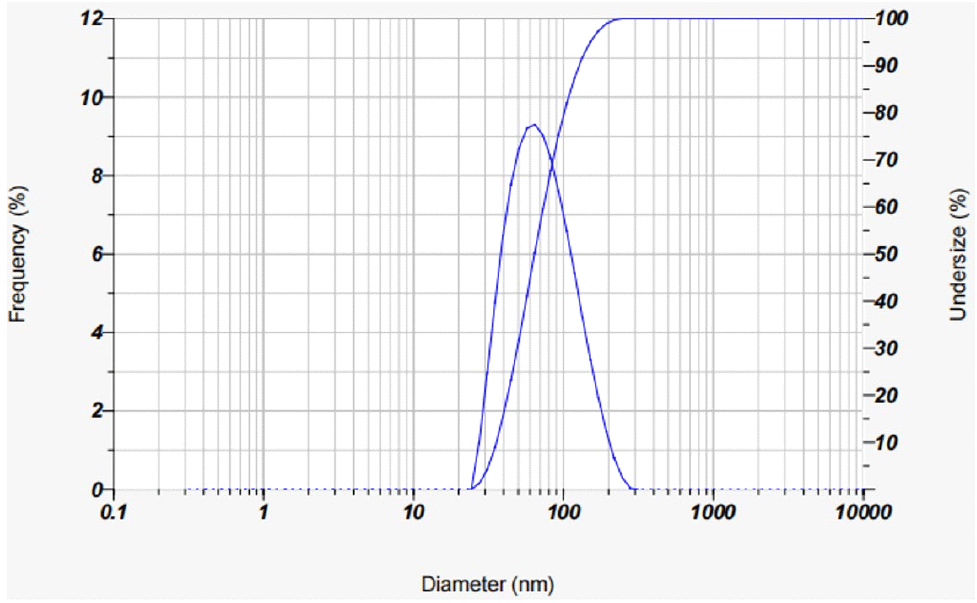
When compared with other studies, the average size of AgNPs-CsEO was similar to AgNPs synthesized from Pedalium murex leaf extract, with an average size of 73.14 nm and a distribution ranging from 10 to 150 nm (Anandalakshmi et al., 2016). Meanwhile, the study by Hosseini et al. (2013) on chitosan nanoparticles encapsulating oregano EO-loaded chitosan NPs reported significantly larger particle sizes, with diameters ranging from 281.5 nm to 309.8-402.2 nm. The differences in size and dispersion may be related to the chemical nature of the biomaterials used in the synthesis. Orange peel essential oil contains high levels of monoterpenes, especially limonene, which has strong reducing activity and good surface interaction with silver ions, contributing to rapid nucleation and better particle size control (Iravani, 2011). In contrast, lavender leaf extract contains compounds such as flavonoids, polyphenols, and tannins, which can form stable complexes with metal ions but often slow down the nucleation process, resulting in larger and more widely distributed particles (Kumar et al., 2016). In addition, the form of extraction also plays an important role: studies have shown that essential oils tend to produce smaller particles than water extracts due to their hydrophobic properties and faster reduction in the reaction medium (Iravani, 2011).
Thus, the AgNPs-CsEO system belongs to the group of nano systems with small average sizes and not too wide a distribution. From the above results, it can be concluded that the particle size of the AgNPs-CsEO nanosystem is completely suitable for practical applications, especially in the fields of antibacterial, biological packaging, and food, where certain control of particle size is required to ensure dispersion efficiency, contact area, and stability in the application environment.
Fig. 5 shows the SEM image of AgNPs-CsEO, observed at 40,000× magnification. The results showed that the AgNPs tended to be distributed uniformly, existing in the form of light agglomerates in small clusters with quite high density on the sample matrix. The surface morphology showed that the particles were nano-sized, mostly spherical or slightly irregular in shape—a common feature of biosynthesized silver nanosystems due to the coverage by organic compounds in the extract (Iravani, 2011). The SEM images exhibited a strong correlation with the results from UV-Vis and DLS analyses. Specifically, when the SPR peak of AgNPs appeared in the range of 400-450 nm (as observed in the UV-Vis spectra), the nanoparticles were typically small and spherical in shape, which was consistent with the morphology observed under SEM (Gaddam et al., 2014).
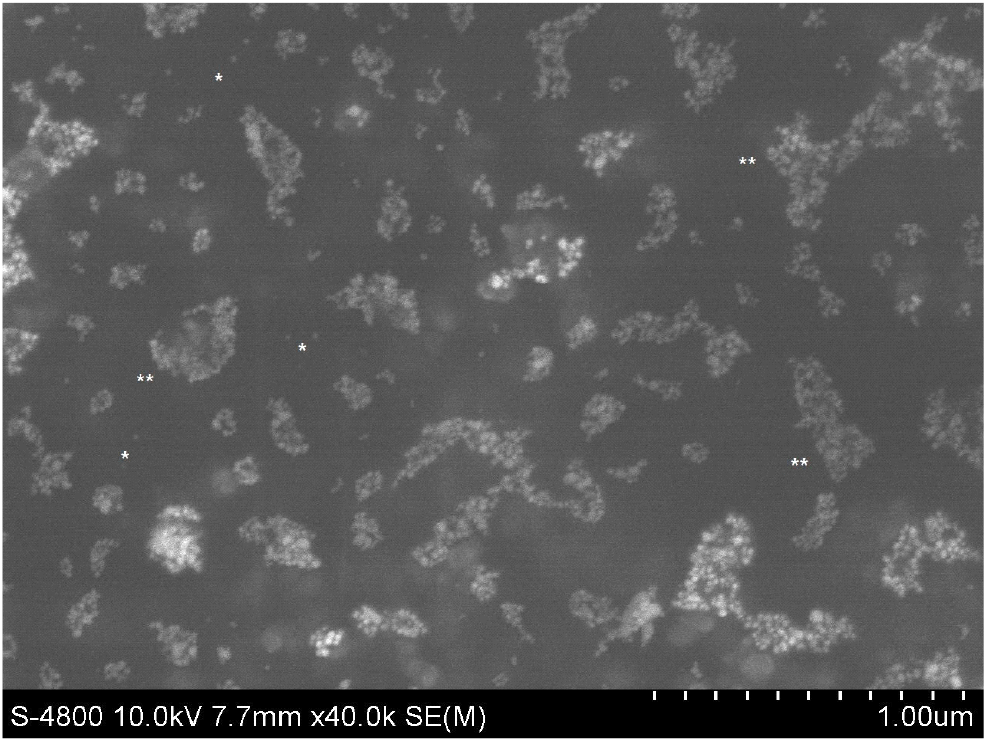
Although there were some locations showing local agglomeration, in general the particles did not form large networks or dense aggregates, suggesting that orange essential oil may have played a certain role in limiting strong condensation between particles. This is consistent with the hypothesis that the components in CsEO, such as limonene, linalool or flavonoids, not only can reduce silver ions but also form a stable shell around the particles (Singh et al., 2016).
The SEM images reinforce the results from UV-Vis spectroscopy and DLS, showing that the synthesis system from CsEO can produce AgNPs with small size, near-spherical morphology, and uniform distribution, which is an important premise for future antibacterial or food packaging applications.
The results in Table 1 indicate that the AgNPs-CsEO sample demonstrated significant antioxidant activity through both evaluation methods. The measured IC50-DPPH values were 56.72±3.72 μg/mL and 98.63±6.84 μg/mL for the IC50-ABTS. Although these values were markedly higher than those of vitamin C reference (4.75 and 8.87 μg/mL, respectively), they still showed remarkable antioxidant potential.
| Test sample | IC50-DPPH | IC50-ABTS |
|---|---|---|
| Vitamin C (μg/mL) | 4.75±0.581)a2) | 8.87±0.64b |
| AgNPs-CsEO3) (μg/mL) | 56.72±3.72b | 98.63±6.84a |
Comparing AgNPs-CsEO to earlier research, the antioxidant activity measured by the DPPH assay (IC50=56.72±3.72 μg/mL) was comparable to Brachychiton populneus (33.85 μg/mL) but lower than extracts from Schinus molle L. (8.44 μg/mL) and Eupatorium adenophorum (8.96 μg/mL) (Dua et al., 2023; Naveed et al., 2022). Furthermore, AgNPs-CsEO’s ability to scavenge DPPH radicals was noticeably greater than that of AgNPs made with Allium sativum essential oil, which showed a significantly higher IC50 of 396.7 μg/mL (Onuoha et al., 2022) and fell within the range of antioxidant efficiency (15.9-71.8% inhibition) reported for clove essential oil encapsulated in chitosan (Hadidi et al., 2020).
AgNPs-CsEO’s IC50 value (98.63±6.84 μg/mL) for the ABTS assay was higher than S. molle L.’s (3.56 μg/mL) (Erenler et al., 2023) and pomegranate peel (4.25 μg/mL) (Rani et al., 2024), indicating a lower ABTS+ radical scavenging capacity than its DPPH performance. Although the antioxidant activity of AgNPs-CsEO was comparatively lower than that of other studies, it still possesses a significant antioxidant potential, which may be further applied in the food industry.
The antioxidant activity of AgNPs has been shown to vary significantly between various applications. For example, Saleh et al. (2024) reported that AgNPs incorporated into beef sausages and fish patties exhibited antioxidant activity ranging from 5.52% to 27.42% during frozen storage. In another study, Taha et al. (2022) observed a more pronounced effect, where starch coatings embedded with AgNPs significantly enhanced the antioxidant performance in strawberries, resulting in an increase in scavenging activity from 25% to 59% during storage. These findings highlight the antioxidant activity of AgNPs. Although the antioxidant efficacy of AgNPs-CsEO observed in the present study appears low when compared to some previous studies, its combined antibacterial and antioxidant properties–especially when derived from orange essential oil–offer distinct advantages for food preservation applications. This is consistent with the growing interest in developing sustainable food.
This difference can be explained by the different physicochemical characteristics of the two types of free radicals and the reaction mechanisms: ABTS+ radicals have higher redox potentials, requiring stronger reduction, while DPPH is a more stable radical and can react favorably with mild reducing agents. At the same time, phytochemical compounds in CsEO may have a selective affinity for each type of radical, thereby affecting the efficiency in each test method (Kut et al., 2022).
Overall, these results not only confirm that AgNPs-CsEO is a material system with antioxidant activity but also open prospects for its application in the food industry as a natural preservative, in pharmaceuticals as an antioxidant ingredient supporting health, or in biomedical materials combining antibacterial and antioxidant properties to enhance treatment efficacy and protect biological tissues.
The current investigation aimed to demonstrate the biomedical significance of AgNPs derived from the essential oil extract of orange peel. Four bacterial species were tested for antibacterial activity, including S. aureus and B. cereus (Gram-positive strains), as well as S. enteritidis and E. coli (Gram-negative strains), using the disc diffusion method.
The tested bacterial strains’ inhibition zone diameter (mm) against the antibiotic gentamicin and the AgNPs-CsEO are displayed in Table 2. According to the findings, gentamicin had better inhibitory effects on all four strains. The inhibition zone’s diameter varied from 20.12 mm for S. aureus to 31.78 mm for S. enteritidis. Although it was less potent than gentamicin, AgNPs-CsEO also demonstrated strong antibacterial activity, with an inhibition zone that ranged from 9.75 mm (S. aureus) to 19.13 mm (S. enteritidis).
This result is similar to the study of Palithya et al. (2021) on AgNPs nanoparticles synthesized from D. crotonifolia (Dc-AgNPs), in which Dc-AgNPs exhibited antibacterial zones of 14-20 mm against E. coli and 20 mm against S. aureus. Interestingly, while Dc-AgNPs showed better efficacy against S. aureus (Gram-positive strain), AgNPs-CsEO exhibited stronger activity against Gram-negative strains (E. coli and S. enteritidis). Compared with the study of Negi and Kesari (2022), in which the chitosan nano system combined with lemon balm essential oil gave an inhibition zone of 17.39 mm for S. aureus and 8.12 mm for E. coli, the AgNPs-CsEO sample in the present study showed significantly higher antibacterial activity on E. coli (16.47 mm vs. 8.12 mm), while the effect on S. aureus was lower (9.75 mm vs. 17.39 mm).
The study’s findings align with AgNPs documented antibacterial mechanism. Based on previous studies demonstrating the ability of AgNPs to penetrate cell membranes and induce cytoplasmic leakage, our experiment showed that AgNPs-CsEO exhibited a stronger antibacterial effect against Gram-negative bacteria (E. coli, S. enteritidis) than against Gram-positive bacteria (S. aureus) (Kim et al., 2011). Specifically, the smallest antibacterial zone (9.75 mm) in our experiment was explained by S. aureus having a thick peptidoglycan layer (20-80 nm), which improved its resistance to AgNPs. Despite the different synthesis sources, the mechanism of action of AgNPs is consistent, as demonstrated by this result, which is also comparable to the report of Palithya et al. (2021) when comparing the effectiveness on the same bacterial strain.
Notably, in the context of food preservation, nano silver not only has antioxidant properties but also possesses many other important application properties. In essence, the study of Nguyen et al. (2023) showed that chitosan coating containing nano silver can inhibit the respiration and ethylene production in mango, thereby significantly extending the storage time. This illustrates that the valuable application of nano silver lies not only in its antioxidant and antibacterial properties but also in its ability to simultaneously integrate multiple preservation mechanisms in the actual product system.
The results from Fig. 6 show a clear effect of biosynthesized silver nanoparticles from AgNPs-CsEO on the growth of S. aureus. At a concentration of 5 mM, the AgNPs-CsEO sample significantly reduced the growth rate of bacteria compared to the untreated control sample, especially as shown by the significant difference in optical absorption during the first 2 to 10 h.
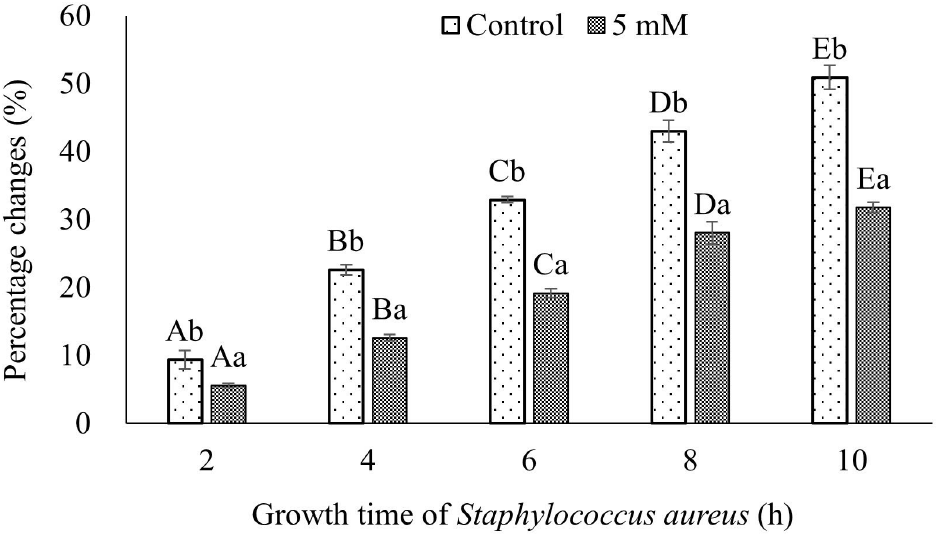
The data obtained reflect two noteworthy points: first, AgNPs-CsEO is capable of partially inhibiting the growth of S. aureus, and second, this effect may originate from slowing down the growth cycle or causing physiological changes in the cells, affecting the normal growth process. Importantly, although AgNPs-CsEO showed the strongest antibacterial effect against S. enteritidis in the agar diffusion assay, the growth rate experiment was intentionally carried out using S. aureus (ATCC 33591), a methicillin-resistant strain. This choice was made to underline the clinical and practical relevance of CsEO-mediated AgNPs in addressing antibiotic-resistant pathogens, which represent a critical global health issue (Basri and Sandra, 2016). By focusing on S. aureus, the study not only demonstrates the general inhibitory capacity of AgNPs-CsEO but also emphasizes its potential role as a promising biological alternative for tackling multidrug-resistant bacteria in both food and medical contexts.
These results are in good agreement with the study by Ceylan and Doğru (2025) on the silver nanosystem synthesized from Olea europaea L. leaf extract, in which AgNPs also exhibited bacterial growth inhibition effects depending on the strain and concentration used.
This similarity not only strengthens the antibacterial potential of AgNPs in general but also emphasizes the prominent role of AgNPs-CsEO as a viable biological agent in controlling pathogenic bacteria. With the demonstrated growth inhibition effect, AgNPs-CsEO can become a valuable component in the development of environmentally friendly biopreservative systems, especially in the food and medical industries. These findings also lay the foundation for further studies to decipher the specific antibacterial mechanism, optimize the conditions of use, and expand the scope of practical applications of this nano system in the future.
4. Conclusions
The biosynthesized AgNPs-CsEO were demonstrated to have small size, stable particle distribution, and uniform morphology, as demonstrated by DLS, SEM, and UV-Vis results. The bioactive compounds in CsEO played a dual role in both reducing and stabilizing, as confirmed by FTIR spectra. In addition to antibacterial effects against several pathogenic bacteria, AgNPs-CsEO also demonstrated antioxidant activity. Although not as strong as vitamin C, the IC50 results still indicate promising antioxidant potential. Taken together, these findings suggest that AgNPs-CsEO could serve as a prospective candidate for applications in food preservation, biomedicine, and the development of environmentally friendly biomaterials, warranting further in-depth investigations.