1. Introduction
Citrus unshiu (satsuma mandarin), a perennial fruit tree belonging to the subfamily Aurantioideae of the family Rutaceae in the order Sapindales, represents one of the most important fruit crops in Korea (Kim et al., 2017). Although its annual production fluctuates, C. unshiu and related cultivars consistently account for more than 35% of the nation’s total fruit yield, ranking first among all fruits (Choi et al., 2019; Kim et al., 2021). In Korea, citrus production is predominantly based on C. unshiu, which is further classified according to cultivation system and cultivar type into open-field C. unshiu, greenhouse C. unshiu, and late-ripening cultivars derived from C. unshiu (e.g., Hallabong, Cheonhyehyang, and Redhyang) (Hong and Kim, 2016; Jeong et al., 2024). Among these, open-field C. unshiu accounts for the majority of production, representing approximately 82-86%, while greenhouse C. unshiu and late-ripening cultivars each contribute 10-13% (Kim et al., 2021; Kim et al., 2023). More than 90% of harvested C. unshiu fruits are consumed fresh, whereas less than 10% are used for processing. Nevertheless, during both distribution and processing, substantial amounts of peel are generated as by-products (Kim et al., 2024).
C. unshiu is a rich source of free sugars, organic acids, dietary fiber, vitamins, and minerals, which contribute to its distinctive flavor, aroma, and color (Andrade et al., 2023; Shi et al., 2024). It also contains various bioactive compounds, including flavonoids, carotenoids, and limonoids (An et al., 2014; Andrade et al., 2023). To date, more than 60 flavonoids have been identified in citrus fruits, with reported biological functions such as antioxidant, antimicrobial, cholesterol-lowering, and hepatoprotective effects (Sande et al., 2018; Shi et al., 2024). Notably, the peel of C. unshiu contains abundant dietary fiber, d-limonene, hesperidin, naringin, neohesperidin, and carotenoids, which exhibit higher antioxidant and antimicrobial activities than those found in the pulp. These compounds have also been associated with anticancer properties and vascular health benefits (Chun and Bae, 2015; Koolaji et al., 2020; Li et al., 2020).
The extraction and purification of bioactive compounds and antioxidants from natural sources are generally influenced by several factors, including extraction time, temperature, solvent concentration, and solvent polarity (Cansino-Jácome et al., 2015; Rauf et al., 2018). Among these, solvent polarity plays a decisive role in both extraction yield and antioxidant activity. Food-derived phenolics are highly soluble in aqueous organic solvents such as methanol, ethanol, and acetone, whereas solvents with lower polarity, such as ethyl acetate, show reduced efficiency (Boeing et al., 2014).
Although some research has investigated the utilization of C. unshiu peel, its functional properties remain insufficiently characterized, and most peel is still discarded. In contrast, agricultural by-products such as grapefruit peel (Ko et al., 2014), yuja peel (Shin et al., 2008), buckwheat hull (Im et al., 2016), and onion peel (Yeom and Hwang, 2020) have been successfully utilized in the development of beverages, sauces, and baked products. While C. unshiu peel is known to possess health-promoting properties and is occasionally consumed in teas or confectionery at the household level, systematic studies on the quality characteristics, bioactive compound profiles, and antioxidant activities of both C. unshiu pulp and peel remain limited. This underscores the need for further investigation.
In the present study, we compared the quality characteristics of C. unshiu pulp and peel, identified suitable solvents for the efficient extraction of bioactive compounds such as polyphenols and flavonoids, and evaluated their antioxidant activities. The results are expected to provide valuable baseline data to enhance the utilization of C. unshiu peel, a highly functional by-product that is largely discarded, while also expanding its potential applications alongside C. unshiu pulp.
2. Materials and methods
C. unshiu fruits cultivated in Jeju Island were purchased from a local market in January 2025. Folin-Ciocalteu reagent, catechin, gallic acid, and potassium persulfate were obtained from Sigma-Aldrich (St. Louis, MO, USA). All other reagents used for proximate composition analysis and antioxidant activity assays were of analytical grade and purchased from Junsei Chemical Co., Ltd. (Tokyo, Japan).
Moisture, crude protein, crude fat, crude ash, and crude fiber contents of C. unshiu pulp and peel were analyzed according to AOAC (1995). Moisture content was measured by the atmospheric heating-drying method, in which samples were dried at 105°C in a dry oven. Ash content was determined by direct ashing of samples at 550°C in a muffle furnace and calculated as the difference in weight before and after ashing. Crude protein content was determined using the semi-micro Kjeldahl method: samples were digested with a selenium catalyst and sulfuric acid at 420°C for 50 min, followed by neutralization and titration. Crude fat content was quantified using a Soxtec extraction system (Soxtec System HT 1043, Foss Tecator, Eden Prairie, MN, USA) with diethyl ether as the solvent. Crude fiber content was measured using a Fibertec system (FOSS Tecator, Höganäs, Sweden) through sequential treatment with 1.25% sulfuric acid and 1.25% potassium hydroxide, leaving fibrous residues that were subsequently ashed to determine fiber content.
C. unshiu pulp or peel (200 g) was homogenized with an equal volume of distilled water, and the homogenate was centrifuged to separate the supernatant and precipitate. The supernatant was filtered through Whatman No. 1 filter paper to remove suspended solids, and the filtrate was used for subsequent measurements. pH was determined using a pH meter (SevenCompact™ PH/Ion S220, Mettler-Toledo, Greifensee, Switzerland). Total acidity was measured according to AOAC (1995) by titrating 10 mL of sample with 0.1 N NaOH to an endpoint of pH 8.3 and expressed as citric acid equivalents. Soluble solids content (°Brix) was measured using a digital refractometer (JP/PR-201, Atago Co., Tokyo, Japan).
The color of C. unshiu pulp and peel was determined using a colorimeter (Chroma Meter CR-400, Konica Minolta, Inc., Tokyo, Japan). The CIE parameters L* (lightness), a* (redness), and b* (yellowness) were recorded. Calibration was performed using a standard white plate with L*, a*, and b* values of 97.10, 0.24, and 1.75, respectively.
Fresh C. unshiu were washed under running tap water, drained, and separated into pulp and peel. Each was placed in aluminum trays, frozen at −80°C, and freeze-dried using a freeze dryer (FDU-1200, EYELA, Tokyo, Japan). The freeze-dried pulp and peel were finely ground using a coffee grinder (PGR 002M, Supreme Electric Co. Ltd., Seoul, Korea), sieved through a No. 20 mesh sieve, and used for extraction experiments.
For extraction, distilled water, 70% ethanol, and 95% ethanol were used as solvents. Freeze-dried C. unshiu powder (10 g) was mixed with 20 mL of solvent, homogenized for 3 min, and subjected to ultrasonic extraction at room temperature for 30 min. The extract was centrifuged at 13,500 ×g for 15 min to separate the supernatant and residue. The supernatant was filtered through Whatman No. 1 filter paper, diluted to appropriate concentrations, and used for determination of total polyphenol and flavonoid contents as well as antioxidant activity.
Total polyphenol content was determined by the Folin-Denis method (Singleton and Rossi, 1965). Briefly, 100 μL of sample extract was mixed with 100 μL of 2 N Folin-Ciocalteu reagent and incubated at room temperature for 3 min. Subsequently, three volumes of 2% sodium carbonate solution were added, and the mixture was incubated in the dark for 1 h. Absorbance was measured at 760 nm, and total polyphenol content was calculated using a gallic acid standard curve and expressed as gallic acid equivalents (GAE) per gram of dry weight (μg GAE/g DW).
Total flavonoid content was determined according to the method of Zhishen et al. (1999). Diluted sample extract was mixed with an equal volume of 2% aluminum chloride solution and incubated at room temperature for 15 min. Absorbance was measured at 430 nm, and total flavonoid content was calculated using a quercetin standard curve and expressed as quercetin equivalents (QE) per gram of dry weight (μg QE/g DW).
The DPPH radical scavenging activity of C. unshiu pulp and peel extracts was measured according to the method of Cheung et al. (2003). Equal volumes of sample and 0.2 mM DPPH solution were mixed, incubated at 37°C for 30 min, and absorbance was measured at 515 nm. Radical scavenging activity was expressed as a percentage relative to the control.
ABTS radical scavenging activity was determined according to the method of Re et al. (1999). ABTS radicals were generated by reacting 7.0 mM ABTS with 2.45 mM potassium persulfate in the dark at room temperature for 24 h. The resulting ABTS+ solution was diluted with ethanol to an absorbance of 0.73±0.03 at 735 nm prior to use. Equal volumes of sample and ABTS+ solution were mixed, incubated in the dark at 37°C for 30 min, and absorbance was measured at 732 nm. Radical scavenging activity was expressed as a percentage relative to the control.
Reducing power was determined according to the method of Oyaizu (1986). One milliliter of sample was mixed with 1 mL of phosphate buffer (200 mM, pH 6.6) and 1 mL of 1% potassium ferricyanide, and incubated at 50°C for 20 min. After reaction, 1 mL of 10% trichloroacetic acid (TCA) was added, and the mixture was centrifuged at 13,500 ×g for 15 min. One milliliter of supernatant was mixed with 1 mL of distilled water and 1 mL of ferric chloride solution, and absorbance was measured at 720 nm.
All experiments were conducted in triplicate, and results are expressed as mean±standard deviation. Statistical analyses were performed using R-Studio (version 3.5.1, Boston, MA, USA). Student’s t-test was employed to determine the significant differences between the pulp and peel of C. unshiu. Differences among means were evaluated by analysis of variance (ANOVA), and significance was determined using Duncan’s multiple range test.
3. Results and discussion
The proximate composition of C. unshiu pulp and peel is presented in Table 1. The moisture content of the pulp (88.73%) was significantly higher than that of the peel (69.71%). The pulp of C. unshiu is composed mainly of juice vesicles, which are rich in moisture and constitute the primary source of juice. In contrast, the peel exhibits a relatively dry and dense structure, resulting in lower moisture content, which contributes to its higher storage stability and drying resilience (Ma et al., 2025). Crude protein content was 0.78% in the pulp and 1.97% in the peel, revealing a 2.53-fold higher protein content in the peel, likely due to structural proteins and minerals (e.g., calcium and potassium) required to maintain the cell wall architecture. Ash content was 0.36% in the pulp and 0.93% in the peel, indicating that the peel contains 2.58 times more ash than the pulp. Citrus peels have also been reported to contain pectin, cellulose, hemicellulose, functional amino acids, and antioxidant minerals (Kim et al., 2024; Sharma et al., 2024), thereby increasing their nutritional value.
Crude fiber content was 2.63% in the peel, approximately 3.4 times higher than that of the pulp (0.77%). The peel serves as a protective tissue against external stresses and contains higher amounts of insoluble dietary fibers, such as lignin and cellulose, than the pulp (Yang et al., 2019). These fibers contribute to gut health, glycemic control, and lipid absorption inhibition (Choi and Kim, 2022; Koolaji et al., 2020). Crude fat content was higher in the pulp (0.80%) than in the peel (0.26%), likely due to lipophilic compounds such as carotenoids and fatty acids present in the pulp. Although peel contains essential oils including d-limonene and citral, these are mostly volatile, resulting in lower detectable neutral fats and fatty acids by Soxhlet extraction (Shaw et al., 2023). Overall, the peel exhibits superior characteristics in ash, protein, and fiber, while the pulp is advantageous in terms of moisture and fat content, enhancing its palatability as fresh fruit.
The pH, total acidity, and soluble solids content of C. unshiu pulp and peel are summarized in Table 2. The pulp exhibited a significantly lower pH (3.92) than the peel (5.29). Total acidity was 0.05% in the pulp and 0.01% in the peel, showing that the pulp had five times higher acidity. C. unshiu pulp and peel contain various organic acids, and their concentrations vary with cultivar, ripeness, harvest time, and tissue type (Song et al., 1998). Citric acid predominates in the pulp (to 90%), followed by malic and oxalic acids (Song et al., 1998). Differences in pH and acidity between pulp and peel are due to variations in organic acid accumulation, with the peel having more polysaccharides and aromatic compounds such as limonene, but lower organic acid content (Rafiq et al., 2018). The peel, classified as a protective tissue, naturally exhibits higher pH and lower acidity due to lower water and organic acid content. This trend is consistent across other citrus fruits, such as oranges and grapefruits, where peels are richer in essential oils and pigments rather than acids (Melgarejo et al., 2023).
| Measurement | Pulp | Peel |
|---|---|---|
| pH | 3.92±0.011) | 5.29±0.00***2) |
| Total acidity (%) | 0.05±0.00*** | 0.01±0.00 |
| Sugar content (°Brix) | 0.80±0.00*** | 0.50±0.00 |
Soluble solids were 0.80 °Brix in the C. unshiu pulp and 0.50 °Brix in the peel. The higher soluble solids content in the pulp is attributed to abundant monosaccharides (glucose, fructose) and disaccharides (sucrose), which contribute directly to sweetness and consumer preference (Khan et al., 2023). In contrast, the peel has higher fiber and functional metabolite content, resulting in lower sugar content. Thus, the pulp has lower pH, higher acidity, and stronger sweetness than the peel (Sharma et al., 2024).
Color parameters of C. unshiu pulp and peel measured using a Hunter colorimeter are presented in Table 3. The peel showed significantly higher lightness (L*), redness (a*), and yellowness (b*) than the pulp (P<0.05), reflecting the peel’s characteristic appearance. Lightness was 34.12 for the pulp and 50.29 for the peel, likely due to the peel’s spongy tissue and waxy epidermis enhancing light reflection (Jentzsch et al., 2024). Redness was approximately twice as high in the peel (5.63) compared to the pulp (2.49), likely due to carotenoids such as β-carotene, β-cryptoxanthin, and zeaxanthin, with β-cryptoxanthin playing a major role in increasing the a* value (Sumiasih et al., 2017). Yellowness was 21.42 in the peel and 7.34 in the pulp, likely resulting from high concentrations of lutein, vitamin C derivatives, and essential oils like limonene. These high b* values indicate the potential of peel as a source of natural yellow pigments. The peel’s bright orange color, combined with concentrated antioxidant and pigment compounds, suggests its applicability as a food ingredient to improve visual appeal and functional properties in bakery, dairy, and functional beverages (Lim, 2023; Shim et al., 2025).
| Measurement | Pulp | Peel |
|---|---|---|
| L* | 34.12±0.571) | 50.29±0.29***2) |
| a* | 2.49±0.07 | 5.63±0.80** |
| b* | 7.34±0.12 | 21.42±0.15*** |
The total polyphenol and flavonoid contents of C. unshiu pulp and peel extracted with distilled water, 70%, and 95% ethanol are shown in Fig. 1. The 95% ethanol extracts exhibited the highest polyphenol content in both tissues, followed by 70% ethanol and distilled water. For distilled water extracts, total polyphenol content was 115.55 μg GAE/g in pulp and 243.64 μg GAE/g in peel, 2.11 times higher in the peel. For 70% ethanol extracts, pulp and peel contained 185.14 μg GAE/g and 285.97 μg GAE/g, respectively (1.54-fold higher in peel). For 95% ethanol extracts, the values were 209.93 μg GAE/g in pulp and 317.88 μg GAE/g in peel (1.51-fold higher in peel).
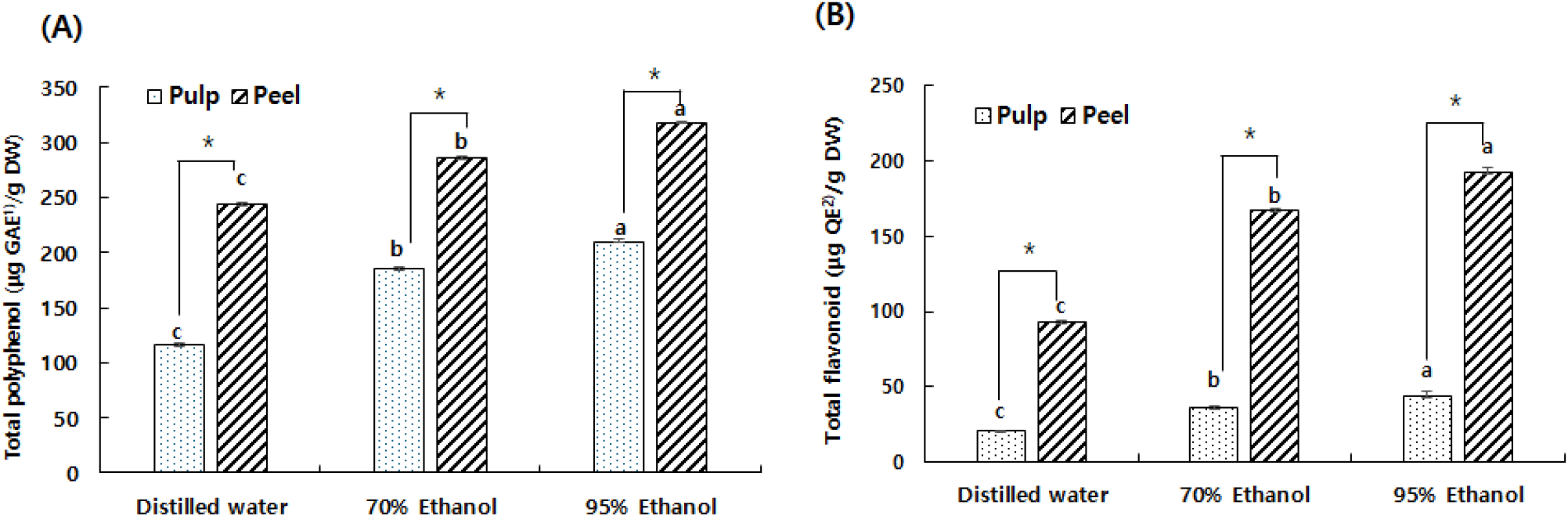
Flavonoid content showed similar trends. In distilled water extracts, pulp and peel contained 20.81 μg QE/g and 93.18 μg QE/g, respectively (4.48-fold higher in peel). For 70% ethanol, the values were 36.63 μg QE/g and 167.80 μg QE/g (4.58-fold higher in peel), and for 95% ethanol, 43.94 μg QE/g and 192.70 μg QE/g (4.39-fold higher in peel). The higher flavonoid content in peel is attributed to high concentrations of hesperidin and naringin (Yang et al., 2019), which accumulate in the flavedo and albedo layers to protect against pathogens and oxidative stress (Rosa et al., 2023). Pulp, consisting mainly of sugars and water, contains diluted polyphenols and flavonoids, resulting in lower extraction efficiency (Garcia-Nicolas et al., 2023). Ethanol, particularly at 95%, is effective for extracting both polar and nonpolar antioxidant compounds such as flavonoids and carotenoids (Lee et al., 2015; Ofori-Boateng and Lee, 2013). Water extracts exhibited lower antioxidant content, suggesting that organic solvent extraction may be more effective for functional applications.
C. unshiu peel is rich in polyphenols and flavonoids, which are closely related to antioxidant, anti-inflammatory, antimicrobial, and anticancer activities (Koolaji et al., 2020; Li et al., 2020; Sande et al., 2018). While peel is traditionally discarded or used as animal feed, these results highlight its potential as a high-value dietary or medicinal resource.
In this study, the antioxidant activities of C. unshiu pulp and peel were assessed after extraction with distilled water, 70% ethanol, and 95% ethanol. The effects of solvent type and sample part were compared, and the results are presented in Table 4.
DPPH radical scavenging activity of C. unshiu peel was significantly higher than that of pulp. In distilled water extracts, peel exhibited 65.61% activity, whereas pulp showed 41.77%. In 70% ethanol extracts, peel activity was 66.51%, not significantly different from that of distilled water extract, while pulp activity increased to 44.68%. In 95% ethanol extracts, pulp and peel exhibited 54.87% and 68.30%, respectively, with peel activity approximately 1.24-fold higher than pulp. Ascorbic acid (40 μg/mL), used as a positive control, showed 65.83% DPPH radical scavenging activity, comparable to that of citrus peel.
ABTS radical scavenging activity also showed higher values in peel than in pulp. In distilled water extracts, peel showed 69.97% activity, whereas pulp showed 48.61%. In 70% ethanol extracts, peel and pulp activities were 72.47% and 67.48%, respectively, corresponding to an approximately 1.07-fold higher activity in peel. In 95% ethanol extracts, peel activity reached 72.36%, slightly higher than 70.21% observed in distilled water extracts, although the difference with 70% ethanol extracts was not statistically significant. Ascorbic acid (40 μg/mL) exhibited 60.27% ABTS radical scavenging activity, confirming that peel extracts generally had superior antioxidant activity.
Reducing power, measured as absorbance at 700 nm, was significantly higher in peel than in pulp. Distilled water extracts exhibited absorbances of 0.93 for peel and 0.74 for pulp. In 70% and 95% ethanol extracts, peel absorbance remained constant at 0.96, whereas pulp absorbance increased from 0.90 to 0.92. This indicates a relatively higher content of lipophilic antioxidant compounds in the peel.
Overall, antioxidant activity tended to increase with ethanol concentration, with 95% ethanol extracts showing the highest DPPH and ABTS scavenging activities. This suggests that nonpolar or moderately polar antioxidant compounds, such as flavonoids and essential oils, are more effectively extracted with higher ethanol concentrations. Similar trends were reported in previous studies, where flavonoids and essential oils in orange peel were most efficiently extracted at ethanol concentrations above 80%, maximizing total phenolic content and ABTS scavenging activity compared to water extracts (de Miera et al., 2023; Wang et al., 2023).
C. unshiu peel consistently exhibited significantly higher antioxidant activity than pulp (p<0.05). This difference is likely due to the enrichment of functional secondary metabolites in the peel. C. unshiu peels contain higher levels of flavonoids (e.g., hesperidin, naringin), phenolic compounds, vitamin C, carotenoids, and essential oils than pulp (Choi and Kim, 2022; Park et al., 2014). Structurally, peel tissues (albedo and flavedo) accumulate polyphenols and flavonoids as a defense mechanism against pathogens and UV radiation, which is closely associated with antioxidant activity (Choi and Kim, 2022).
In contrast, pulp contains relatively lower concentrations of antioxidant compounds and is more susceptible to losses during heat treatment and storage. Similar observations have been reported in other citrus fruits, such as grapefruit and orange, where peel functional compound content exceeds that of pulp (Elkhatim et al., 2018). Currently, most citrus peel is discarded as processing waste or used as animal feed, representing an economic and environmental loss. The present study demonstrates that peel exhibits superior antioxidant activity compared to pulp, highlighting its potential as a functional food ingredient, natural antioxidant, nutraceutical, or cosmetic raw material. Given the increasing consumer preference for natural antioxidants, citrus peel extracts could serve as alternatives to synthetic antioxidants. Various products, including antioxidant beverages, extract capsules, and natural preservatives, have already been developed using citrus peel, but standardized extraction and formulation technologies are required for broader application. Additionally, aromatic compounds in peel, such as limonene, have potential uses in flavoring and aroma applications, enhancing its value as a multifunctional ingredient with both bioactivity and sensory appeal.
In conclusion, C. unshiu peel exhibited markedly higher antioxidant activity than pulp, attributable to the concentration of diverse antioxidant compounds. Among the extraction solvents, high-concentration ethanol (95%) was most effective for extracting these compounds, consistent with the lipophilic nature of flavonoids and essential oils. These results provide scientific evidence supporting the use of C. unshiu peel as a functional antioxidant material and underscore its potential for value-added utilization of citrus processing byproducts and sustainable food resource management.
4. Conclusions
This study demonstrated that the peel of C. unshiu exhibits markedly higher functional compound content and antioxidant activity compared to the pulp. Proximate composition analysis showed that the peel is richer in ash, crude protein, and crude fiber, indicating a higher concentration of bioactive metabolites, whereas the pulp contains higher levels of moisture and fat. The C. unshiu peel also displayed more intense color characteristics and greater total phenolic and flavonoid contents, particularly under 95% ethanol extraction conditions. Antioxidant assays, including DPPH and ABTS radical scavenging activities and reducing power, consistently showed superior performance of the peel over the pulp, with 95% ethanol extracts providing the highest efficiency. These findings indicate that C. unshiu peel is not merely a byproduct of fruit processing but a valuable resource for functional food ingredients, natural antioxidants, and potential nutraceutical or cosmetic applications. Utilizing C. unshiu peel could enhance the value of processing byproducts and contribute to sustainable food resource management.