1. Introduction
Galangal (Alpinia officinarum Hance) is an herb widely used in Southeast Asia for both medicinal and culinary purposes. With a flavor similar to ginger, it effectively removes the fishy odor from meat and fish, making it a versatile ingredient in various dishes. Although its use was once limited due to reliance on wild harvesting, recent advances in cultivation have improved its availability (Lee and Rhee, 2011). The plant grows to a height of about 100-150 cm, with dark brown roots and broad leaves, and thrives in humid tropical regions such as Vietnam and southern China. It is commonly used fresh or dried in tea, wine, soups, porridge, and rice dishes (Ding et al., 2015).
Beyond its culinary use, galangal has long been valued as a medicinal ingredient. It has been traditionally used to treat stomach pain and as an antidiabetic agent (Benarba et al., 2015), as well as a cold remedy in China (Shang et al., 2012). These diverse physiological activities are largely attributed to its rich content of phenolic compounds (Ibrahim et al., 2018). Pharmacological studies have reported various bioactivities of galangal, including anticancer, antifungal, antibacterial, antiviral, anti-inflammatory, and antioxidant effects. For example, galangal extracts have been shown to induce cell death in breast cancer cells (MCF-7), inhibit Candida albicans growth, suppress nitric oxide production in macrophages, and exhibit antiviral activity against herpes simplex virus (HSV-1) (Jeong et al., 2008; Kurokawa et al., 1995). Moreover, galangal extract has been reported to increase bone density, suggesting an osteoporosis-preventive effect (Su et al., 2015), while also being studied for its potential in wound healing and the treatment of Alzheimer’s disease (Akgul et al., 2009; Guo et al., 2010).
Given these diverse physiological functions, galangal possesses strong potential for development as a functional food ingredient. However, despite its milder aroma compared to ginger, its domestic recognition remains low, and its commercial application as a functional food is still limited. Although galangal is frequently used as a spice, its incorporation into foods and functional products has been minimal, with only a few reported examples such as pineapple juice (Zhou et al., 2021), processed meat (Arfa et al., 2022), and seolgitteok (Kim, 2024a).
A previous study (Kim, 2024a) attempted to develop seolgitteok containing galangal. However, the product’s sensory acceptability was reduced due to galangal’s distinct bitterness and aroma. Such sensory limitations are also observed in products containing other bitter ingredients, including cookies and jelly with chestnut inner shell powder (Joo and Choi, 2012; Lee and Surh, 2021) and muffins with aronia (Lee, 2024). To address this issue, the present study incorporated galangal powder into muffins, which possess inherent sweetness that can help mask bitterness. Moreover, muffins require less gluten formation compared to white bread, allowing for easier incorporation of functional ingredients without compromising product quality (Kim et al., 2012).
Therefore, this study aimed to develop muffins containing galangal powder that maintain desirable sensory properties while maximizing its functional benefits. The findings of this study are expected to provide fundamental data for the broader application of galangal in functional food development.
2. Materials and methods
For this experiment, galangal (Alpinia officinarum Hance) produced in Indonesia, was purchased from online market (Coupang Inc., Seoul, Korea). The sample was ground and passed through a 40-mesh sieve, then stored at −18°C until use. Weak flour (CJ ceiljedang Co., Kyungnam, Korea), sugar (Samyang Foods Co., Daejeon, Korea), Anchor butter (Fonterra Co., Auckland, New Zealand), and baking powder (Jenico Foods LTD., Seoul, Korea) were used. Fresh eggs were purchased from a local market.
Galangal powder (GP) was added at ratios of 0%, 3%, 5%, 7%, 9%, and 12% relative to the weight of weak flour. Muffins were prepared following the method of Kim and Kim (2019). The mixture was sifted three times to ensure thorough blending of the flour and GP before use. Muffins were prepared using the cream method, with ingredient ratios following Table 1. Butter was mixed using a baking mixer (5K5SS, KitchenAid, Benton Harbor, MI, USA) at speed 4 for 1 min. Sugar was added to the creamed butter and mixed at speed 1 for 30 s, followed by mixing at speed 4 for 1 min and 20 s. Eggs were then added in three portions and mixed at speed 10 for 3 min. Weak flour, baking powder, GP, and milk were subsequently added, and the ingredients were mixed to form a batter. The resulting batter was portioned into 24-hole muffin molds (7×4.5×11 cm), with each mold filled with 65 g of batter. They were baked in an oven (FDO-7103, Dae-Young Machinery Ltd., Seoul, Korea) preheated to 180°C top heat and 160°C bottom heat for 22 min, then cooled at room temperature for 1 hour.
The moisture content was analyzed using atmospheric heating drying in a 105°C oven following the AOAC (1990). To obtain data on the pH and soluble solids content of muffins, 2 g of the sample was mixed with 18 mL of distilled water and vortexed for 3 min. The resulting solution was then centrifuged at 3,061 ×g for 30 min using a centrifuge (Combi 514R, Hanil Electrics Ltd., Seoul, Korea). The supernatant was collected, and the pH (a-AB33PH, OHAUS Co., Parsippany, NJ, USA) and soluble solids content were measured. The dilution factor was not separately reflected in the measured values. The soluble solids content was expressed in °Brix.
The weight of muffins containing GP was measured five times using an electronic scale (AR1530; OHAUS Co.). The baking loss rate was calculated using the following formula. Baking loss rate was calculated using the following formula, as described by Jung et al. (2010).
BW: Batter weight
CW: Cake weight
The volume, symmetry, and uniformity index of the muffins were measured. The muffins were cut vertically through their center, with points A and E marked at the ends of the cut surface and the center designated as C. A line B was drawn at the midpoint between A and C, and a line D was drawn at the midpoint between C and E. The height of the muffin was then measured at each point. The calculation formula was as follows. The results from five measurements were averaged, and the standard deviation was calculated.
After baking, muffins were cooled at room temperature for 1 h. Each muffin was then cut vertically from top to bottom through the center to assess internal color. Color was measured five times using a colorimeter (CM5, Konica Minolta, Tokyo, Japan) and average L*, a* and b* values were recorded. The white plate had an L* value of 99.47, a* value of −0.16, and a b* value of −0.50.
To measure the texture of muffins, seven repeated measurements were performed using a Texture Analyzer (TA-XT Ⅱ, Stable Micro System, Surrey, England). TPA (Texture Profile Analysis) parameters such as hardness, adhesiveness, springiness and cohesiveness were measured from the force-time curve obtained when the probe was consecutively penetrated twice into the manufactured sample (top diameter 7 cm, bottom diameter 4.5 cm, height 4.5 cm). Measurement conditions were as follows: Probe: p75 (75mm diameter cylinder aluminum); Pre-test speed was 1.0 mm/sec and Post-test speed was 1.0 mm/sec. Strain was 50% and Trigger force was 10.0 g.
The quantitative descriptive analysis test for muffins made with GP was conducted by 30 students from W University as sensory evaluators. The test was performed between 3:00 PM and 4:00 PM on an empty stomach, considering the test method, training, and characteristics. The finished samples were cooled at room temperature for one hour. Each 2×2×2 cm samples were placed on a white plate. Each sample was labeled with a random number. Participants were instructed to rinse their mouths with water immediately after evaluating each sample. The samples were evaluated based on their color, softness, moisture, distinct odor, sweetness, and bitterness. Each characteristic was rated on a scale of 1 to 9, with 9 being the highest.
A sensory evaluation of muffins made with added GP was conducted with 30 students from W University who had received thorough training in sensory evaluation procedures. The sample preparation and evaluation methods followed the same protocol as the quantitative descriptive analysis. Evaluation items included acceptability based on appearance, flavor, texture, taste, and overall impression. Evaluation scores were assigned using a 9-point scale, where a higher score indicated greater acceptability. A sensory evaluation was conducted after receiving exemption approval from the Institutional Review Board of W University (approval no. 1041549-250418-SB-202).
Extracts for antioxidant activity analysis were prepared as follows. The muffins were freeze-dried and powdered. For antioxidant activity evaluation, 30 mL of methanol was added to 10 g of dried powder, and the mixture was stirred and extracted at room temperature for 1.5 h. The extracted samples were centrifuged at 3,061 ×g, 4°C for 30 min using a centrifuge (Combi 514R, Hanil Electrics Ltd., Seoul, Korea). The supernatant was collected, filtered through syringe filters (0.45 μm, Hyundai Micro, Seoul, Korea), and used as the sample to compare antioxidant activity differences. To prevent oxidation, the samples were stored at −20°C.
The 2,2-diphenyl-2-picrylhydrazyl (DPPH) radical scavenging activity was measured in galangal-added muffin methanol extracts using the method adapted from Blois (1958). To 50 μL of extract, 150 μL of 0.4 mM DPPH solution (Sigma-Aldrich, St. Louis, USA) was added. The mixture was reacted for 30 min in the dark place, and the absorbance was measured at 517 nm. The DPPH radical scavenging activity results were expressed as the percentage difference in absorbance between the sample solution addition group and the non-addition group.
S: Absorbance of the sample
B: Absorbance of the blank
C: Absorbance of the control (without sample)
ABTS radical scavenging activity was measured following the method of Fellegrini et al. (1999). One day prior to the experiment, an equal volume of 7.0 mM ABTS and 2.45 mM potassium persulfate was mixed and reacted in the dark place to form the ABTS radical cation. The ABTS stock solution was diluted in phosphate-buffered saline (PBS, pH 7.4) until an absorbance of 0.70±0.03 was achieved at 732 nm. To 10 μL of the extract, 190 μL of the diluted ABTS solution was added, and the absorbance was measured at 732 nm. The experimental results were repeated three times and presented as the mean and standard deviation. The results of the ABTS radical scavenging activity were expressed as the percentage difference in absorbance between the group to which the sample was added and the group that was not treated.
S: Absorbance of the sample addition cell
C: Absorbance of the control (without sample)
Total polyphenol content (TPC) was measured using the method described by Chung and Kim (2023). The sample was a methanol extract used for measuring radical scavenging activity. For TPC analysis, 30 μL of extract was mixed with 240 μL of distilled water, followed by the addition of 50 μL of 2M Folin-Ciocalteu’s reagent (Sigma-Aldrich). After reacting for 3 min, 30 μL of 1N Na2CO3 (Daejung, Siheung, Korea) was added, and the mixture was allowed to react at room temperature. The absorbance was measured at 660 nm using spectrophotometer (Optizen POP, Mecasys, Daejeon, Korea). A standard curve was prepared using gallic acid (Sigma-Aldrich) as the reference compound. Each sample was analyzed in triplicate, and the results were expressed as gallic acid equivalent (GAE) per gram.
IBM SPSS Statistics (version 29, IBM Corporation, Armonk, NY, USA) was used to perform an analysis of variance (ANOVA), a Duncan’s multiple range test, and a test to analyze significant differences between samples (p<0.05). Moisture content, pH, soluble solids, color properties, radical scavenging activity, and total polyphenol content were measured three times, baking properties were measured five times, and textural properties were measured seven times. The results were expressed as mean±standard deviation. A t-test was conducted to verify the significance of the difference in characteristics between GP and wheat flour.
3. Results and discussion
Table 2 presents the physicochemical properties of flour and GP, which were analyzed to understand their potential impact on muffin characteristics. The moisture content of flour (12.67%) was not significantly different from that of GP (12.88%). The pH results showed that the pH of the wheat flour was 6.24, significantly higher than the pH of the GP (5.13) (p<0.001). The relatively high pH of the muffins is attributed to the intrinsic pH of wheat flour, which is approximately 6.6 (Han et al., 1989). Conversely, the low pH of GP may be associated with its phenolic acids, flavonoids, and lignans (Lin, 2007).
The soluble solids content of wheat flour was 0.9, while that of GP was significantly higher at 1.97 (p<0.001). GP’s soluble solids are thought to be influenced by the monosaccharides present in galangal, such as galactose, glucose and fructose (Ma et al., 2015). The sugar content in galangal is believed to influence the product’s soluble solids content. Steamed rice cakes containing galangal also had significantly higher soluble solids than the control group (Kim, 2024a).
Color measurement results showed a significant difference in L* value between flour (92.74) and GP (65.55) (p<0.001), and a significant difference in redness between flour (0.28) and GP (6.91) (p<0.001). The yellowness (b*) value of flour was 8.48, whereas that of galangal powder (GP) was 24.46, indicating a significant difference (p<0.001). The color properties of galangal are due to its original color and enzymatic and non-enzymatic reactions occurring during the drying process. These characteristics are expected to significantly influence the appearance of the final products.
An experiment was conducted to determine the physicochemical changes resulting from the substitution of flour with galangal in muffins and to evaluate the effects on muffin quality. The results are presented in Table 3. Since the moisture content of GP was similar to that of flour (Table 2), varying GP addition levels did not significantly affect the moisture content of muffins. Similar results were observed in muffins containing mulberry powder (Yoon and Shin, 2024).
As the GP additive content increased, the pH of the muffins decreased significantly (p<0.001). The pH of control was 9.85, while the 3%, 5%, 7%, 9%, and 12% groups showed progressively lower values of 9.53, 9.67, 9.65, 9.56, and 9.53, respectively. This reduction in pH is considered to result from the inherently lower pH of galangal compared to that of wheat flour (Table 2). And this low pH of galangal is due to acidic compounds in galangal, such as galangal acetate, syringic acid, gallic acid, and cinnamic acid (Ajobair, 2022).
The soluble solids content of muffins with different GP levels was 2.76 for the control, 2.73 for 3%, 2.70 for 5%, and 2.63 for 7% or higher, showing no significant difference from the control. Although GP is slightly sweeter than flour (Table 2) and was expected to increase soluble solids, no significant differences were found. This may be because the added sugar (19% w/w) masked the effect of GP. Similar results were reported for muffins with freeze-dried ramie powder and aronia powder (Lee, 2024).
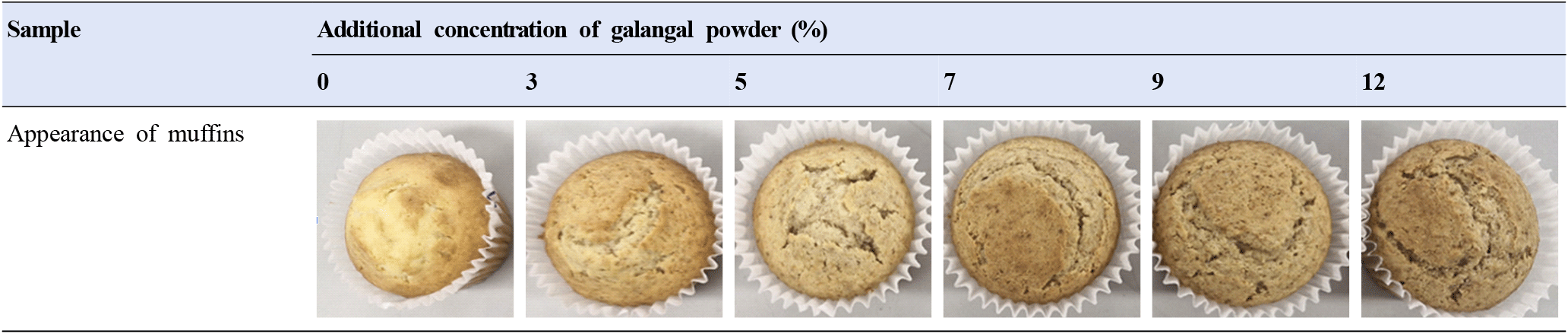
As GP content increased from 0% to 12%, the muffins became darker. The L* value of control was 75.05, while all GP treatments showed significantly lower L* values (p<0.001) because GP itself had a low L* value. Redness also increased significantly with higher GP content (p<0.001). GP was much darker and redder than wheat flour (Table 2, Fig. 1), leading to lower lightness and higher redness in the muffins. The GP treatments also showed significantly lower yellowness than the control (p<0.001). Food color is affected by factors such as moisture, temperature, ingredients, and browning from the Maillard reaction during baking (Shin et al., 2007). Therefore, changes in product color were expected to affect appearance acceptability. The observed decrease in brightness and yellowness and increase in redness were similar to results for muffins with added bran (Hwang et al., 2024).
Since the quality of muffins is largely influenced by flour, an experiment was conducted to assess the effects on baking properties when flour was partially replaced with galangal, and the results of muffin baking property measurements are presented in Table 4. The control group weighed 53.81 g, and the galangal addition did not significantly affect muffin weight, showing no significant difference from the control group. This is consistent with earlier finding that GP did not significantly affect moisture content (Kim, 2024a). Comparing volume changes revealed that the group with added GP exhibited significantly lower volume than the control group. These results were similar to those of muffins containing aronia powder (Lee, 2024) and kiwi powder (Kim, 2022). According to Kim and Walker (1992), adding ingredients can dilute the gluten network, weakening its structure and reducing its ability to retain gas during baking, resulting in limited volume expansion. However, there were no significant changes in symmetry and uniformity, and these results were similar to those of studies on hibiscus muffins (Kim and Kim, 2019) and whole grain glutinous sorghum muffins (Bae et al., 2012). Replacing wheat flour with galangal was expected to decrease gluten content and negatively affect baking properties. However, aside from a slight reduction in volume, no notable changes were observed, suggesting that any adverse effects on product quality would be minimal. This limited impact may be attributed to the already low gluten content of the weak flour used in the experiment.
Table 5 presents the texture of muffins prepared with varying amounts of galangal powder (GP). Since altering the flour content affects the gluten content, which in turn can strongly influence product texture, an experiment was conducted to evaluate the changes in texture resulting from substituting flour with galangal. Compared to the control, the GP treatments exhibited significantly lower hardness. It is generally known that muffins with well-developed pores increase gas retention capacity, leading to reduced density and lower hardness (Jung and Cho, 2011). This reduction in hardness due to the additive was similar to the results for buckwheat flour-added muffins and was interpreted as a tendency to soften the internal structure by positively affecting gas retention and expansion (Bae and Jung, 2013). Typically, when hardness decreases, product volume increases, enhancing gas retention and expansion. This reduction in hardness has been attributed to decreased density (Kim and Lee, 2012). However, in this experiment, volume decreased and moisture content remained unchanged, yet hardness still decreased. Therefore, further research is needed to determine the cause.
Springiness is the degree to which an object returns to its original state after being deformed by an external force. Compared to the control group, the group with GP added showed a significant decrease.
GP treatments had significantly lower cohesiveness than the control group. Cohesiveness is the force that holds food together and maintains its shape. This decrease may be attributed to weakened interactions between starch granules and a lower density caused by increasing levels of GP. This trend is consistent with previous findings regarding muffins containing wheat bran. (Yun et al., 2015).
Gumminess, defined as the energy required to chew a food until it is ready to swallow, was significantly lower in the GP treatments than in the control (p<0.001). Similar trends were reported in muffins prepared with coffee grounds powder (Kim et al., 2016). Gumminess is related to hardness and cohesiveness, and the decrease is considered to be due to the reduced cohesiveness (Kim, 2024b).
Chewiness is defined as the energy required to chew a solid food until it is ready to be swallowed, and it is typically calculated as the product of two parameters: gumminess and springiness. The reduced chewiness observed in the GP-treated samples is considered to result from the previously noted decreases in gumminess and springiness (Kim, 2024b). This result can be attributed to the fact that as cohesiveness decreases, the ability to maintain a lumpy form diminishes, increasing the tendency to crumble into powder and reducing the chewing sensation (Onyango et al., 2011). It may be debatable whether the observed decreases in texture parameters actually improve muffin texture.
Muffins prepared by replacing wheat flour with GP exhibited changes in physiochemical, baking, texture properties. These changes were further evaluated through a quantitative descriptive analysis using the five human senses, and the results are presented in Table 6. The characteristic color and specific odor of galangal significantly intensified as the GP addition amount increased (p<0.001). Conversely, tenderness, moistness, and sweet taste showed no significant differences between groups. The bitter taste significantly increased with the addition of more GP (p<0.05). This increase in galangal’s inherent bitterness aligns with the results of GP-added sulgidduk (Kim, 2024a). The increase in the additive’s inherent bitterness was expected to affect consumer acceptance.
A consumer acceptance test was conducted to evaluate the effect of galangal addition on overall muffin preference and to determine the optimal addition level. The results are presented in Table 7. GP addition did not show a significant difference in the acceptance of muffin appearance, flavor, texture, or taste. Based on the results of color property changes according to the GP treatment (Table 3), a significant change in appearance acceptability was expected; however, no significant difference was observed. This result may be attributed to consumers’ familiarity with brown-colored products. A similar result was reported in muffins containing chestnut inner shell powder (Choi et al., 2024). However, the GP 9% addition group showed no significant difference in overall acceptability from the control group. Meanwhile, the 12% addition group showed a significant decrease. In contrast to the results for steamed rice cakes made with GP addition (Kim, 2024a), where overall acceptability significantly decreased due to the strong aroma and bitterness inherent to GP, acceptability levels remained comparable to the control group up to the 9% addition group. This might be because the muffin recipe contained a relatively high amount of sugar (19%), which helped balance the natural bitterness of galangal and maintain a pleasant taste, thereby preserving overall acceptability. The addition of GP, which possesses heat-stable antioxidant activity during muffin production, was found to effectively enhance the antioxidant capacity of the muffins, making it suitable for the development of functional health-promoting muffins.
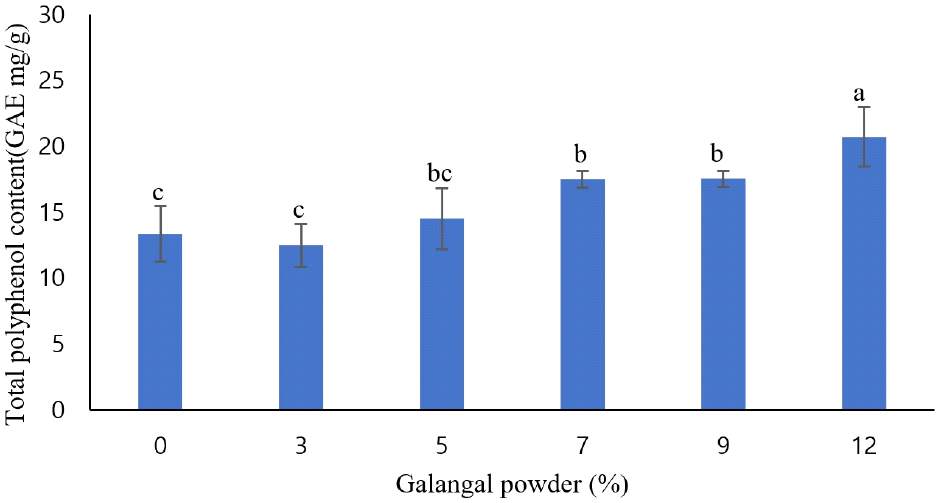
An experiment was conducted to determine whether the polyphenol compounds present in galangal could influence the total polyphenol content of muffins and thereby enhance their potential as a functional food, with the results presented in Fig. 2. The control group had TPC of 13.35 gallic acid equivalents (GAE) mg/g. TPC increased significantly as GP addition level increased. No significant differences were observed between the groups supplemented with 3% and 5% GP and the control group. However, groups with 7% or higher addition showed significantly higher TPC levels than the control group, and the 12% addition group exhibited the significantly highest TPC level (p<0.01). Gallic acid, catechin, quercetin, catechol, and isorhamnetin have been reported as the major phenolic compounds in galangal (Aljobair, 2022). Galangal has been reported to have the highest phenolic compound content compared to similar plants such as ginger, turmeric, and cardamom (Ivanovic et al., 2021). Therefore, the high phenolic compound content of galangal is considered to have influenced the phenolic content of the muffins containing galangal. The increase in total phenolic content due to the addition of ingredients showed a similar trend to the results of muffins with added Andrographis paniculata powder (Kim and Shin, 2025).
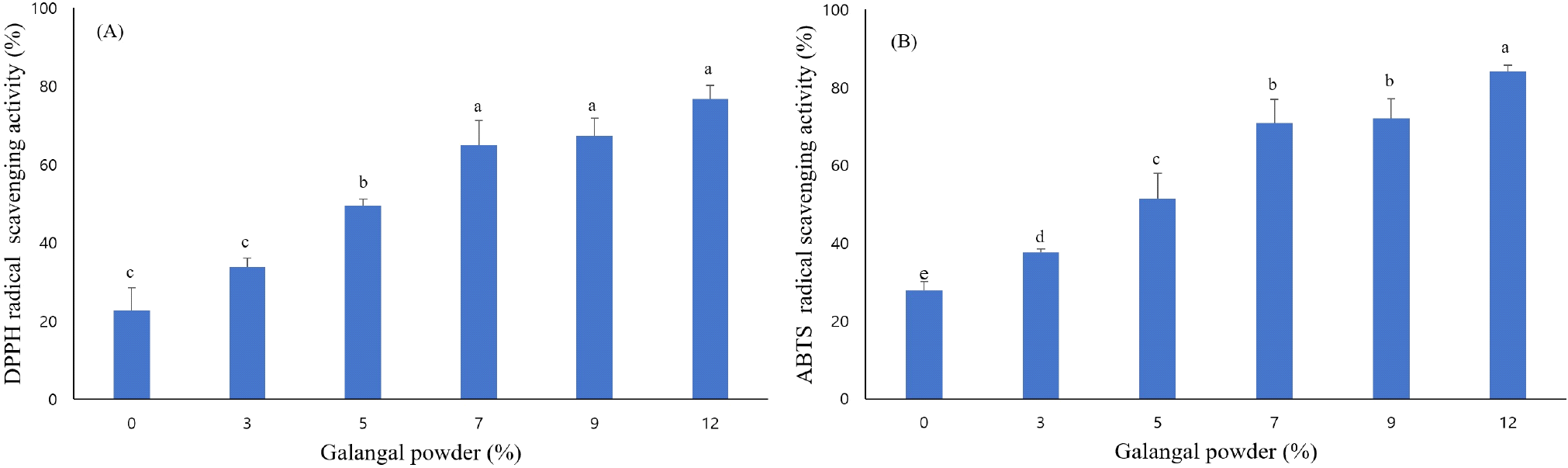
DPPH radical scavenging activity was measured to evaluate whether the addition of galangal enhanced the antioxidant properties of the muffins, and an experiment was conducted to confirm the significant improvement in product functionality, with the results presented in Fig. 3. There was no significant difference in DPPH radical scavenging activity between the control group and the group with a 3% addition. However, groups with a 5% or higher addition showed a significantly higher activity. ABTS radical scavenging activity increased significantly from 38% in the 3% addition group compared to 28% in the control, showing significant differences between groups. The 12% addition group exhibited a high activity at 84%. DPPH is influenced by the content of phenols and flavonoids (Yoon and Shin, 2023). This result aligns with findings from Kim (2024a), where galangal-added steamed rice cakes also showed a significant increase in DPPH radical scavenging activity with increasing galangal addition. The high antioxidant capacity observed in this study can be attributed to the high phenolic compound content in galangal and the high flavonoid content reported in previous studies (Kim, 2024a). Notably, the retention of antioxidant activity after high-temperature baking suggests its thermal stability and supports its potential use in functional baked products.
4. Conclusions
Muffins were prepared with 3-12% galangal powder (GP) relative to flour. GP showed similar moisture content to flour but had lower pH, higher soluble solids, and darker color with increased redness and yellowness. Muffins with added GP showed no significant differences in moisture or soluble solids, but pH decreased as GP increased. Lightness and yellowness decreased, while redness increased. Baking properties such as weight, loss rate, symmetry, and uniformity were unaffected, but volume decreased in all GP treatments. Texture parameters (hardness, springiness, cohesiveness, gumminess, chewiness) decreased significantly. Color, odor, and taste intensity increased with GP addition, while tenderness, moistness, and sweetness were unchanged. Sensory preference showed no significant difference in appearance, flavor, texture, or taste, though 5% and 7% groups had higher acceptability than 12%. Total polyphenol content and antioxidant activities (DPPH radical and ABTS radical scavenging activities) increased significantly with GP addition, with the highest values at 12%. Considering these results collectively, a GP addition level of 5-7% is considered feasible for muffin production. The addition of 5-7% galangal powder to muffins effectively masked its inherent bitterness while maintaining overall acceptability. Furthermore, the enhanced antioxidant activity supports its applicability as a functional food ingredient.