1. Introduction
Global food systems are increasingly challenged by environmental degradation, food insecurity, and public health issues. Sustainable diets have emerged as a key strategy for promoting ecofriendly, economically viable, and socially equitable foods that provide adequate nutrition while minimizing ecological impacts and optimizing natural and human resource use (Chiriacò et al., 2022; Gialeli et al., 2023; Hazley and Kearney, 2024; Karavasiloglou et al., 2022; Lairon, 2010; Selcuk et al., 2023).
Organic food has garnered substantial attention in sustainable diet development owing to its use of natural, low-chemical, and ecofriendly production practices (Ahmed et al., 2020; Baudry et al., 2019; Vo et al., 2025). These products are grown and processed without synthetic pesticides, herbicides, genetically modified organisms, or artificial additives (Hashemi et al., 2024; FiBL and IFOAM, 2020). Under the Environmentally-Friendly Agriculture, Fisheries, and Forestry act in Korea, environmentally friendly agriculture is defined as the production of agricultural, livestock, and fishery products within a healthy ecosystem, wherein the use of synthetic pesticides, chemical fertilizers, antibiotics, and other chemical inputs is minimal.
Organic farming prioritizes the simultaneous maintenance of soil health, animal welfare, and ecosystem balance with sustainability principles. Consumers are primarily attracted to organic food due to the health benefits, food safety, and increasing environmental consciousness (Köse, 2020; Mie et al., 2017; Rahman et al., 2024). In some studies, organic food consumption has been associated with potential health benefits, including a reduction in obesity and body mass index, improved blood nutrient composition, and decreased risks of maternal obesity, pregnancy-associated preeclampsia, non-Hodgkin lymphoma, and colorectal cancer (Rahman et al., 2024). Additionally, organic agriculture is believed to protect the environment by enhancing biodiversity, preventing soil erosion, and improving climate change resilience (Ansari and Khan, 2024; Gialeli et al., 2023). Organic produce also tends to be less contaminated with pesticides and less toxic than conventional alternatives (Castro Campos and Qi, 2024).
However, organic food may not represent a comprehensive solution for sustainable diets. Organic agriculture may produce lower yields than conventional farming, potentially leading to increased land use and ecosystem degradation. Furthermore, the nutritional superiority of organic food remains inconclusive, and the higher prices reduce market accessibility (Ansari and Khan, 2024; Köse, 2020; Niggli, 2015). Therefore, evaluating the roles of organic food in the field of sustainable diets necessitates a comprehensive analysis of its environmental impact, social value, and economic viability.
The term of sustainability is defined first in the 1987 report of the UN World Commission on Environment and Development titled “Our Common Future” (World Commission on Environment and Development, 1987). This report emphasized the need for a balance between economic growth, social justice, and environmental protection, rather than simply environmental protection. In other words, this report presented for the first time the three pillars of environmental, economic, and social as integrated components of sustainability. Therefore, these three dimensions need to be used for assessing the sustainability of organic food.
Food and Agriculture Organization (FAO) defines a sustainable diet as having minimal environmental impact while ensuring food and nutritional security and promoting health for present and future generations, and fulfilling the following factors (FAO, 2012);
-
protect and respect biodiversity and ecosystems.
-
be culturally acceptable.
-
be economically fair and affordable.
-
be nutritionally adequate, safe, and healthy.
-
optimize natural and human resources.
Because FAO’s definition of sustainable diet is most widely used, above five factors could be used to assess the position of organic food in terms of sustainability.
Among 24 European countries that have integrated sustainability into their national dietary guidelines, only two explicitly mentioned organic food (Kim, 2024). This highlights the need for a critical and evidence-based evaluation of the sustainability of organic food consumption, along with the current strengths and limitations in terms of the FAO sustainable diet criteria.
Despite the growing interest in sustainable diets, many food educators and policymakers tend to perceive the promotion of organic food as the primary solution to addressing climate change and environmental concerns. However, sustainable food systems require a broader and more balanced understanding that considers not only environmental but also social and economic dimensions. Therefore, it is necessary to accurately determine the position of organic food within the framework of sustainable dietary education. Based on this need, this review was conducted to provide food educators and researchers with evidence-based insights to guide educational strategies and policymaking.
This review aimed to determine the status of organic food in terms of environmental, societal, and economic sustainability as well as its alignment with FAO sustainability standards. We critically analyzed recent articles addressing the benefits and limitations of organic food. Our findings could contribute to refreshing and deepening perceptions on organic food and facilitating the implementation of food education in the context of sustainable food system.
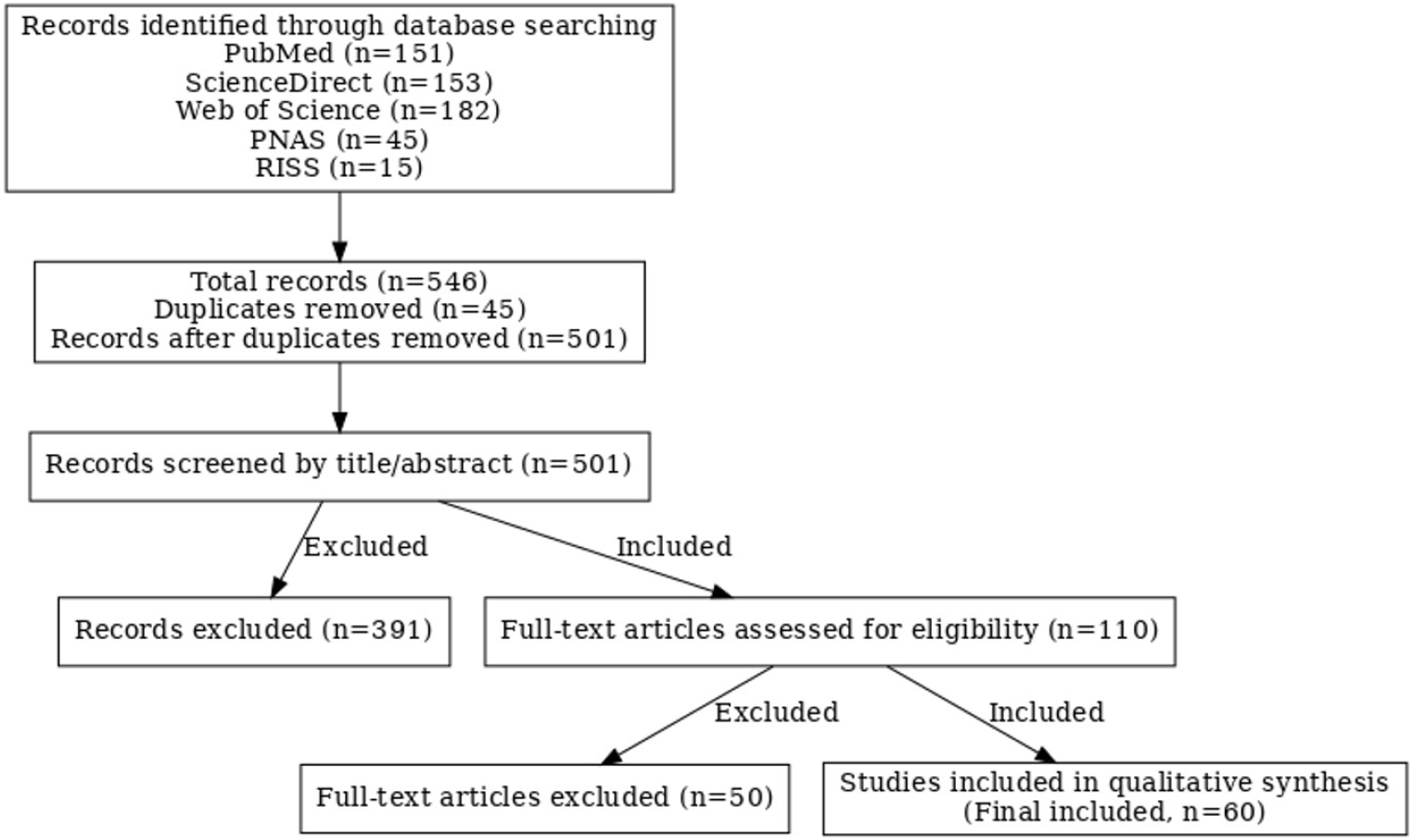
This systematic review followed the Preferred Reporting Items for Systematic Review and Meta-Analyses (PRISMA) guidelines (https://www.prisma-statement.org/). We initially searched articles published between January 2010 and June 2025 using the PubMed, ScienceDirect, Web of Science, PNAS, and RISS databases, and identified articles using the keywords “organic food,” “sustainable diet,” “life cycle assessment,” and “environment” or “dietary guideline” to critically evaluate the current position of organic food in the field of sustainability. In total, 546 records were identified. After removing 45 duplicates, 501 unique records remained. After screening their titles and abstracts, 391 studies were excluded. The full text of 110 articles was assessed for eligibility, and 50 were excluded due to irrelevance or insufficient data. Ultimately, 60 studies were included in the qualitative synthesis (Fig. 1).
2. Status of organic food in terms of environmental, societal, and economic sustainability
Increasing concerns over environmental degradation and climate change have escalated interest in sustainable agricultural practices. We reviewed the environmental sustainability of organic food production in the most recent literature and identified its benefits and limitations.
We could summarize the environmental benefits of organic food in terms of the sustainable development goals (SDGs), particularly SDG13 (climate action) and SDG15 (life on land) (Ansari and Khan, 2024) as following.
Organic farming practices that prohibit synthetic pesticides and herbicides promote biodiversity in agricultural landscapes and surrounding environments (Bengtsson et al., 2005; Tscharntke et al., 2021). Less pesticide use and diverse crop rotations create favorable conditions for pollinators, soil microbes, and wildlife compared with those on conventional farms. Meta-analyses indicated that species richness was around 34% higher and organisms were 50% more abundant in organic than conventional farming systems (Tscharntke et al., 2021).
Organic farming practices rely on various practices such as crop rotation; organic fertilizers such as compost, green manure, animal manure; and minimal tillage for enhancing soil health (Niggli, 2015). These methods improve organic matter content, soil structure, and water infiltration and retention and reduce soil erosion risk. Water infiltration capacity may be 20-40% higher in organically managed loess soils.
Organic agriculture can contribute to efficient water uses by improving soil structure and water retention. The water footprint for organic carrot production is >5-fold lower than that of conventional production (Knorr, 2024). Reduced reliance on synthetic fertilizers and pesticides minimizes groundwater contamination from agricultural runoff (Bourges, 2020).
Average GHG emissions per land unit are generally 43% lower for organic than conventional farming owing to the limited use of synthetic fertilizers—an important source of nitrous oxide (N2O) emissions (Chiriacò et al., 2022). Lower yields can potentially increase emissions per product unit, though the overall impact of organic food in terms of GHG emissions per product unit of fruits, vegetables, and livestock products is still ~12% lower than that of conventional food. Improved organic farming management practices can greatly reduce the yield gap and enhance the sustainability of organic agriculture in terms of GHG emissions (Chiriacò et al., 2022; Seufert et al., 2012).
Organic agriculture faces several challenges despite its environmental benefits as following.
Meta-analyses have found that crop yields are consistently 20-30% lower in organic than in conventional agriculture. Organic farming expansion to satisfy the global food demand could increase deforestation and land use (Seufert et al., 2012).
While organic farming may emit less GHGs per land unit, emissions per product unit may be similar to or even higher than conventional farming owing to lower yields (Chiriacò et al., 2022). Specifically, methane and nitrous oxide emissions from organic livestock and manure management could offset some of the benefits gained from reduced synthetic fertilizer use (Wu et al., 2024a).
While organic food production has inherent environmental benefits, its overall sustainability is not solely determined by the production method. Long-distance transportation and packaging can greatly influence the environmental impact of organic food (Wu et al., 2024b). For instance, full life-cycle assessments (LCAs) have casted doubt on the sustainability of local food consumption. Replacing locally sourced chickens in the UK with Brazilian imports reduced GHG emissions by 32% due to more efficient large-scale farming practices in Brazil. This indicates that production efficiency in conventional systems may outweigh the environmental costs associated with long-distance transportation. Consequently, when evaluating the sustainability of organic food, it is crucial to comprehensively assess the entire life cycle including production, transportation, processing, and packaging, rather than focusing solely on the advantages of organic farming practices or food price per unit distance. LCAs are essential for providing a holistic understanding of the environmental footprint of organic and conventional food choices (Giampieri et al., 2022; Hashemi et al., 2024).
Organic food production not only affects the environment but also has important societal implications. Here, we explored the societal sustainability of organic food, focusing on public health, consumer perception, ethical considerations, and the socio-economic impact (Bosona and Gebresenbet, 2018), integrating recent findings of the roles of organic farming in public health and food security, consumer behavior, and rural economies, while addressing key challenges.
Organic food is often perceived as healthy due to reduced pesticide exposure and potentially higher nutrient levels (Vigar et al., 2019). While its superior nutrient content over conventional food is not definitive due to study limitations (Gomiero, 2018), some studies have found higher levels of iron, magnesium, and vitamin C in organic foods (Rahman et al., 2024). Additionally, organic fruits and vegetables may contain modestly elevated levels of phenolic compounds (Mie et al., 2017), while organic dairy and meat products may have high omega-3 fatty acid contents. Consumers of organic food tend to have healthy dietary profiles overall, due to high intake of fruits, vegetables, whole grains, and legumes, and low intake of meat. Such diets are associated with decreased risk of several chronic diseases. However, the link between organic food consumption and reduced risks of disease such as allergies and obesity may be confounded by overall healthy lifestyles.
Consumers prioritize food quality, ethical sourcing, and sustainability when deciding on purchases (Baudry et al., 2017). In fact, a large proportion of consumers in Europe and North America believe that organic food is healthier and more environmentally friendly than other foods (FiBL and IFOAM, 2020). Approximately 72% of Swedish consumers surveyed in an online questionnaire perceived organic food production as more sustainable than conventional methods (Bosona and Gebresenbet, 2018). The KRAV organic certification in Sweden has strict standards for animal welfare, health, social responsibility, and climate impact, which further enhances the appeal of organic products among ethically conscious consumers. Consequently, many Swedish consumers view organic food consumption as a social responsibility. Organic farming is associated with animal welfare and fair-trade principles that appeal to ethically conscious consumers. Ethical concerns such as labor conditions and environmental impact have progressively influenced purchasing behavior, especially among younger and higher-income consumers. This suggests that organic food serves as a platform for ethical identity expression, and its consumption can be interpreted as an expression of health, environmental, and ethical values (Li et al., 2019; Vega-Zamora et al., 2020). The main difference between consumers of organic and conventional foods is a demand for and appreciation of different market aspects. The growing “meaning out” trend among young consumers further emphasizes the connection to products that reflect ethical and sustainability values (Vega-Zamora et al., 2020).
Organic agriculture can enhance rural economies via price premiums that are on average 29-32% higher than conventional products, thereby creating employment opportunities and supporting small-scale farmers (Crowder and Reganold, 2015). Policies promoting organic agriculture contribute to rural development and economic resilience. Organic farms can be more profitable due to premium prices and potentially lower long-term production costs, despite potentially lower yields (Gomiero, 2018; Knorr, 2024; Tscharntke et al., 2021). The establishment of organized local markets can benefit organic farmers, especially in developing countries (Niggli, 2015).
To overcome the burden of high costs, efforts are underway to increase its accessibility to low-income populations (Hough and Contarini, 2023). Public institutions such as schools and hospitals in Denmark can obtain over 60% of their food organically because they are aided by subsidies and centralized procurement (Mie et al., 2017). Similarly, New York City’s Organic Food Voucher Program increased fruit and vegetable consumption by 23% among low-income families, demonstrating the impact of targeted accessibility programs. Community-supported agriculture and government subsidies are useful strategies for bridging affordability gaps.
Despite its benefits, organic food remains inaccessible for many consumers due to higher production costs and pricing (Azzurra et al., 2019) [10-40% more than conventional foods (Rahman et al., 2024)]. Furthermore, high organic certification costs (US $500 to $2,000 annually) can limit independent small-scale farming (Kumar, 2024). These costs contribute to structural inequity, where only large-scale farms or cooperatives can afford sustainable branding. Strategies such as government support and fair pricing models are needed to improve accessibility.
A common misconception is that organic food is completely pesticide-free. However, over 30 different natural or low-toxicity pesticides are permitted under organic standards, among which copper sulfate and other agents can accumulate in the environment (Tscharntke et al., 2021). For example, 69% and 61% of consumers who choose organic and conventional foods, respectively, in Germany believe that pesticide residues in foods are not permitted, indicating a trust gap due to misinformation (Koch, 2017)
By the end of 2023, organic agriculture represented only 2.1% of global agricultural land (99 million ha), and continues to grow at 2-3% annually (FiBL and IFOAM, 2025). However, increasing demand introduces scalability and ethical concerns. For instance, large-scale organic greenhouse farms in southern Spain rely on low-wage migrant labor, raising concerns about labor exploitation and social injustice, even under certified operations (Tscharntke et al., 2021).
Increasing consumer awareness and appropriate policies have driven the rapid expansion of organic agriculture over the past few decades. However, its economic sustainability remains an issue. We investigated the economic viability of organic food production in terms of profitability, employment, rural development, resilience to market fluctuations and demand, and policy interventions (Crowder and Reganold, 2015).
The organic food market has experienced rapid global growth, with increasing consumer demand translating into higher market prices (Azzurra et al., 2019). The global market reached €136.4 billion in 2023, and the European market recorded the strongest growth (FiBL and IFOAM, 2025). Price premiums and reduced dependence on input (minimizing the use of synthetic agricultural materials and promoting natural farming practices) can generate profit margins 35% higher than conventional farms (Crowder and Reganold, 2015). For instance, organic apple growers in the USA receive an average price premium of 20-40% over conventional apples.
Organic farming tends to be more labor-intensive than conventional agriculture due to obligatory practices such as manual weeding, composting, and biodiversity management, leading to increased employment opportunities in rural areas (Góralska-Walczak et al., 2025). This increased labor demand results in higher employment per hectare. Organic farms are burdened with 7-13% higher labor costs than conventional farms, largely owing to reduced mechanization and more diversified production systems (Crowder and Reganold, 2015). Similarly, a meta-analysis found that labor requirements can be 10-20% higher for organic than conventional farms, especially in horticultural and mixed farming systems (Morison et al., 2005)
The demand for organic products has remained stable even during economic downturns. Organic food sales during the 2008 financial crisis in the USA increased by 15.8% and reached $22.9 billion, whereas many segments of the conventional food market experienced stagnation or decline (Organic Trade Association, 2009). Furthermore, organic farmers often benefit from policy incentives that support economic stability. The Common Agricultural Policy (CAP) in the EU provides financial support for organic conversion and maintenance, helping to mitigate the risks associated with market volatility (FiBL and IFOAM, 2025). Collectively, these measures enhance the long-term economic sustainability of organic food systems.
Organic farming often faces 10-30% higher production costs than conventional systems, mainly due to increased labor intensity, reliance on organic inputs such as compost and manure, and certification expenses (Crowder and Reganold, 2015). Certification-related expenses and compliance with organic regulations pose financial barriers for small-scale and transitioning farms (Niggli, 2015). These costs are especially burdensome during conversion periods when yields may decline and price premiums have not yet been realized.
Organic food prices are on average 10-40% higher than conventional equivalents, limiting consumer accessibility, especially among low- and middle-income populations (Aschemann-Witzel and Zielke, 2017; Rahman et al., 2024). Price premiums are influenced by higher production costs, lower yields, and limited distribution channels. Lack of representation in mainstream retail outlets further limits accessibility, particularly in rural or economically disadvantaged areas (Gamage et al., 2023). Expanding supply chains and improving economies of scale are needed to reduce price barriers and broaden market access.
Large-scale meta-analyses have found that the average organic yields are typically 19-25% lower than conventional systems (Seufert et al., 2012). Yield gaps are most pronounced in cereals, vegetables, and monoculture systems, where deficits can exceed 30-50%, particularly under nutrient-limited or pest-prone conditions. While diversification techniques such as polycultures and crop rotations can be useful, low yields remain a major constraint to scaling up production and indirectly promote land-use expansion, raising sustainability concerns (Meemken and Qaim, 2018). Thus, improving efficiency in organic systems is a critical research priority. Promising directions include longer crop rotations, intercropping, and soil fertility enhancement through agroecological methods (Batáry et al., 2015; Ponisio et al., 2015).
Table 1 summarizes the key strengths and challenges in the field of organic food development, which can inform consumer decision-making.
| Dimension | Strength | Challenge |
|---|---|---|
| Environmental |
|
|
| Societal |
|
|
| Economic |
|
|
3. Assessment of organic food according to FAO’s sustainable diet criteria
This review re-evaluated the sustainability of organic food systems using the FAO framework (FAO, 2012), incorporating findings from over 60 studies and recent European initiatives on Sustainable Food-Based Dietary Guidelines (SFBDGs). We discuss the performance of organic agriculture across five FAO-defined dimensions: environmental integrity, cultural acceptance, economic fairness, nutritional adequacy, and resource optimization. While organic systems have clear strengths in biodiversity and health protection, limited yield and poor economic access are persistent challenges (Tscharntke et al., 2021).
Organic farming enhances soil health and biodiversity by minimizing synthetic inputs. Various species are enriched and abundant on organic farms owing to crop rotation and organic fertilization (Bengtsson et al., 2005). Organic soil also sequesters more carbon and reduces runoff, which benefits water cycling (FAO, 2012). However, lower organic crop yields may require land expansion to meet conventional farm yields, thereby undermining land-use efficiency. Although production efficiency is generally lower for organic than conventional farming, GHG emissions per food unit produced are comparable to and even higher than those of conventional farming (Seufert et al., 2012). Moreover, the environmental impact also depends on transportation and packaging (Tscharntke et al., 2021). Overall, organic food systems show robust environmental resilience in terms of biodiversity and soil health, despite limitations in yield and full life-cycle impacts.
Organic food enjoys widespread cultural acceptance with increasing consumer interest and a growing market, particularly in Europe. Swedish consumers consider organic production more sustainable than conventional methods and associate it with animal welfare (Bosona and Gebresenbet, 2018). However, the expansion of industrial-scale organic farms, particularly those resembling conventional monocultures, raises concerns about the erosion of traditional organic values such as localism and ecological harmony (Gamage et al., 2023; Rosa-Schleich et al., 2019). Therefore, although the cultural acceptability of organic food is robust, its industrialization risks diminishing core social and ethical values.
Organic farming contributes to economic fairness by improving farm profitability and supporting rural employment. Profitability gains in organic systems are primarily driven by price premiums and lower input costs, though the precise changes vary among studies and regions (Reganold and Wachter, 2016). Organic farms also tend to rely more on manual labor, especially on farms with low mechanization. Despite these benefits for producers, organic food products remain consistently more expensive than conventional alternatives, thus affordability remains a major concern for consumers. Although they vary by country and product, price premiums are a frequently cited barrier to widespread accessibility. Higher retail prices of organic products limit consumption by low-income households, reinforcing socio-economic disparities in access to healthy and sustainable food (Rosa-Schleich et al., 2019).
Policy interventions play crucial roles in addressing inequities. The United States Department of Agriculture (USDA) Organic Certification Cost Share Program mitigates the financial burden for producers by reimbursing certification costs, whereas the European Union subsidizes organic transition and maintenance under CAP. The Korean government provides direct payments to organic farmers based on crop type, certification, and land area (MAFRA, 2025). However, consumer access to organic food remains limited, with retail prices often nearly double those of conventional products. Organic farmland has recently declined in Korea and the market has become more niche (MODS, 2025). These factors hinder broader affordability and market integration. Therefore, the economic fairness and affordability aspects of organic food may play conflicting roles, benefiting producers while excluding economically vulnerable consumers.
Organic produce typically contains low levels of synthetic pesticide residues and nitrates (Mie et al., 2017). The abundance of dry matter content, essential minerals such as iron and magnesium, and antioxidant micronutrients is higher in organic than conventional vegetables (Lairon, 2010). Additionally, organic animal products are commonly enriched in polyunsaturated fatty acids. However, the nutritional superiority of organic food is not consistently supported. Health benefits are more reliably associated with reduced chemical exposure and food safety (Gomiero, 2018; Mie et al., 2017). Thus, organic food moderately adheres to nutritional adequacy and health requirements, with clear benefits in terms of lower contaminant exposure, although the nutritional advantages remain unclear.
Organic farming enhances sustainable resource use through reduced dependence on synthetic chemicals, diversification of crops, and management of soil organic matter (FAO, 2012). However, 19-25% lower yields raise concerns about land-use efficiency (Meemken and Qaim, 2018; Niggli, 2015; Seufert et al., 2012). Agroecological practices such as mixed cropping and longer rotations may narrow this gap to <10% (Ponisio et al., 2015). Widespread implementation of such strategies is crucial for improving overall efficiency and resilience in organic systems, which remains highly labor-intensive due to manual tasks such as weeding, composting, and pest control. While organic systems partially invest in resource optimization, labor demands and yield efficiency represent ongoing challenges (Morison et al., 2005; Rahman et al., 2024).
Organic agriculture greatly contributes to the environmental, ethical, and health-related pillars of sustainable diets as outlined by the FAO (FAO, 2012). However, the ongoing challenges of low yield, affordability, and industrial organic technologies must be addressed to ensure the long-term viability and equity of organic systems.
Moreover, most consumers as well as some food scientist or food educators seem to have superficial understanding on organic food such as being produced without pesticides, having high antioxidants or nutrients, supporting ecosystem with less pollution, and as healthier and ethical food compared with conventional food (Table 2). However, our review results revealed that organic food eventually shows a partial fulfillment of sustainable diet according to FAO’s criteria and these are summarized in Table 3.
| Aspect | Organic food | Conventional food | Reference |
|---|---|---|---|
| Farming method | Limited synthetic inputs, biodiversity-focused | High-input, yield-focused | Niggli (2015), Seufert et al. (2012) |
| Yield | Generally lower | Higher | Ponisio et al. (2015), Seufert et al. (2012) |
| Nutrient content | Possibly higher antioxidants/minerals | Standard nutrient levels | Lairon (2010), Smith-Spangler et al. (2012) |
| Pesticide residue | Not present (organic pesticides remain) | Present | Mie et al. (2017), Smith-Spangler et al. (2012) |
| Price | Higher (premium pricing) | More affordable | Azzurra et al. (2019), Crowder and Reganold (2015) |
| Environmental impact | Supports ecosystem, less pollution | Risk of soil and water degradation | Hashemi et al. (2024), Meemken and Qaim (2018) |
| Public perception | Seen as healthier and ethical | Considered efficient and accessible | Bosona and Gebresenbet (2018), Meemken and Qaim (2018) |
| FAO criterion | Assessment | Key insights |
|---|---|---|
| Environmental sustainability | Strong, but limited by yield gaps | Improved biodiversity and soil carbon, debatable yield and land use efficiency (Hashemi et al., 2024; Tscharntke et al., 2021) |
| Cultural acceptability | Strong | Consumer trust and ethical alignment, challenged by industrial-scale farming (Gamage et al., 2023; Rosa-Schleich et al., 2019) |
| Economic fairness and affordability | Mixed | Profitable for farmers, expensive for consumers, access supported by policy (Meemken and Qaim, 2018; Reganold and Wachter, 2016) |
| Nutritional adequacy and health | Moderate | Lower pesticide residue, possibly higher nutrients, health-focused more than nutrient-dense (Mie et al., 2017) |
| Optimization of natural and human resources | Low | Low chemical use, but larger land use and more labor input (Morison et al., 2005; Rahman et al., 2024) |
4. Role of food education in promoting sustainable food choices
Nowadays, it is essential to integrate sustainable diet into food education for better understanding and making decisions on their food choices by considering sustainable food system. While organic food has become popular due to its environmental and health benefits, its integration into food education or dietary guidelines is inconsistent among institutions and countries (Kim, 2024). This section examines how food education can incorporate organic food principles to promote sustainable consumption habits. A key aspect of advancing sustainable food systems involves both efficient production and consumer education, especially youth and families, regarding the benefits, limitations, and roles in a healthy diet (Hashemi et al., 2024; Tscharntke et al., 2021).
Educational programs should teach not only nutritional values but also the multifaceted environmental and socio-economic impacts of food choices within the broader context of sustainable food systems (Bosona and Gebresenbet, 2018; Bourges, 2020; Castro Campos and Qi, 2024; Rahman et al., 2024). While organic food education can provide an entry point for learning about sustainable agriculture, biodiversity, and climate change, it is crucial to recognize that organic food is not inherently sustainable owing to factors such as transport, processing, and waste (Azzurra et al., 2019; Hashemi et al., 2024; Wu et al., 2024a). The European Commission (2021) emphasizes the importance of embedding sustainability into school curriculums and food procurement systems. Programs that connect food choices to planetary health, encompassing a range of sustainable options beyond organic, can increase vegetable intake and reduce ultra-processed food reliance (FAO, 2012; Kim, 2024; Rahman et al., 2024). Food educators should aim to provide a more comprehensive understanding of sustainable diets, highlighting the various factors influencing sustainability, and foster a nuanced perspective on the role and limitations of organic food within this framework (Schader et al., 2015; Wu et al., 2024a). In addition, it is important to contextualize organic food education within national and local initiatives, such as eco-friendly school meal programs in Korea, where certified organic products are selectively incorporated into certain menus. These policy-driven practices demonstrate a growing institutional interest in sustainable food systems; however, they also highlight the necessity for educational approaches that move beyond organic certification alone. By integrating broader aspects of sustainability including environmental, societal, and economic dimensions, educational programs can better prepare students and the general public to critically evaluate diverse food choices and adopt balanced, evidence-based sustainable diets.
Consumer education must deliver the meaning and value of organic certification and food labeling to enhance sustainable decision-making. A significant portion of the public misinterprets “organic,” assuming it implies the complete absence of pesticides, which is an oversimplification that does not align with certification standards (Koch et al., 2017; Patton, 2024). Educational initiatives should distinguish between natural and synthetic inputs, and emphasize that organic farming follows regulated sustainability-focused practices rather than guaranteeing total safety (Kim, 2024). Furthermore, promoting sustainable diets requires educating consumers on interpreting a broader range of sustainability-related labels, including those for low-carbon footprints, local production and origin, and animal welfare, which collectively reflect the multifaceted nature of sustainable food systems. Because most consumers have some common misconceptions on organic food in terms of nutrition and safety by organic labels, fact-based information needs to be provided (Table 4). Clarifying such misconceptions and promoting clearer labeling can aid consumers in making truly informed decisions beyond just organic certification (Wu et al., 2024a).
| Common misconception | Fact |
|---|---|
| Organic = pesticide-free | Permitted natural substances are allowed; synthetic pesticides are restricted (Patton, 2024). |
| Organic food is always more nutritious | Some differences exist, but results are not consistent (Gomiero, 2018). |
| Organic guarantees complete safety | Safety standards may be met, but no food is risk-free (Azzurra et al., 2019). |
Most European countries recognize the urgency of addressing climate change and promoting sustainable consumption, and are actively integrating sustainability principles into their national SFBDGs (James-Martin et al., 2022; Kim, 2024; Martini et al., 2021; Mazac et al., 2021). Common recommendations include increasing the consumption of plant-based foods, choosing local and seasonal produce, reducing the consumption of animal products (particularly red meat), minimizing food waste, and selecting sustainable seafood. Denmark, Sweden, Switzerland, and Spain provide detailed guidance about selecting foods with lower environmental impact within specific food groups, such as choosing poultry over beef and lamb due to lower climate footprints, opting for potatoes and other grains (in some contexts), and replacing palm and rapeseed oils with olive oil. These guidelines often encourage consumers to consider the origin and production methods of their food and reduce overall food waste through careful planning, storage, and consuming leftovers. In contrast, the current Korean dietary guidelines mention environmentally conscious food choices but lack specific and detailed guidance on sustainable food consumption (Kim, 2024). Revised dietary guidelines based on sustainable food system would serve consumers for practicing sustainable diets.
5. Conclusions
Recognizing the urgency of promoting sustainable diets, this review aimed to characterize organic food in terms of environmental, social, and economic sustainability and assess its alignment with the FAO’s sustainable diet criteria. By the results, we could conclude that organic food showed only a partial fulfillment of sustainable diet based on a balanced, evidence-based perspective in sustainable food systems.
Most consumers and even some food scientists and food educators tend to view organic food as inherently superior to conventional food, often without fully grasping its broader implications. This review highlights the importance of moving beyond such simplified assumptions. It is essential that food educators have accurate and current information that reflects the complexity of organic food including its environmental benefits as well as debatable results in terms of sustainability. Sustainable food education should therefore empower learners to think critically and make choices that reflect a holistic perspective that encompasses not only personal well-being, but also environmental impact, social equity, and economic viability.
The development of SFBDGs across Europe has promoted the integration of sustainability into national dietary recommendations. Structured curricula are needed to equip food educators with the appropriate tools for teaching the multifaceted nature of organic food and supporting this paradigm shift. Further interdisciplinary research is also essential to fully elucidate the role of organic food in individual and planetary health. Our findings suggest that future investigation and policy efforts are necessary not only to protect the health of individuals but also to secure the sustainability of future generations, which is recognized as imperative in global discussions about environmental resilience and food system transformation. Ultimately, educating consumers by food educators with better understanding on organic food would develop them to have critical perspectives on food and practice dietary life of sustainability and systemic transformation.