Research Article

푸룬 발효음료가 loperamide로 유도된 변비 쥐 모델에서 변비 개선에 미치는 효과

박울림1https://orcid.org/0000-0003-3976-4852, 민혜지1https://orcid.org/0009-0005-7847-7372, 허지안1https://orcid.org/0009-0008-5511-5506, 김휘곤1https://orcid.org/0009-0008-1274-5188, 박상현1https://orcid.org/0009-0002-3125-3652, 권순재2https://orcid.org/0000-0002-2188-092X, 이상원3,*,https://orcid.org/0009-0007-8001-7409, 서권일1,*,https://orcid.org/0000-0002-2391-9146
Wool-Lim Park1https://orcid.org/0000-0003-3976-4852, Hye-Ji Min1https://orcid.org/0009-0005-7847-7372, Ji-An Heo1https://orcid.org/0009-0008-5511-5506, Hwi-Gon Kim1https://orcid.org/0009-0008-1274-5188, Sang-Hyeon Park1https://orcid.org/0009-0002-3125-3652, Soon-Jae Kwon2https://orcid.org/0000-0002-2188-092X, Sang Won Lee3,*,https://orcid.org/0009-0007-8001-7409, Kwon-Il Seo1,*,https://orcid.org/0000-0002-2391-9146
Author Information & Copyright
1동아대학교 식품생명공학과
2농업회사법인 주식회사 생생초
3경상국립대학교 제약공학과
1Department of Food Biotechnology, Dong-A University, Busan 49315, Korea
2Sangsangcho Co., Ltd, Cheongdo 38324, Korea
3Department of Pharmaceutical Engineering, Gyeongsang National University, Jinju 52828, Korea
*Corresponding author Sang Won Lee Tel: +82-55-772-3394, E-mail: dumul@gnu.ac.kr, Kwon-Il Seo Tel: +82-51-200-5788, E-mail: kseo@dau.ac.kr

These authors contributed equally to this study.

Citation: Park WL, Min HJ, Heo JA, Kim HG, Park SH, Kwon SJ, Lee SW, Seo KI. Laxative effects of prune-fermented drink on loperamide-induced constipation in Sprague-Dawley rats. Food Sci. Preserv., 32(6), 1188-1199 (2025)

Copyright © The Korean Society of Food Preservation. This is an Open Access article distributed under the terms of the Creative Commons Attribution Non-Commercial License (http://creativecommons.org/licenses/by-nc/4.0) which permits unrestricted non-commercial use, distribution, and reproduction in any medium, provided the original work is properly cited.

Received: Oct 16, 2025; Revised: Oct 30, 2025; Accepted: Nov 03, 2025

Published Online: Dec 30, 2025

Abstract

The prune is known to have excellent physiological activity due to an abundance of dietary fibers and polyphenols. In this study, the effect of prune-fermented drink (PF) made with prune fermentation broth produced using Lactobacillus plantarum KSH-406 on intestinal function was confirmed. The feces and digestive tract of rats with loperamide-induced constipation were analyzed. There was less fecal excretion, fecal weight, and lower fecal water content in loperamide-treated rats than in normal rats. The oral administration of the PF remarkably increased fecal excretion, fecal weight, and water content. In addition, the intake of PF increased the length of the large intestines that had been shortened by loperamide. Alcian blue and periodic acid-Schiff (PAS) staining were used to assess the damage to the colonic mucosa. The colonic mucosal morphology and crypt structure were markedly improved in PF-treated rats compared with the loperamide-treated group. Also, the PF was found to have high total polyphenol and flavonoid content. Since the PF was manufactured with the addition of other ingredients including enoki mushroom lactobacillus fermented liquid, apple extract, and fructooligosaccharides, there are an increase in its functional ingredients, such as polyphenols and flavonoids, which resulted in improved intestinal function. These results suggest that PF shows potential as a functional food for improving constipation.

Keywords: constipation; lactic acid fermentation; Lactobacillus plantarum; loperamide; Prunus domestica

1. 서론

변비는 실제 환자마다 표현하는 내용이 다양하지만, 임상에서 관찰되는 소화기 기능장애 증상으로 배변 활동이 어렵거나 배변 횟수 감소, 배분 후 잔변감, 복부의 긴장감을 동반하는 경우가 많으며, 전 세계 인구의 약 5-20%가 변비 증상으로 인한 불편을 겪고 있으며 주로 여자나 노인, 경제적 수준이 낮은 계층에서 더 많이 변비가 발생한다(Jeon 등, 2015; Kim 등, 2004; Suares와 Ford, 2011). 최근 한국인들의 서구화된 식생활로 식물성 식품의 섭취량 감소와 동물성 식품의 섭취량 증가로 인한 저섬유소 식단과 운동부족으로 변비 환자는 점점 증가하는 추세이다(Jeon 등, 2015; Jun 등, 2006; Shin과 Ly, 2003). 지속적인 변비는 일류성 요실금, 분변성 궤양, 분변의 장내 정체, 게실염, 직장 탈장, 급성 또는 만성 치열, 장염전, 골반기저부 이완 등의 합병증을 유발시켜 삶의 질을 손상시킬수 있다(Sanchez와 Bercik, 2011). 현재 변비의 병태생리에 대한 다양한 연구와 소화관 운동기능 검사의 발달, 변비 치료제의 메커니즘들이 밝혀져 왔지만 많은 변비 환자들은 잘못된 치료법이나 자가치료를 선호하고 있다(Lee, 2005; Lee 등, 2006). 일반적으로 변비의 일차적인 치료방법으로 충분한 식이섬유와 수분을 섭취하는 식이요법이 있으며, 식이섬유는 난소화성 식물 성분으로 대장 내에서 수분을 흡수하여 변을 연하게 하고 장내 유익균에 의해 butyric acid와 같은 유효성분으로 전환되어 변비 증상 완화에 도움을 줄 수 있다(Chen 등, 1998; Lembo와 Camilleri, 2003). 변비 치료를 위한 약물요법으로는 sorbitol, polyethylene glycol, milk of magnesia와 같은 삼투성 설사제나 bisacodyl, senna와 같은 자극성 설사제, tegaserod와 같은 위장관운동촉진제를 사용하고 있다(Huh 등, 2007; Lembo와 Camilleri, 2003; Park과 Lee, 2005). 그러나 대부분의 설사제들은 전해질 및 수분 손실, 단백소실, 2차성 알도스테론증, 알러지 반응, 유지질 폐렴, 흡수장애, 간장애, 신장애, 위장염 등 여러 가지 심각한 부작용을 유발시킬 수 있어 장기간 사용이 어렵다(Park과 Lee, 2005). 따라서, 부작용이 거의 없는 식이 섬유 보충을 위한 천연물 원료 및 이를 이용한 변비 기능 개선 효능을 함유한 식품에 대한 연구가 필요한 실정이다.

발효식품은 고대시대부터 인류가 섭취한 가공식품으로서 과거에는 주로 상하기 쉬운 재료의 보존 및 저장성 증대, 맛 향상을 위해 발효를 사용하였으나, 시간이 지남에 따라 발효식품의 다양성과 건강상의 이점이 알려지면서 과학적 관심을 끌고 있다(Leeuwendaal 등, 2022; Shin, 2008). 근래에는 발효를 통한 비타민, 미네랄 및 기능성 물질의 증가와 이에 따른 인체 내 긍정적 역할에 대한 연구가 밝혀졌다(Şanlier 등, 2017; Shin, 2008). 발효식품의 잠재적인 기능성으로 당뇨병, 비만, 고혈압, 혈전증, 고콜레스테롤, 설사 등 다양한 질병에 대한 완화 효과를 가지는 것으로 보고되었다(Şanlier 등, 2017). 또한 발효에 기여하는 가장 많이 연구된 미생물로 유산균이 있으며, 유산 발효물의 장 기능 개선, 생리조절 작용, 면역기능 강화 등 유익한 생리활성이 알려지면서 유산균을 이용한 발효식품에 대한 관심이 증가하는 추세이다(Eom과 Kim, 2019; Şanlier 등, 2017).

푸룬(Prunus domestica)은 장미과 벚나무속 자두아속으로 유럽국가에 널리 분포되어 있는 자두 품종으로 유럽 자두로 불린다(Na 등, 2022; Ozzengin 등, 2023). 푸룬은 비타민, 미네랄 등 많은 영양소와 풍부한 플라보노이드 및 안토시아닌과 같은 페놀류을 함유하고 있어 암, 당뇨병, 심혈관 질환, 비만, 항산화, 기억력 향상 및 항염증 등 다양한 생리활성이 보고되어 있다(Igwe와 Charlton, 2016; Ozzengin 등, 2023). 특히 푸룬은 식이섬유 함량이 높기 때문에 설사 및 변비와 관련된 장 기능 개선 효과에 대한 기능성이 많이 알려져 있으나 대부분 생리활성 연구는 건조된 푸룬 또는 푸룬 농축액을 이용하였으며, 푸룬을 주원료로 유산균을 이용한 발효식품의 장 기능 개선 연구는 거의 없는 것으로 나타났다 (Igwe와 Charlton, 2016).

따라서 본 연구에서 식이섬유가 풍부한 푸룬을 주원료로 유산균 발효를 통해 제조된 푸룬 발효 음료의 변비 개선 효과를 평가하고 변비 개선 효능을 가진 기능성 식품으로서의 가능성을 확인하고자 한다.

2. 재료 및 방법

2.1. 실험재료

본 연구에서 사용된 푸룬 혼합액, 푸룬 발효액 및 푸룬 발효 음료는 (주)생생초(Cheongdo, Korea)에서 제공받아 실험에 사용하였다. 각 시료의 주요 제조 과정은 아래와 같다.

2.2. 푸룬 발효 음료 제조

푸룬 농축액과 바나나 농축액을 증류수와 혼합하여 10 °Brix (v/v)로 제조 후 80°C, 10분 살균 냉각하여 2 °Brix로 희석하여 푸룬 혼합액(prune and banana extract mixture, PB)을 제조하였고, 푸룬 발효액(prune and banana extract fermented mixture, PBF)은 푸룬 농축액과 바나나 농축액 혼합 원액에 Lactobacillus plantarum KSH-406(10%, v/v) 접종하여 37°C, 24시간 정치 발효 후 90°C, 5분 동안 살균 냉각하여 2 °Brix로 희석하여 제조하였다. 푸룬 발효 음료(prune fermented drink, PF)는 PBF에 사과농축액, 프락토올리고당, 팽이버섯 유산균 발효액을 부재료로 첨가하여 90°C, 5분 동안 살균 냉각하여 제조하였다.

2.3. 동물실험 모델
2.3.1. 실험동물 사육

실험동물은 6주령 Sprague-Dawley 수컷 쥐를 효창 사이언스(Daegu, Korea)에서 구입하였다. 동물 사육 조건은 항온(22±2°C), 12시간 명암 주기를 유지하며 물과 식이를 자유롭게 제공하였다. 난괴법에 따라 정상군(Normal group, N), 변비군(Control group, C), 푸룬 혼합액군(Prune and banana extract mixture group, PB), 푸룬 발효액군(Prune and banana extract fermentated mixture group, PBF), 푸룬 발효 음료 저농도군(Prune fermented drink low group, PFL) 및 푸룬 발효 음료 고농도군(Prune fermented drink high group, PFH)으로 각 6마리씩 나누고 1주일간 적응시킨 후 실험을 진행하였다. 본 실험에서 고형식이와 식수는 자유롭게 공급하였고, 정상군을 제외한 나머지 군에 3 mg/kg loperamide(Sigma-Aldrich, USA)를 경구투여 하였으며, 정상군은 동량의 생리식염수를 투여하였다. 이후 1시간 뒤 각 시료를 8.3 mL/kg 경구투여하였고, 정상군과 변비군은 시료 대신 동량의 생리식염수를 경구투여하였다. 8.3 mL/kg의 투여 용량은 60 kg 성인이 각 시료를 80 mL 섭취하는 것을 기준으로 환산한 값이다. 각 시료와 loperamide는 7일간 1일 1회 투여하였다. 실험이 끝난 후 18시간 절식하여 SD 쥐를 희생시켜 간, 비장을 적출했다. 동물실험은 동아대학교 동물실험 윤리 심의 위원회에서 제시한 동물 관리 과정을 준수하여 진행하였다(DIACUC-22-21).

2.3.2. 변 개수, 중량 및 수분함량 측정

변의 개수, 변 중량 및 변의 수분함량은 loperamide 투여 전날(0 day)과 희생 전날(6 day) 24 h 동안 수집하여 측정하였다. 수분 함량 분석을 위해 60°C, 24 h 동안 dry oven에서 건조 후 중량을 측정하고, 변 중량과 건 중량의 차이를 변 중량으로 나누어 계산하였다.

2.3.3. 장 길이, 소화관 이동거리 및 이동률 측정

소화관 이동거리 및 이동률은 Baik 등(2004)의 방법을 변형하여 측정하였다. 0.5% methylcellulose(Duksan, Korea)에 용해된 3% 활성탄(Sigma-aldrich, USA)을 1 mL 경구투여한 후, 30분 뒤에 희생시켜 위장관을 적출하였다. 소장은 위에서부터 맹장까지의 길이를 측정하였고, 대장은 맹장에서부터 항문까지의 길이를 계산하였다. 소화관 이동률은 활성탄의 소장 내 이동거리를 총 소장길이로 나누어 산출하였다.

T ( % ) = A / B × 100

T: 활성탄의 소화관 이동률

A: 활성탄의 이동거리

B: 총 소장길이

2.3.4. 조직병리학적 관찰

결장 조직을 적출하여 10% formalin(Duksan, Korea)으로 고정하여 조직처리 과정을 거치고 파라핀으로 포매한 후 5 μm 두께로 절편을 제작하였다. Alcian-blue 및 periodic acid-Schiff (Asan pharm, Korea)으로 염색하여 관찰하였다.

2.4. 총폴리페놀 및 플라보노이드 함량 측정

각 시료의 총폴리페놀 함량 측정은 Gao 등(2000)이 제시한 Folin-ciocalten 법을 사용하였다. 0.1 mL의 시료에 8.4 mL의 3차 증류수, 0.5 mL의 2 N folin-ciocalten(Sigma-Aldrich, USA) 및 1 mL의 20% Na2CO3(Junsei, Japan)을 첨가하여 2시간 동안 반응 후 분광광도계(Spectramax Plus 384, Molecular Devices, Crop., CA, USA)를 사용하여 725 nm 파장에서 흡광도를 측정하였다. 이후 gallic acid(Junsei, Japan)를 사용하여 표준곡선을 작성 후 시료의 총폴리페놀 함량을 계산하였다.

총플라보노이드 함량 측정은 Abdel(2009)의 방법을 변형하여 사용하였다. 1 mL의 시료에 0.15 mL의 5% sodium nitrite (Daejung, Korea)를 첨가한 뒤 25°C, 6분간 방치 후 0.3 mL의 10% aluminum chloride(Daejung, Korea)를 넣고 5분간 반응하였다. 1 mL의 1 N NaOH(Daejung, Korea)를 첨가하여 반응을 정지시킨 후 분광광도계(Molecular devices, USA)를 이용하여 510 nm 파장에서 흡광도를 측정하였고 quercetin (Sigma-Aldrich, USA)을 표준곡선으로 사용하여 시료의 총플라보노이드 함량을 계산하였다.

2.5. 통계처리

모든 데이터는 평균±SD로 표시하였고, Statistic Analysis System(Software 9.4, SAS Institute Inc., Cary, NC, USA)을 사용하여 Duncan’s multiple range test로 모든 군간의 유의성 검증을 나타내었다(p<0.05).

3. 결과 및 고찰

3.1. 식이 섭취량, 음수량, 체중 증가량 및 장기 중량

실험기간 동안 각 군의 식이와 식수 섭취량, 체중은 Table 1와 같다. 초기 체중은 모든 군에서 비슷한 무게를 보이면서 유의적인 차이는 확인되지 않았고 최종 SD 쥐 체중에서는 정상군에 비해 loperamide를 투여한 모든 군의 체중이 감소하는 경향을 보였으나 유의적인 차이는 없었다. 또한, 식이 섭취량 및 음수량에서도 군 간의 통계적 유의성은 나타나지 않았다. Kim 등(2019)은 loperamide 및 각 시료를 투여한 후 정상군을 포함한 모든 군에서의 최종 SD 쥐 몸무게, 식이 및 식수 섭취량에 큰 변화가 없었다고 보고하였으며, 이는 본 연구결과와 일치하였다. 따라서, loperamide 및 각 시료의 투여는 SD 쥐의 섭식 행동에 영향을 주지 않는 것으로 판단된다.

Table 1. Effects of prune-fermented drink (PF) on body weight, water consumption and food intake in loperamide-induced constipation rats
N1) C PB PBF PFL PFH
Body weight (g)
Initial 218.00±9.222)a3) 217.48±9.81a 217.89±7.44a 217.75±6.92a 217.66±5.23a 218.68±4.08a
Final 312.80±20.64a 301.13±11.96a 298.86±21.54a 294.55±7.54a 292.79±14.43a 294.95±12.26a
Water consumption (mL/day) 40.58±13.53a 36.75±10.82a 35.42±12.02a 34.17±13.41a 33.38±12.58a 34.00±15.22a
Food intake (g/day) 31.98±11.15a 31.25±11.25a 30.64±11.83a 29.84±11.33a 30.10±11.14a 30.42±11.62a

1) N, non-treated control; C, loperamide-treated control; PB, loperamide + prune and banana extract mixture; PBF, loperamide + prune and banana extract fermented mixture; PFL, loperamide + prune-fermented drink low; PFL, loperamide + prune-fermented drink high.

2) All values are mean±SD (n=6).

3) Means with different superscript letters in the same row are significantly different at p<0.05 by Duncan’s multiple range test (a>b).

Download Excel Table

Loperamide를 투여하면서 각 시료를 섭취한 SD 쥐의 간 및 비장 무게 변화는 Table 2와 같다. 간과 비장의 무게는 모든 실험군에서 정상군과 차이가 나타나지 않았으며, 이러한 결과는 loperamide 및 각 시료의 투여가 SD 쥐의 간과 비장에 명백한 장기 비대나 위축 등의 형태학적 변화를 유발하지 않았음을 시사하며, 조직 수준에서 급성 독성 반응이 나타나지 않았을 가능성을 의미한다. 그러나 생화학적 또는 조직학적 분석을 추가적으로 수행하여 독성 여부를 보다 명확히 평가할 필요가 있다.

Table 2. Effects of prune-fermented drink (PF) on organ weight in loperamide-induced constipation rats
N1) C PB PBF PFL PFH
Liver (g) 9.29±1.062)a3) 9.14±0.76a 8.68±1.35a 8.13±0.28a 8.32±1.13a 8.26±0.49a
Spleen (g) 0.73±0.09a 0.68±0.06a 0.73±0.09a 0.64±0.04a 0.71±0.06a 0.68±0.06a

1) N, non-treated control; C, loperamide-treated control; PB, loperamide + prune and banana extract mixture; PBF, loperamide + prune and banana extract fermented mixture; PFL, loperamide + prune-fermented drink low; PFL, loperamide + prune-fermented drink high.

2) All values are mean±SD (n=6).

3) Means with different superscript letters in the same row are significantly different at p<0.05 by Duncan’s multiple range test.

Download Excel Table
3.2. 변의 개수, 중량 및 수분함량 변화

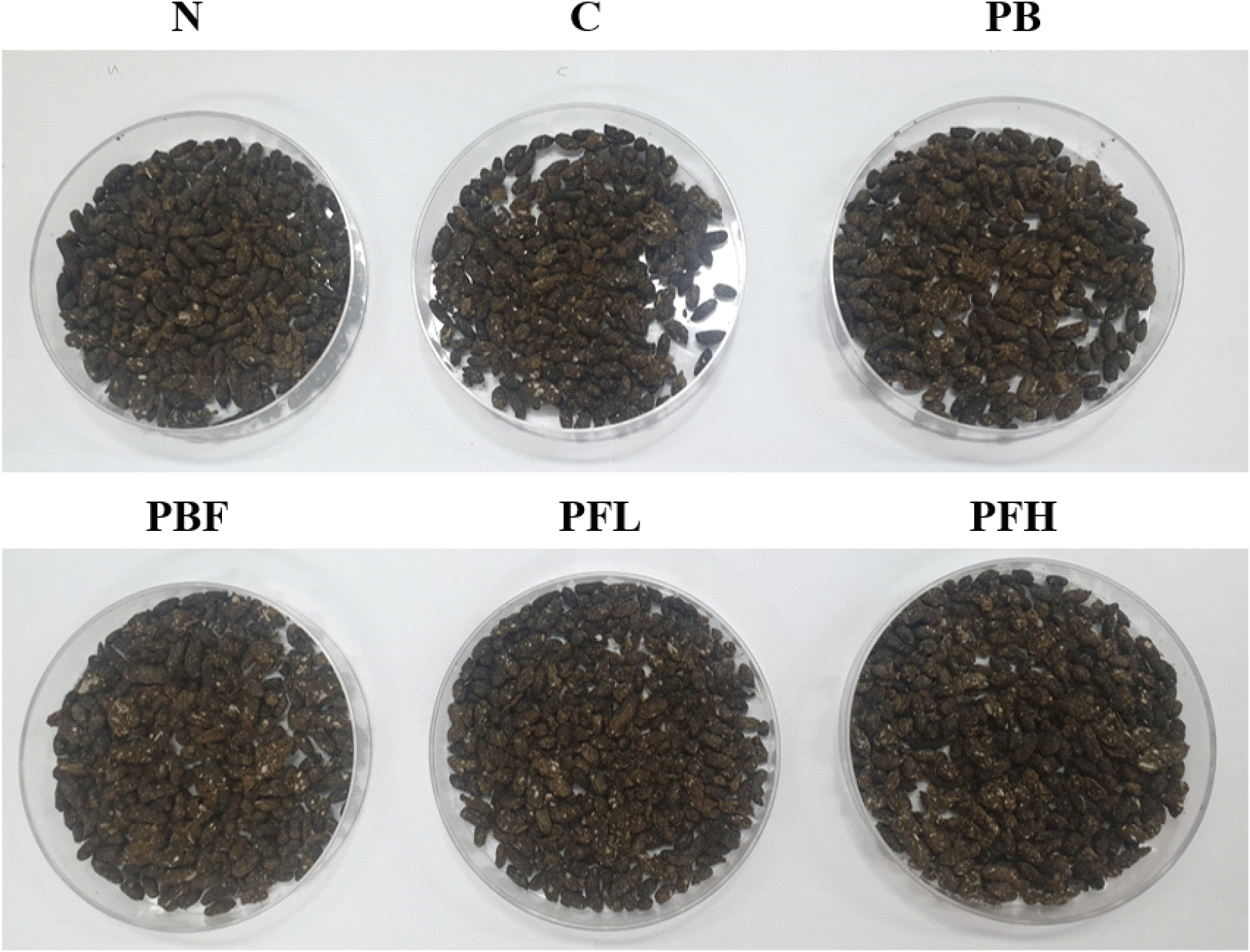
Loperamide 투여전 변의 개수, 중량 및 수분함량은 Control군과 비교했을 때, 모든 군에서 비슷한 수치인 것으로 확인되었다(Fig. 1). 반면, loperamide를 투여함에 따라 Control군의 변의 개수는 45.00개로 Normal군(55.50개)보다 유의적으로 줄어들면서 변비가 유발되었음을 확인할 수 있었고, 변비 유도 하에 Control군에 비해 PFL 및 PFH군의 변의 개수는 각각 59.67개, 61.00개로 증가하였다(Fig. 1A). 변의 중량은 Normal군이 8.79 g인 것에 비하여 Control군이 6.57 g으로 유의적으로 감소한 것으로 확인되었고, PFL군(10.65 g)과 PFH군(10.87 g)의 경우 Control군과 비교하였을 때 변의 무게는 증가하는 것으로 나타났다. 변의 수분함량의 경우 Control군은 Normal군보다 28.75% 감소하였으며, PFL군과 PFH군보다 각각 45.28%, 47.15% 감소한 것으로 확인되었다. 또한, 변의 총 개수 측정 결과, Normal군이 Control군보다 변의 총량이 증가하였고, PFL 및 PFH군에서도 Control군보다 총 변의 개수가 증가된 것을 관찰할 수 있었다(Fig. 2). Loperamide는 장 내 연동운동 저하와 점막의 전해질 및 수분 흡수를 촉진하고 배변시간을 지연시켜 동물실험에서 변비 유발을 위해 이용된다(Cho 등, 2008; Min 등, 2014). 본 연구에서도 loperamide의 투여가 변의 개수, 중량 및 수분함량의 감소를 초래하였으며 이러한 변비 증상들은 푸룬 혼합액 및 푸룬 발효액보다 푸룬 발효음료에서 효과적으로 완화되는 것을 볼 수 있었다. 푸룬은 hemicellulose, pectin, cellulose 등 식이섬유가 풍부하고 완하제 효과가 있는 sorbitol이 함유되어 있다(Gill 등, 2019). 프락토올리고당, 이눌린, 갈락토올리고당 등과 같은 식이섬유는 장 내 미생물의 탄소원역할을 하며 다양한 방식으로 소화기 기능에 도움을 준다고 알려져 있다(Carlson 등, 2018). Yook 등(2003)은 우렁쉥이 식이섬유를 섭취한 흰쥐에서 배변량과 변의 수분함량이 대조군보다 유의하게 증가한 것으로 보고하였고, 팽이버섯은 주로 hemicellulose, cellulose를 함유하고 있으며, 특히 hemicellulose 함량은 당근보다 더 많다고 보고하였다(Yang 등, 2021). 푸룬 혼합액 및 푸룬 발효액보다 푸룬 발효음료에서 변비 개선 효능이 더 뛰어난 것은 식이섬유를 함유하고 있는 팽이버섯 유산균 발효액 및 프락토올리고당 등 부재료의 첨가로 인해 효능이 더 증가한 것으로 사료된다.

kjfp-32-6-1188-g1
Fig. 1. Effects of prune-fermented drink on number of fecal pellets (A), weight of fecal pellets (B) and fecal water content (C) in loperamide-induced constipation rats. All values are mean±SD from six rats per group (n=6). N, non-treated control; C, loperamide-treated control; PB, loperamide + prune and banana extract mixture; PBF, loperamide + prune and banana extract fermented mixture; PFL, Loperamide + prune-fermented drink low; PFL, loperamide + prune-fermented drink high. Different letters on the bars indicate significant differences (p<0.05) by Duncan’s multiple range test.
Download Original Figure
kjfp-32-6-1188-g2
Fig. 2. Representative histological images of total number of fecal pellets in loperamide-induced constipation rats. N, non-treated control; C, loperamide-treated control; PB, loperamide + prune and banana extract mixture; PBF, loperamide + prune and banana extract fermented mixture; PFL, loperamide + prune-fermented drink low; PFL, loperamide + prune-fermented drink high.
Download Original Figure
3.3. 장 길이 및 소화관 이동률

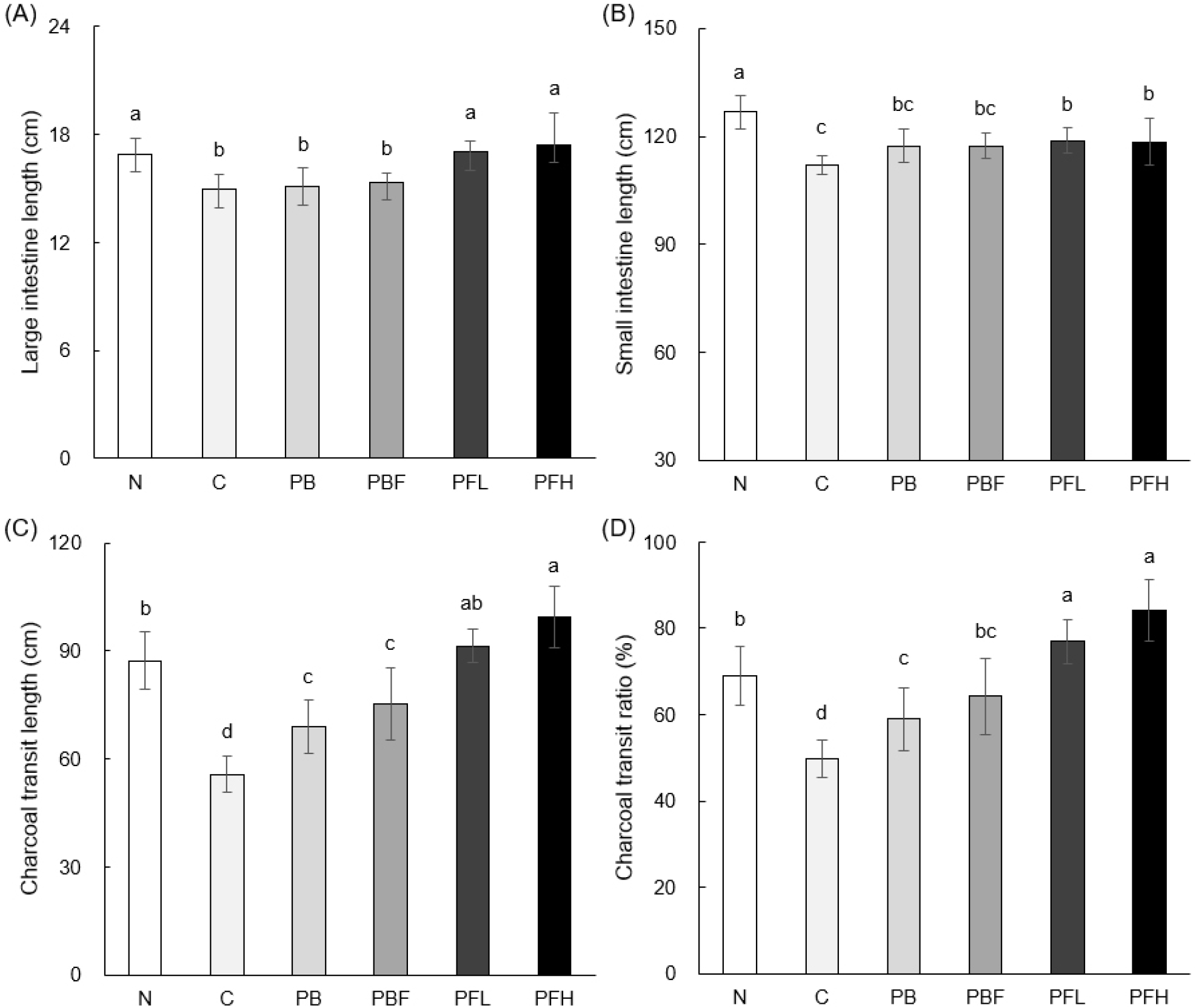
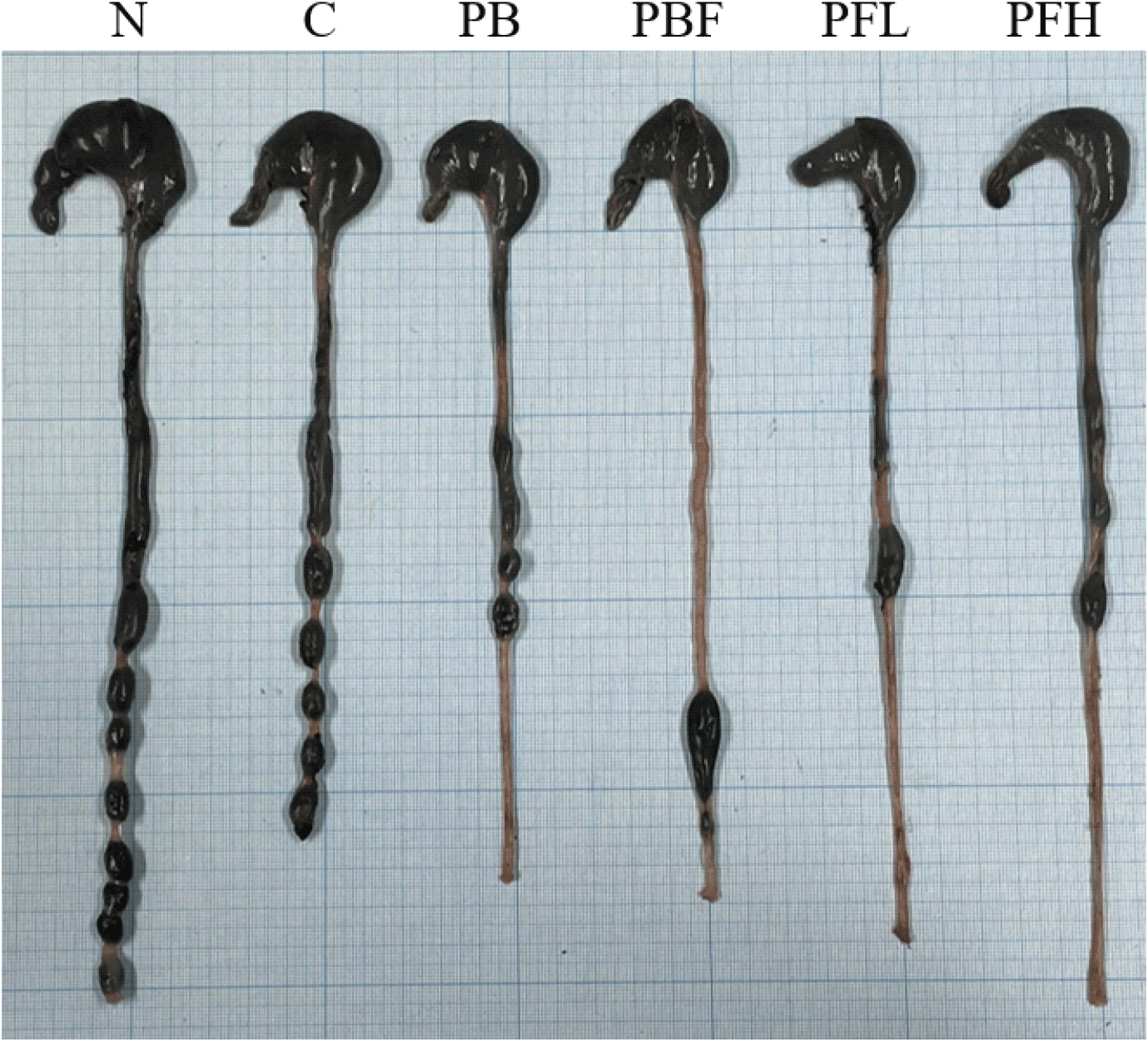
Fig. 3A3B에 나타낸 바와 같이, 소장 및 대장 길이를 측정한 결과, loperamide를 단독 투여한 Control군은 정상 SD 쥐인 Normal군보다 각각 11.64% 및 11.54% 감소하여 유의적인 차이를 보였다. 반면 PFL 및 PFH의 소장 길이는 각각 6.07%, 5.71% 증가하였고, 대장 길이는 각각 13.94%, 16.61% 길어진 것으로 확인되었으며, 특히 대장의 길이는 Normal군과 유의적인 차이가 나타나지 않았다(Fig. 4). Loperamide 투여 쥐의 소장 및 대장 길이는 정상군보다 상당히 감소하였고, Loperamide 투여 SD 쥐에서 장의 길이가 정상군보다 감소하였으며(Eor 등, 2018; Kim 등, 2023), Kim 등(2021)은 loperamide 투여에 의한 장의 총 길이는 loperamide를 투여하지 않은 정상군보다 유의적으로 줄어든다고 보고하였다. 본 연구결과에서도 loperamide로 변비를 유도한 Control군이 정상군에 비해 소장 및 대장 길이의 유의적인 감소가 확인되었으며, 이는 loperamide에 의한 것으로 사료된다.
kjfp-32-6-1188-g3
Fig. 3. Effects of prune-fermented drink on length of large intestine (A), length of small intestine (B), length of gastrointestinal charcoal transit (C) and gastrointestinal charcoal transit ratio (D) in loperamide-induced constipation rats. All values are mean±SD from six rats per group (n=6). N, non-treated control; C, loperamide-treated control; PB, loperamide + prune and banana extract mixture; PBF, loperamide + prune and banana extract fermented mixture; PFL, loperamide + prune-fermented drink low; PFL, loperamide + prune-fermented drink high. Different letters on the bars indicate significant differences (p<0.05) by Duncan’s multiple range test.
Download Original Figure
kjfp-32-6-1188-g4
Fig. 4. Representative histological large intestine length in loperamide-induced constipation rats. N, non-treated control; C, loperamide-treated control; PB, loperamide + prune and banana extract mixture; PBF, loperamide + prune and banana extract fermented mixture; PFL, loperamide + prune-fermented drink low; PFL, loperamide + prune-fermented drink high.
Download Original Figure

푸룬 발효음료의 투여가 위장 운동성의 변화를 유도할 수 있는지 확인하기 위해 변비 SD 쥐 모델에서 활성탄 식이의 이동거리 및 이동율을 측정하였다. 활성탄의 이동거리 및 이동율은 정상 SD 쥐인 Normal군에 비해 Control군에서 유의적인 감소가 나타났다(Fig. 3C3D). 변비 유발군들에서 PFH군, PFL군, PBF군, PB군 순으로 활성탄 이동거리 및 이동율이 높은 것으로 확인되었으며, 특히 PFL 및 PFH군은 Control군보다 활성탄 이동거리가 각각 63.95%, 78.61% 증가하였고, 이동율은 54.74%, 69.15% 높아진 것으로 나타나면서 유의적인 차이를 보였다. 이전 연구에서 식이섬유는 소장에서 겔을 형성하여 소장 내용물의 중량 및 소장의 길이를 상승시킬 수 있다고 하였으며, 섬유 섭취량에 비례하여 장의 연동운동이 활발해지고 이로 인해 장의 길이가 길어진다고 보고하였다(Johnson 등, 1984; Kim과 Lee, 1995). 또한 Cho 등(2008)은 loperamide로 유도된 변비 쥐 모델에서 함초 추출물의 장 이동율은 변비군보다 증가하였고, 이는 함초의 섬유질에 의한 것으로 보고하였다. 본 실험의 결과에서도 푸룬 혼합액과 푸룬 발효액보다 푸룬 발효음료를 섭취한 SD 쥐에서의 소장 및 대장 길이가 가장 길었으며, 활성탄 이동거리 및 이동율이 유의적으로 증가하였는데, 이는 식이섬유가 보다 많이 함유된 푸룬 발효음료의 섭취를 통해 장에서 활발히 연동운동이 일어난 결과에 의한 것으로 판단된다.

3.4. 대장관 내 점액질 분비

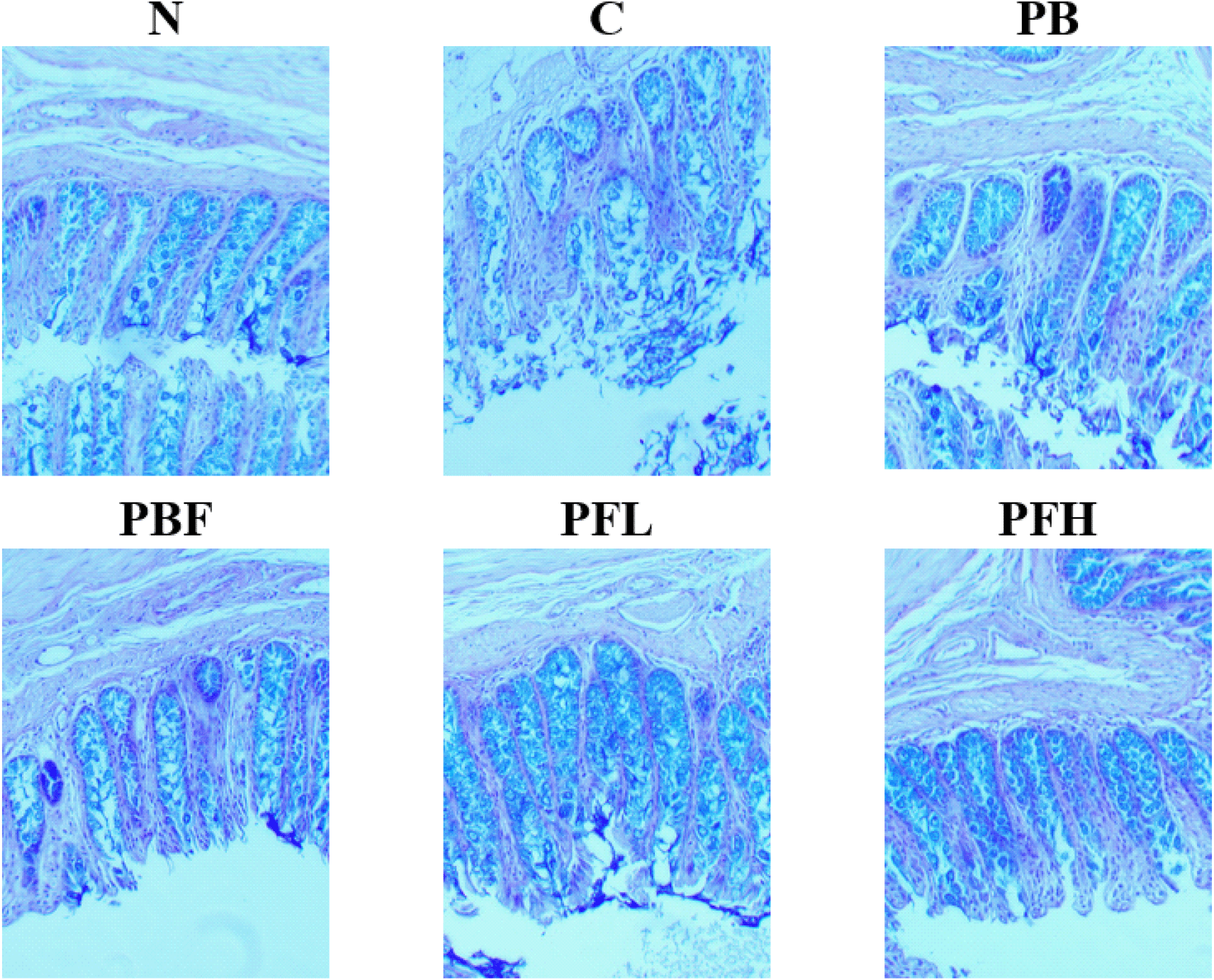
변비환자는 대장 내 점액 분비 세포의 기능 저하로 인해 장 점막의 보호 기능이 감소하고 장 내용물의 이동성이 저하되는 것으로 알려져 있다(Cepinskas 등, 1993). Periodic acid–Schiff (PAS) 염색은 단순 다당류와 점액단백질을 포함한 다양한 다당류 성분과 반응하여 이들을 염색하는 데 사용된다(Kilcoyne 등, 2011; Steinke 등, 2018). 한편, Alcian Blue 염색은 산성 점액 다당류(acidic mucin)와 선택적으로 결합하여 그 존재를 확인할 수 있는 방법이다(Whiteman, 1973). 이러한 두 염색을 병행한 PAS-Alcian Blue 이중 염색법은 장 점막에 분포하는 다당류의 변화를 시각화함으로써 상피 조직의 손상 정도를 평가하는 데 활용된다(Yang 등, 2022). 본 실험에서 각 군의 대장 조직을 alcian blue-Pas로 염색하여 광학현미경으로 관찰한 결과는 Fig. 5와 같다. Normal군은 대장 내 점막 모양과 형태가 길게 유지가 되는 반면 변비가 유도된 Control군의 점막은 모양이 망가지면서 불규칙적인 형태를 보였다. PFL 및 PFH군에서 점막은 Normal군과 비슷한 모양과 형태로 회복되었다. 푸룬에는 수용성 펙틴과 식이섬유가 풍부하게 함유되어 있으며, 이들 성분은 장 점막의 손상을 완화하는 데 기여하는 것으로 알려져 있다(Kosmala 등, 2013; Wen 등, 2022). 또한, Wang 등(2023)Lactobacillus plantarum을 투여한 마우스 모델에서 장 점막 손상이 개선되는 결과를 보고하였으며, Li 등(2020)은 사과 유래 다당류가 장내 미생물 균형을 조절함으로써 점막 손상을 억제하는 효과를 나타낸다고 보고하였다. 따라서 푸룬의 장 점막 보호 효과는 그 안에 함유된 펙틴과 식이섬유에 기인하는 것으로 판단된다. 그러나 유산 발효 과정을 거친 푸룬 주스의 경우, Lactobacillus plantarum에 의한 발효 대사산물과 사과 유래 다당류 등 추가적인 생리활성 성분이 복합적으로 작용하여 loperamide로 유도된 장 점막 손상 억제 효과가 더욱 향상된 것으로 사료된다.
kjfp-32-6-1188-g5
Fig. 5. Representative histological colon images of alcian blue and periodic acid-schiff staining in loperamide-induced constipation rats. N, non-treated control; C, loperamide-treated control; PB, loperamide + prune and banana extract mixture; PBF, loperamide + prune and banana extract fermented mixture; PFL, loperamide + prune-fermented drink low; PFL, loperamide + prune-fermented drink high. magnification, ×200.
Download Original Figure
3.5. 총폴리페놀 및 총플라보노이드 함량

과일에 함유된 다양한 폴리페놀 화합물들은 인간 건강에 유익한 이점을 줄 수 있고, 특히 푸룬은 이러한 성분들의 공급원으로서 여러 질병 예방에 기여할 수 있다(Noratto 등, 2009; Silvan 등, 2020). 총폴리페놀 및 플라보노이드 함량은 PB군에서 각각 134.69 mg%, 58.09 mg%로 가장 낮았으며, PBF군은 149.52 mg%, 65.81 mg%로 확인되었고 PF군의 경우 270.00 mg%, 78.90 mg%로 가장 높은 함량을 나타내었다(Table 3). 특히 총폴리페놀 함량은 PF군에서 유의적인 차이를 보였다. Attaluri 등(2011)은 다량의 식이섬유, sorbitol 및 페놀 화합물, 특히 neochlorogenic acid와 chlorogenic acid는 완하 작용을 도울 수 있다고 보고하였다. Lee 등(2017)은 loperamide로 변비가 유발된 쥐에게 뽕잎 유산균 발효액을 섭취시킨 결과, 대변의 수, 무게, 수분 함량이 증가하였고 장 통과 시간이 단축되면서 뽕잎 유산균 발효액의 변비 개선 효과가 확인되었으며, 이는 뽕잎 유산균 발효액에 함유된 총폴리페놀, 총플라보노이드, chlorogenic acid와 같은 생리활성 화합물에 의한 것으로 보고하였다. 또한, chlorogenic acid은 대표적으로 푸룬, 사과, 체리와 같은 과일에서 가장 풍부한 폴리페놀 중 하나이다(Bouayed 등, 2007). 본 연구결과에서 푸룬 혼합액과 푸룬 발효액에 비해 푸룬 발효음료에서 변비 개선 효과가 뛰어난 것은 사과농축액 등의 부재료 첨가로 chlorogenic acid와 같은 폴리페놀 함량 증가의 영향으로 사료된다. 이상의 결과를 종합하면, 푸룬 발효음료의 섭취는 loperamide로 유도된 변비 모델에서 배변 횟수, 수분함량 및 장 운동성을 유의적으로 개선시켰으며, 이는 식이섬유와 폴리페놀 화합물의 상승 작용에 의한 것으로 판단된다. 향후에 식이섬유, chlorogenic acid, neochlorogenic acid, sorbitol 등 주요 활성성분의 정량분석과 이들의 장내 미생물 및 연동운동 관련 인자에 대한 작용기전을 규명하는 심도 있는 연구가 필요할 것으로 사료된다.

Table 3. Total polyphenol and total flavonoid contents of prune- fermented drink (PF)
Sample Content (mg%)
Total polyphenols (GAE1)) Total flavonoids (QE2))
PB3) 134.69±5.024)c5) 58.09±16.58a
PBF 149.52±7.57b 65.81±7.50a
PF 270.00±5.25a 78.90±18.38a

1) GAE, gallic acid equivalent.

2) QE, quercetin equivalent.

3) PB, prune and banana extract mixture; PBF, prune and banana extract fermented mixture; PF, prune-fermented drink.

4) All values are mean±SD (n=3).

5) Means with different superscript letters in the same column are significantly different at p<0.05 by Duncan’s multiple range test (a>b>c).

Download Excel Table

4. 요약

본 연구는 개발된 푸룬 발효음료의 변비 개선 효능을 확인하기 위해 loperamide로 유도된 변비 SD 쥐모델에서 쥐 체중, 식이 · 수 섭취량, 조직 무게, 변의 개수, 중량, 수분함량, 장의 길이, 소화관 이동률 및 대장 내 alcian blue & periodic acid-schiff 염색을 평가하였다. 체중과 식이 · 수 섭취량의 경우 모든 군에서 유의적인 변화는 확인되지 않았으며, 간 및 비장 무게에서도 큰 변화가 관찰되지 않으면서 각 시료에 대한 독성은 확인되지 않았다. 반면 변의 개수, 중량 및 수분함량에서 Loperamide를 단독 투여한 Control군은 정상군인 Normal군에 비해 유의적인 감소가 나타나면서 loperamide로 인한 변비 유도를 확인하였다. Loperamide 및 푸룬 발효음료를 투여한 PFL와 PFH군은 Control군과 비교하여 변의 개수, 중량 및 수분함량이 유의적으로 증가하였고, 총 대변의 수도 두드러지게 증가하는 것을 확인 할 수 있었다. 또한 loperamide로 인해 소장 및 대장의 길이, 소화관 내 변의 이동거리 및 이동률이 Normal군에 비해 줄어든 반면, 푸룬 발효음료 섭취를 통해 유의적으로 회복되면서 변비를 효과적으로 개선하였다. 조직학적 검사에서도 푸룬 발효음료 투여군의 장 점막의 모양과 형태가 Normal군과 비슷하게 회복된 것으로 확인되었다. 총폴리페놀 및 총플라보노이드 함량 결과, 푸룬 혼합액 및 푸룬 발효액에 비해 푸룬 발효음료에서 높은 함량을 갖는 것으로 나타났다. 이는 피로회복 기능성식품 소재로 이용할 수 있을 것으로 기대한다. 이러한 푸룬 발효음료의 뛰어난 변비 개선 효과 및 높은 총폴리페놀 및 플라보노이드 함량은 푸룬 발효액에 사과 농축액, 프락토올리고당 및 팽이버섯 유산균 발효액 등 다양한 부재료 첨가를 통해 기능성 및 생리활성 물질이 증가한 것으로 사료된다. 따라서, 푸룬 발효음료는 장 기능 개선 또는 변비 개선을 위한 기능성 식품으로서 상당한 가치가 있을 것으로 사료된다.

Acknowledgements

None.

Conflict of interests

Some authors are affiliated with the company that provided the test materials used in this study.

Author contributions

Conceptualization: Kwon SJ, Lee SW, Seo KI. Methodology: Park WL, Min HJ, Park SH. Formal analysis: Heo JA, Kim HG, Park SH. Validation: Min HJ, Heo JA, Kim HG. Writing - original draft: Park WL, Kim HG. Writing - review & editing: Park WL, Lee SW, Seo KI.

Ethics approval

This research was approved by IACUC from the Dong-A University Institutional Animal Care and Use Committee (approval no. DIACUC-22-21).

Funding

This research was supported by Biomaterials Specialized Graduate Program through the Korea Environmental Industry & Technology Institute (KEITI) funded by the Ministry of Environment (MOE).

References

1.

Abdel-Hameed ESS. Total phenolic contents and free radical scavenging activity of certain Egyptian Ficus species leaf samples. Food Chem. 114:1271-1277 2009;

2.

Attaluri A, Donahoe R, Valestin J, Brown K, Rao SSC. Randomised clinical trial: Dried plums (prunes) vs. psyllium for constipation. Aliment Pharmacol Ther. 33:822-828 2011;

3.

Baik SO, Kim HK, Lee YH, Kim YS, Ryu MH. Preparation of active fraction from radish water extracts for improving the intestinal functions and constipation activities. J Korean Soc Appl Biol Chem. 47:315-320 2004;

4.

Bouayed J, Rammal H, Dicko A, Younos C, Soulimani R. Chlorogenic acid, a polyphenol from Prunus domestica (Mirabelle), with coupled anxiolytic and antioxidant effects. J Neurol Sci. 262:77-84 2007;

5.

Carlson JL, Erickson JM, Lioyd BB, Slavin JL. Health effects and sources of prebiotic dietary fiber. Curr Dev Nutr. 2:nzy005 2018;

6.

Cepinskas G, Specian RD, Kvietys PR. Adaptive cytoprotection in the small intestine: Role of mucus. Am J Physiol. 264:G921-G927 1993;

7.

Chen HL, Haack VS, Janecky CW, Vollendorf NW, Marlett JA. Mechanisms by which wheat bran and oat bran increase stool weight in humans. Am J Clin Nutr. 68:711-719 1998;

8.

Cho YS, Kim SI, Han YS. Effects of slander glasswort (Salicornia herbacea L.) extract on improvements in bowel function and constipation relief. Korean J Food Sci Technol. 40:326-331 2008;

9.

Eom IJ, Kim SH. Optimization of lactic acid fermentation condition of mulberry juice using response surface methodology. J Korean Soc Food Sci Nutr. 48:575-588 2019;

10.

Eor JY, Tan PL, Lim SM, Choi DH, Yoon SM, Yang SY, Kim SH. Laxative effect of probiotic chocolate on loperamide-induced constipation in rats. Food Res Int. 116:1173-1182 2019;

11.

Gao X, Bjӧrk L, Trajkovski V, Uggla M. Evaluation of antioxidant activities of rosehip ethanol extracts in different test systems. J Sci Food Agric. 80:2021-2027 2000;

12.

Gill SK, Lever E, Emery PW, Whelan K. Nutrient, fibre, sorbitol and chlorogenic acid content of prunes (Prunus domestica): An updated analysis and comparison of different countries of origin and database values. Int J Food Sci Nutr. 70:924-931 2019;

13.

Huh JW, Park YA, Sohn SK, Lee SM, Jung EJ, Lee KY, Kim SJ, Ha WK. Effect of yogurt enriched water-soluble fiber on functional constipation. J Korean Soc Coloproctol. 23:312-320 2007;

14.

Igwe EO, Charlton KE. A Systematic review on the health effects of plums (Prunus domestica and Prunus salicina). Phytother Res. 30:701-731 2016;

15.

Jeon JH, Kyung M, Jung S, Jo SE, Chang MJ. Effect of xylooligosaccharide-sugar mixture on defecation frequency and symptoms in young women with constipation: A randomized, double-blind, placebo-controlled trial. J Nutr Health. 48:19-29 2015;

16.

Johnson IT, Gee JM, Mahoney RR. Effect of dietary supplements of guar gum and cellulose on intestinal cell proliferation, enzyme levels and sugar transport in the rat. Br J Nutr. 52:477-487 1984;

17.

Jun DW, Park HY, Lee OY, Lee HL, Yoon BC, Choi HS, Hahm JS, Lee MH, Lee DH, Kee CS. A population-based study on bowel habits in a Korean community: Prevalence of functional constipation and self-reported constipation. Dig Dis Sci. 51:1471-1477 2006;

18.

Kilcoyne M, Gerlach JQ, Ferrell MP, Bhavanandan VP, Joshi L. Periodic acid-Schiff’s reagent assay for carbohydrates in a microtiter plate format. Anal Biochem. 416:18-26 2011;

19.

Kim JE, Choi YJ, Lee SJ, Gong JE, Jin YJ, Park SH, Lee HS, Choi YW, Hong JT, Hwang DY. Laxative effects of phlorotannins derived from Ecklonia cava on loperamide-induced constipation in SD rats. Molecules. 26:7209 2021;

20.

Kim JE, Park JW, Kang MJ, Choi HJ, Bae SJ, Choi YS, Lee YJ, Lee HS, Hong JT, Hwang DY. Anti-inflammatory response and muscarinic cholinergic regulation during the laxative effect of asparagus cochinchinensis in loperamide-induced constipation of SD rats. Int J Mol Sci. 20:946 2019;

21.

Kim MJ, Lee SS. The effect of dietary fiber on the serum lipid level and bowel function in rats. Korean J Nutr. 28:23-32 1995;

22.

Kim NY, Kim KA, Yang HJ, Jeong SJ, Han A, Cha YS. Comparison of the laxative effects of Korean Gochujang containing different microbiota on loperamide-induced constipation in ICR mice. Food Funct. 14:7615-7630 2023;

23.

Kim TI, Park SJ, Choi CH, Lee SK, Kim WH. Effect of ear mushroom (Auricularia) on functional constipation. Korean J Gastroenterol. 44:34-41 2004;

24.

Kosmala M, Milala J, Kolodziejczyk K, Markowski J, Zbrzezniak M, Renard CMGC. Dietary fiber and cell wall polysaccharides from plum (Prunus domestica L.) fruit, juice and pomace: Comparison of composition and functional properties for three plum varieties. Food Res Int. 54:1787-1794 2013;

25.

Lee HJ, Lee H, Choi YI, Lee JJ. Effect of lactic acid bacteria-fermented mulberry leaf extract on the improvement of intestinal function in rats. Korean J Food Sci An. 37:561-570 2017;

26.

Lee JS, Kim YD, Im HH, Cho YM, Jung IS, Koh BM, Hong SJ, Ryu CB, Kim JO, Cho JY, Lee MS, Choi DL, Shim CS, Kim BS. The effect of lactulose on the colon transit and the various symptoms of constipation in patients with functional constipation. J Neurogastroenterol Motil. 12:127-135 2006;

27.

Lee KJ. Pharmacologic treatment for chronic functional constipation. J KAHP. 3:55-61 2005;

28.

Leeuwendaal NK, Stanton C, O’Toole PW, Beresford TP. Fermented foods, health and the gut microbiome. Nutrients. 14:1527 2022;

29.

Lembo A, Camilleri M. Chronic constipation. N Engl J Med. 349:1360-1368 2003;

30.

Li Y, Wang S, Sun Y, Xu W, Zheng H, Wang Y, Tang Y, Gao X, Song C, Long Y, Liu J, Liu L, Mei Q. Apple polysaccharide protects ICR mice against colitis associated colorectal cancer through the regulation of microbial dysbiosis. Carbohydr Polym. 230:115726 2020;

31.

Min KS, Han D, Kwon SO, Yeo KM, Kim BN, Ly SY. The effect of Sargassum confusum on reduction of body fat in obese women. J Nutr Health. 47:23-32 2014;

32.

Na Y, Song YJ, Lee JJ. Quality characteristics and antioxidant effects of rice cookies enriched with dried plum (Prunus domestica L.) powder. Korean J Food Nutr. 35:499-512 2022;

33.

Noratto G, Porter W, Byrne D, Cisneros-Zevallos L. Identifying peach and plum polyphenols with chemopreventive potential against estrogen-independent breast cancer cells. J Agric Food Chem. 57:5219-5226 2009;

34.

Ozzengin B, Zannou O, Koca I. Quality attributes and antioxidant activity of three wild plums from Prunus spinosa and Prunus domestica species. Meas: Food. 10:100079 2023;

35.

Park YS, Lee DH. Evidence based guideline for diagnosis and treatment: Therapeutic guideline for constipation. Korean J Neurogastroenterol Motil. 11:51-57 2005;

36.

Sanchez MIP, Bercik P. Epidemiology and burden of chronic constipation. Can J Gastroenterol. 25:11B-15B 2011;

37.

Şanlier N, GÖkcen BB, Sezgin AC. Health benefits of fermented foods. Crit Rev Food Sci Nutr. 59:506-527 2019;

38.

Shin DH. Traditional fermented food promotion plan and globalization strategy. Food Preserv Process Ind. 7:2 2008;

39.

Shin JR, Ly SY. Dietary habits and factors related to lifestyles in constipated female students. Korean J Community Nutr. 8:675-688 2003;

40.

Silvan JM, Michalska-Ciechanowska A, Martinez-Rodriguez AJ. Modulation of antibacterial, antioxidant, and anti-inflammatory properties by drying of Prunus domestica L. plum juice extracts. Microorganisms. 8:119 2020;

41.

Steinke H, Wiersbicki D, Speckert ML, Merkwitz C, Wolfskämpf T, Wolf B. Periodic acid-Schiff (PAS) reaction and plastination in whole body slices. A novel technique to identify fascial tissue structures. Ann Anat. 216:29-35 2018;

42.

Suares NC, Ford AC. Prevalence of, and risk factors for, chronic idiopathic constipation in the community: systematic review and meta-analysis. Am J Gastroenterol. 106:1582-1591 2011;

43.

Wang T, Wang P, Yin L, Wang X, Shan Y, Yi Y, Zhou Y, Liu B, Wang X, Lu X. Dietary Lactiplantibacillus plantarum KX041 attenuates colitis-associated tumorigenesis and modulates gut microbiota. Food Sci Human Wellness. 12:1626-1636 2023;

44.

Wen X, Zhong R, Dang G, Xia B, Wu W, Tang S, Tang L, Liu L, Liu Z, Chen L, Zhang H. Pectin supplementation ameliorates intestinal epithelial barrier function damage by modulating intestinal microbiota in lipopolysaccharide-challenged piglets. J Nutr Biochem. 109:109107 2022;

45.

Whiteman P. The quantitative measurement of Alcian Blue-glycosaminoglycan complexes. Biochem J. 131:343-350 1973;

46.

Yang D, Jacobson A, Meerschaert KA, Sifakis JJ, Wu M, Chen X, Yang T, Zhou Y, Anekal PV, Rucker RA, Sharma D, Sontheimer-Phelps A, Wu GS, Deng L, Anderson MD, Choi S, Neel D, Lee N, Kasper DL, Jabri B, Huh JR, Johansson M, Thiagarajah JR, Riesenfeld SJ, Chiu IM. Nociceptor neurons direct goblet cells via a CGRP-RAMP1 axis to drive mucus production and gut barrier protection. Cell. 185:4190-4205 2022;

47.

Yang X, Dai J, Zhong Y, Wei X, Wu M, Zhang Y, Huang A, Wang L, Huang YK, Zhang C, Chen X, Xiao H. Characterization of insoluble dietary fiber from three food sources and their potential hypoglycemic and hypolipidemic effects. Food Funct. 12:6576-6587 2021;

48.

Yook HS, Kim JO, Choi JM, Kim DH, Cho SK, Byun MW. Changes of nutritional characteristics and serum cholesterol in rats by the intake of dietary fiber isolated from ascidian (Halocynthia roretzi) tunic. J Korean Soc Food Sci Nutr. 32:474-478 2003;