

1. Introduction
Chicken breast is widely recognized as a high-quality protein source with a favorable nutritional profile, contributing to body weight management and increases in lean body mass (Carbone and Pasiakos, 2019; Potue et al., 2022; Tang et al., 2013). Reflecting these nutritional advantages, global consumption of ready-to-eat (RTE) chicken breast products has increased substantially, driven by consumer demand for convenient and health-oriented foods (WiseGuy Reports, 2025). These products are available in a variety of processed forms and packaging systems, highlighting their growing integration into modern dietary patterns. Market analyses further suggest that demographic changes–particularly the rise in single-person households–are expected to sustain continued growth in this product category (Seoul National University Food Business Lab, 2025). However, chicken breast is a favorable environment for microbial proliferation due to its high moisture and protein contents (Silva et al., 2018). Consequently, in the absence of appropriate control measures, chicken breast is readily colonized by major foodborne pathogens such as Salmonella Typhimurium and Listeria monocytogenes–primarily through cross-contamination from unhygienic processing and handling practices. In the United States, Salmonella is responsible for an estimated 1.35 million infections annually, whereas L. monocytogenes causes approximately 1,250 infections and 172 deaths each year (CDC, 2024a; CDC, 2024b).
One promising strategy to improve the microbial safety of RTE chicken breast is the use of antimicrobial marinades. A 3% cultured sugar-vinegar blend completely suppressed the growth of S. Typhimurium in precooked chicken breast during storage at 10°C (Park et al., 2014). Similarly, Kiprotich et al. (2021) reported that lemon-juice marinades supplemented with thyme oil and yucca extract significantly enhanced the inactivation of Salmonella enterica, achieving reductions of 2.62-3.91 log CFU/sample after 8 h at 22°C.
The onion (Allium cepa L.) is one of the most economically important vegetable crops worldwide and is widely used in both industrial and household food applications (Teshika, 2019). Beyond its culinary role, onions contain abundant bioactive compounds such as flavonoids and sulfur-containing molecules, which contribute to its antioxidant, antimicrobial, and anti-inflammatory properties (Benkeblia and Lanzotti, 2007; Downes et al., 2009). However, onion quality is strongly influenced by environmental conditions (Kadayifci et al., 2005), and recent climate variability has increased the prevalence of substandard or visually blemished onions. Despite their partial utilization, the development of value-added approaches is essential to improve resource-use efficiency and mitigate food waste.
Fermentation is a traditional bioprocess known to improve the shelf-life and functional properties of food materials (Ross et al., 2002). Previous studies have shown that fermentation enhances the functional properties of onions, as demonstrated by the improved antioxidant stability (60-65%) observed in onion juice fermented with Lactobacillus plantarum (Chang et al., 2010). Purple onion fermented with L. plantarum showed significant antibacterial activity against multidrug-resistant Salmonella spp. and Escherichia coli (Hai et al., 2025). These findings indicate that fermentation can enhance the functional qualities of onions and support their utilization as value-added food ingredients.
Carbon quantum dots (CQDs) have been identified in a range of heat-processed foods, including coffee, cola, grilled meat, smoked fish, grilled chicken, and fried hamburger patties (Wang et al., 2020), indicating that humans have been inadvertently exposed to naturally occurring CQDs for centuries. A recent study by Ahn et al. (2025) further demonstrated the antimicrobial activity of onion-peel-derived CQDs for controlling biofilm formation on food-contact surfaces.
Despite their reported antimicrobial properties, fermentation-derived ingredients and synthesized CQDs have not been evaluated, either individually or in combination, as marinade components for RTE chicken breast. Although CQDs have attracted growing interest for food-related applications, their use as food additives has not yet been approved. Therefore, investigating these two approaches provides a basis for assessing their potential to enhance microbial safety while improving product quality in poultry products.
Therefore, this study aimed to 1) characterize the antimicrobial efficacy of fermented onion juice derived from substandard onions against S. Typhimurium and L. monocytogenes, including identification of the optimal fermentation period for maximal inhibitory activity; and 2) assess its feasibility as a marinade intervention for improving microbial safety and quality attributes of RTE chicken breast.
2. Materials and methods
Leuconostoc mesenteroides (KCTC 13374) was obtained from the Korean Collection for Type Cultures (KCTC, Daejeon, Korea). The strain was maintained at −80°C in De Man, Rogosa, and Sharpe (MRS) broth (MBcell, Seoul, Korea) supplemented with 20% (v/v) glycerol. Prior to use, frozen stocks were thawed and 10 μL was inoculated into 10 mL of MRS broth, followed by incubation at 30°C for 24 h in a rotary shaker (HB-201SF, Hanbaek Scientific Co., Bucheon, Korea) at 140 rpm.
S. Typhimurium (ATCC 13311) and L. monocytogenes (KCCM 43155) were obtained from the Korean Culture Center of Microorganisms (KCCM, Seoul, Korea). The strains were stored at −80°C in Brain Heart Infusion (BHI) broth (Oxoid, Basingstoke, Hampshire, UK) for S. Typhimurium and Tryptic Soy Broth (TSB; MBcell, Seoul, Korea) supplemented with 0.6% yeast extract for L. monocytogenes, each containing 20% (v/v) glycerol. For activation, 10 μL of frozen stock cultures were inoculated into 10 mL of sterile BHI or TSB and incubated at 36°C for 24 h in a rotary shaker (VS-8480SR, Vision Scientific Co., Daejeon, Korea).
Substandard onions were purchased from a local market in Seoul, Korea. A commercial fermented onion powder (SafePlate® Onion Powder 211; Wenda Ingredients, Naperville, IL, USA) was used as a reference material for comparison. Boneless, skinless chicken breast meat was obtained from a local retail market (Dongdaemun-gu, Seoul, Korea).
Substandard onions were washed and peeled, and their flesh was juiced using a blender (Tefal Perfectmix+ High-Speed Blender BL811D, Écully, France) for 15 min. The juice was then sterilized at 121°C for 15 min using an autoclave before fermentation. The sterilized onion juice (100 mL) was transferred into a sterile beaker and loosely covered with sterile aluminum foil to minimize contamination while allowing gas exchange during fermentation. Subsequently, 1 mL of L. mesenteroides was inoculated to achieve an initial concentration of approximately 5-6 log CFU/mL and the fermentation was conducted at 36°C for 24, 48, and 72 h. At each fermentation time point, fermented onion juice (1 mL) was serially diluted with 0.1% peptone water and spread onto MRS agar. Plates were incubated at 36°C for 24 h, after which colonies were enumerated and results were expressed as log CFU/mL to determine lactic acid bacteria populations. Non-fermented onion juice (control) was prepared using the same procedure, except that no lactic acid bacteria were inoculated.
Onion-peel-derived carbon quantum dots (CQDs) were synthesized via hydrothermal carbonization following a previously reported method (Khan et al., 2024). Briefly, onion peel powder (1.5 g) was dispersed in 50 mL of distilled water and magnetically stirred at 200 rpm for 5 min to obtain a homogeneous suspension. The suspension was then transferred to a 100 mL Teflon-lined stainless-steel autoclave and heated in a muffle furnace at 200°C for 7 h. A set of four muffle furnace chambers was operated simultaneously. After natural cooling to room temperature (approximately 6 h), the resulting brown solution was filtered through a 0.22 μm syringe-mounted membrane filter (25 mm diameter; Whatman, Little Chalfont, UK) to remove residual particulates. Filtrates obtained from the four chambers were combined, and 1 mL of the pooled solution was dried in a Petri dish at 105°C for 1 h to determine the final concentration of CQDs, which was calculated to be 6,500 μg/mL.
Changes in pH, titratable acidity (TA), and soluble solids content (°Brix) during fermentation were measured according to AOAC official methods (AOAC, 2023). A 10 mL aliquot of the samples was used to measure pH using a calibrated pH meter (Orion StarTM A211, Thermo Fisher Scientific Co., Waltham, MA, USA). TA of the samples was determined by titrating 10 mL of the sample with 0.1 N NaOH until the pH reached 8.3. The volume of NaOH consumed was used to calculate TA using the following equation:
where V is the volume of 0.1 N NaOH used (mL), F is the factor of 0.1 N NaOH, D is the dilution factor, and S is the volume of sample (mL).
The soluble solids content of the samples was measured using a refractometer (PAL-1, ATAGO, Tokyo, Japan). All measurements were conducted in triplicate.
To evaluate the effect of fermentation time on the antimicrobial activity of onion juice, 1 mL of each bacterial culture was inoculated into 23.25 mL of broth—BHI for S. Typhimurium and TSB for L. monocytogenes. Each broth was supplemented with 0.75 mL of fermented onion juice obtained after either 24 or 72 h of fermentation, resulting in a final concentration of 3% (v/v) fermented onion juice in the medium. The 3% (v/v) concentration was selected based on the manufacturer-recommended application rate for a commercial fermented onion powder. A commercial fermented onion powder was also added at an equivalent volume for comparison.
The inoculated media were incubated at 10°C and 25°C. The initial inoculum levels of both pathogens were adjusted according to the incubation temperature to allow accurate evaluation of antimicrobial effects. At 10°C, a temperature that favors survival or slow inactivation rather than active growth, a higher initial inoculum (4-5 log CFU/mL) was used to ensure reliable quantification of population reductions. In contrast, at 25°C, a growth-permissive temperature, a lower initial inoculum (2-3 log CFU/mL) was used to enable sensitive detection of growth inhibition.
To evaluate the effect of marination on pathogen control in RTE chicken breast, chicken samples were halved and steam-cooked for 15 min until an internal temperature of 75°C was achieved. After cooking, samples were aseptically portioned into 5 g units using sterilized knives and transferred to sterile Petri dishes in a biosafety cabinet. Then, chicken samples were intentionally inoculated with S. Typhimurium or L. monocytogenes to achieve an initial population of approximately 4 log CFU/g allowing assessment of their growth or survival behavior. The inoculum (50 μL) was spot-inoculated onto the surface of the chicken breast using a micropipette, and the samples were allowed to dry for 10 min to facilitate bacterial attachment.
Marination treatments consisted of non-fermented onion juice (NFOJ), fermented onion juice (FOJ), onion-peel-derived CQDs (CQDs), and a combined treatment of fermented onion juice and onion-peel-derived CQDs (CFC). The CQDs treatment was applied at the minimum bactericidal concentration (MBC) against S. Typhimurium (2,800 μg/mL), as reported by Ahn et al. (2025). This concentration exceeds the reported MBC for L. monocytogenes and was therefore selected to ensure a conservative antimicrobial level effective against both pathogens. For marination treatment, 1 mL of the respective treatment was pipetted onto each 5 g portion of inoculated chicken breast to fully cover the surface of the chicken breast. For the combined treatment, samples received 1 mL of fermented onion juice and 1 mL of onion-peel-derived CQDs to evaluate potential additive or synergistic antimicrobial effects. To prevent direct contact between the inoculated surface and the packaging film, samples were handled with sterile forceps and inverted so that the inoculated and marinated surface faced the bottom of the Petri dish before vacuum packaging. The samples were then vacuum-packaged (FR-B100WB, CSE Co., Siheung, Korea) and stored at 15°C and 25°C to simulate temperature abuse conditions during distribution of RTE chicken products. In addition, pathogen-specific storage temperatures were applied to reflect differences in minimum growth temperature, with S. Typhimurium stored at 10°C and L. monocytogenes stored at 5°C for their respective growth potential under refrigerated conditions.
At predetermined sampling intervals, vacuum-packaged chicken samples were aseptically removed using sterile forceps and transferred into sterile filter bags. Each sample was then homogenized with 45 mL of sterile 0.1% peptone water for 2 min using a stomacher (BagMixer 400, Interscience, Saint-Nom-la-Bretèche, France). Because chicken breast samples were steam-cooked to an internal temperature of 75°C prior to inoculation, background microflora were substantially reduced. Furthermore, non-selective media were employed to facilitate the recovery and enumeration of both healthy and sublethally injured cells that might fail to grow on selective media. One milliliter of each homogenate was serially diluted and surface-plated onto tryptic soy agar (TSA; Oxoid, Hampshire, UK) for S. Typhimurium or TSA supplemented with 0.6% yeast extract for L. monocytogenes. Following incubation at 36°C for 24 h, colonies were counted to determine bacterial populations. The initial populations immediately after inoculation were 4.09±0.13 log CFU/g for S. Typhimurium and 3.91±0.05 log CFU/g for L. monocytogenes. Growth curves were constructed, and kinetic parameters for S. Typhimurium and L. monocytogenes were estimated by fitting the data to the modified Gompertz model (Gibson et al., 1987) using GraphPad Prism version 7.0 (GraphPad Software, San Diego, CA, USA). The equation is expressed as follows:
where N0 and Nt denote the initial bacterial population and the population at time t, respectively (log CFU/g), C represents the difference between initial and final bacterial populations (log CFU/g), SGR is the maximum specific growth rate (log CFU/h or log CFU/day), and LT is the lag time (h or day). The maximum population density (MPD) was calculated as the sum of N0 and C (log CFU/g).
Texture measurements were conducted according to previously described methods (Aguirre et al., 2018; Dykiel et al., 2025). The texture properties of cooked chicken breast marinated with 24 h-fermented onion juice for 2 h or 4 h were evaluated by texture profile analysis (TPA) using a texture analyzer (CT3-10K, Brookfield Engineering Laboratories, Inc., MA, USA). Samples were cut into uniform cubes (1.5× 1.5×2.0 cm), and measurements were performed in triplicate. The pre-test, test, and post-test speeds were set at 2.00, 0.50, and 1.00 mm/s, respectively, with a compression ratio of 50%. A TA4/1000 cylindrical probe (38.1 mm diameter) was used to determine hardness, springiness, cohesiveness, gumminess, and chewiness. The control group was evaluated without marination treatment.
Water-holding capacity (WHC) of RTE chicken breast samples marinated with fermented onion juice for 2 h or 4 h, as well as that of the control group, was determined following the method described by Barbut (2024). After cooking, samples were cooled at room temperature for 20 min and trimmed into portions weighing 1.5 g. To prevent reabsorption of expressed moisture during centrifugation, each sample was placed on a mesh screen within a 50 mL conical tube and centrifuged using a laboratory centrifuge (VS-550, Vision Scientific Co. Ltd., Daejeon, Korea). WHC was calculated using the following equation:
where W1 is the sample weight before centrifugation and W2 is the sample weight after centrifugation.
For pH determination, 5 g of marinated chicken breast (2 or 4 h) and control samples were homogenized with 45 mL of distilled water using a stomacher for 2 min, and the pH of the homogenate was measured using a pH meter.
All experiments were performed in triplicate. Data were subjected to one-way analysis of variance (ANOVA), and significant differences among treatments were determined using Duncan’s multiple range test (p<0.05) using SAS software (version 9.3; SAS Institute Inc., Cary, NC, USA).
3. Results and discussion
The effect of fermentation time on lactic acid bacteria (LAB) populations, pH, titratable acidity (TA), and soluble solids content (°Brix) of onion juice are presented in Table 1. The LAB population increased from an initial level of 5.51 log CFU/mL to a maximum of 8.95 log CFU/mL after 24 h of fermentation, followed by slight decreases to 8.91 and 8.76 log CFU/mL at 48 and 72 h, respectively. The initial pH of 5.11 decreased to 3.67 after 24 h and continued to decline to 3.40 at 48 h and 3.27 at 72 h. These findings are consistent with previous research, in which LAB inoculated into onion juice decreased the pH from approximately 5-6 at the beginning of fermentation to 3.73-3.95 after 72 h (Kim et al., 2022). TA increased significantly from 0.14% at 0 h to 0.95% at 72 h. The soluble solids content (°Brix) decreased from an initial value of 7.87 to 7.37 after 72 h, with a significant reduction observed up to 48 h (p<0.05), but no significant change between 48 and 72 h. LAB produce various metabolic compounds, including organic acids and amino acids, during fermentation, and these metabolites play key roles in determining the flavor, nutritional attributes, and overall quality characteristics of the final fermented product, while also serving as important indicators of microbial activity (Ha et al., 2019; Park et al., 2006). The gradual decline in LAB populations during fermentation is likely attributable to increasing acid stress resulting from the continued decrease in pH, which may exceed the acid tolerance limits of LAB (McDonald et al., 1990). In this study, the progressive decrease in pH, the concomitant increase in TA, and the dynamic changes in LAB populations collectively indicate that fermentation progressed appropriately in onion juice prepared from substandard onions. The 24 h-fermented onion juice exhibited the highest LAB population (8.95 log CFU/mL), whereas the 72 h-fermented sample showed the lowest pH (3.27) (Table 1), suggesting that different fermentation stages may influence antimicrobial activity through different mechanisms. Future studies are required to elucidate the underlying mechanisms.
To investigate the effect of fermentation duration on the inhibition of S. Typhimurium and L. monocytogenes, the antimicrobial activities of onion juice fermented for 24 and 72 h were compared with those of a commercial fermented onion powder at 10 and 25°C (Fig. 1). At 10°C, onion juice fermented for 24 h effectively suppressed the growth of both S. Typhimurium and L. monocytogenes. S. Typhimurium populations remained close to the initial inoculum throughout storage in the presence of 24 h-fermented onion juice, whereas gradual population increases were observed with the 72 h-fermented onion juice (Fig. 1A). Compared with the 24 h-fermented onion juice and the commercial fermented onion powder, S. Typhimurium exhibited similar growth trends up to day 6. Beyond this point, growth inhibition was observed only in the 24 h-fermented onion juice treatment, while continued growth occurred in the commercial fermented onion powder. In contrast, the commercial fermented onion powder effectively prevented the growth of L. monocytogenes at 10°C, whereas only moderate growth inhibition was observed with both 24 h- and 72 h-fermented onion juice treatments (Fig. 1B).
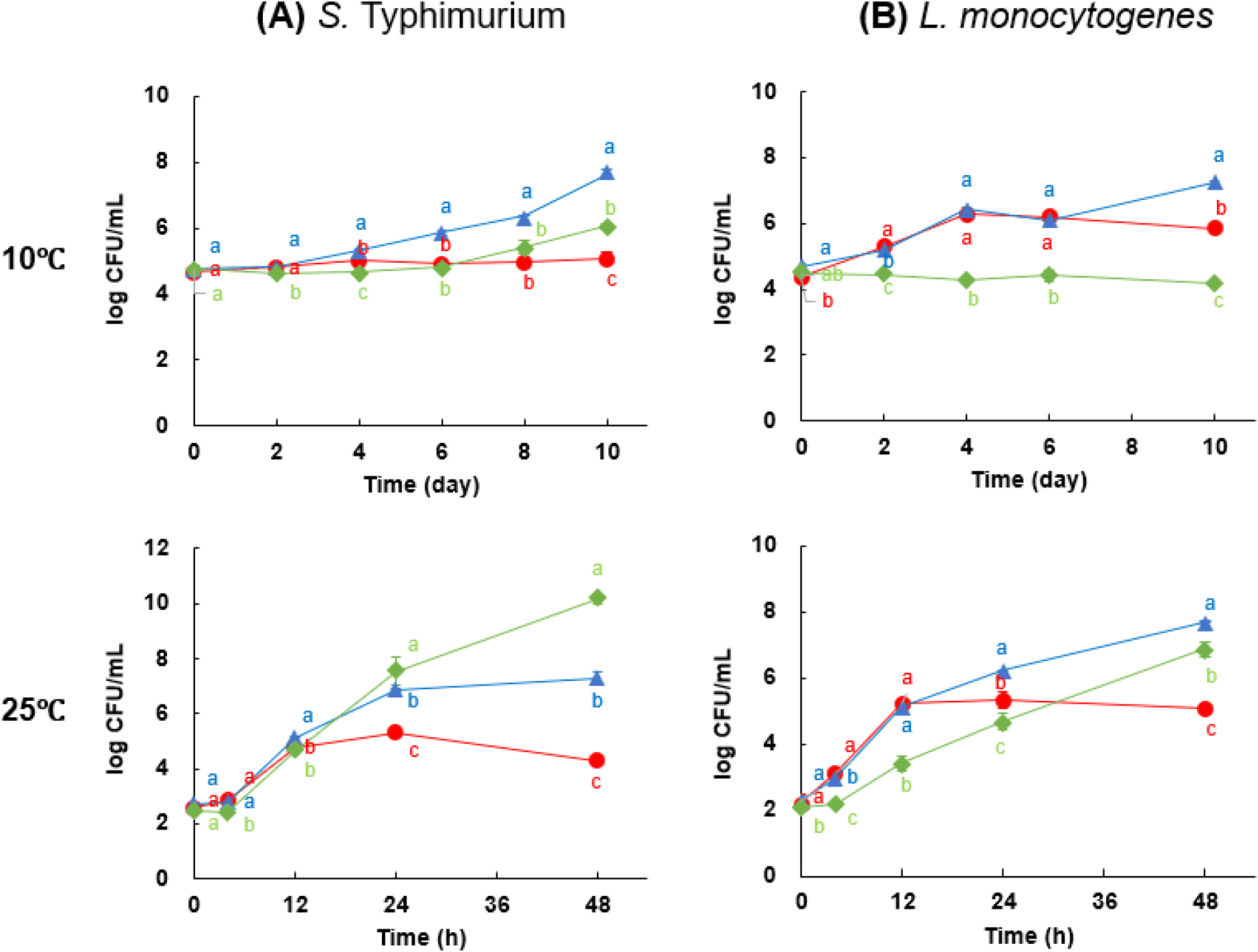
 ); 72h-fermented onion juice (
 ); commercial fermented onion powder (
 ). All values are presented as mean±SD and different superscript letters (a-c) within the same storage time indicate significant differences among treatments (Duncan’s multiple range test, p<0.05).
At 25°C, S. Typhimurium populations in the 24 h-fermented onion juice treatment peaked at 24 h and subsequently declined, whereas continuous growth was observed in the 72 h-fermented onion juice and commercial fermented onion powder treatments (Fig. 1A). A similar trend was observed with L. monocytogenes, where no further increase in bacterial counts was observed after 12 h in the 24 h-fermented onion juice. But, the commercial fermented onion powder and 72 h-fermented onion juice did not prevent the L. monocytogenes growth (Fig. 1B). Lactic acid is a key metabolite generated during fermentation and plays a critical role in food preservation by reducing the surrounding pH, and its concentrations have been reported to increase with fermentation time (Liu et al., 2022; Santos et al., 2025). In previous studies on fermented onion juice, lactic acid concentrations were also reported to increase with fermentation time (Kim et al., 2022; Roberts and Kidd, 2005).
Lactic acid production during fermentation generates an acid-stress environment that suppresses the proliferation and metabolic activity of foodborne pathogens and spoilage microorganisms (Zapaśnik et al., 2022). However, despite longer fermentation, the stronger antimicrobial activity observed in the 24 h-fermented onion juice compared with the 72 h-fermented counterpart suggests that antimicrobial efficacy is governed not solely by acid accumulation but by dynamic LAB metabolic activity. Prolonged exposure to highly acidic conditions during extended fermentation can impair LAB viability and metabolic function, leading to reduced production of antimicrobial metabolites, including organic acids, hydrogen peroxide, and bacteriocin-like compounds (McDonald et al., 1990; Timothy et al., 2021). This fermentation-dependent decline in LAB metabolic activity likely explains the attenuated antimicrobial effect observed in the 72 h-fermented onion juice in the present study.
Overall, the 24 h-fermented onion juice exhibited the most robust and consistent antimicrobial activity across both target pathogens and storage temperatures, identifying 24 h as the optimal fermentation duration for maximizing antimicrobial efficacy. Relative to the commercial fermented onion powder, the 24 h-fermented onion juice demonstrated comparable inhibitory effects under refrigerated conditions and superior control of both pathogens at 25°C. Collectively, these results underscore the potential of 24 h-fermented onion juice as an effective and competitive antimicrobial ingredient for food applications. The commercial fermented onion powder differs from the fermented onion juice produced in this study in both physical form and pH, as the former is a buffered powder product (pH 5.8-6.2), whereas the latter is a liquid fermentate with a lower pH (3.67). Such differences in physicochemical characteristics may partly explain the variation in antimicrobial effects observed between the two treatments.
The growth kinetics parameters of S. Typhimurium and L. monocytogenes in all marination-treated groups at various temperatures are shown in Table 2 and 3. Marination treatments consisted of NFOJ, FOJ, CQDs, and CFC.
LT, lag time (day: 10°C, h: 15 and 25°C); SGR, maximum specific growth rate (log CFU/day: 10°C, log CFU/h: 15 and 25°C); MPD, the maximum population density (log CFU/g).
LT, lag time (day: 5°C, h: 15 and 25°C); SGR, maximum specific growth rate (log CFU/day: 5°C, log CFU/h: 15 and 25°C); MPD, the maximum population density (log CFU/g).
At 10°C, LT of S. Typhimurium was significantly increased in chicken breast marinated with FOJ and CFC across all storage temperatures (p<0.05). In addition, marination with FOJ, CQDs, and CFC significantly reduced SGR of S. Typhimurium compared with NFOJ group (p<0.05), while no significant difference was observed among FOJ, CQDs, and CFC (p>0.05). However, significantly lower MPD values were observed in FOJ and CFC (p<0.05). Overall, no significant differences were observed between CFC and FOJ in LT, SGR, and MPD at 10°C (p>0.05). These results are consistent with the antimicrobial responses observed in broth systems, indicating that the fermentation-enhanced antimicrobial activity of FOJ is retained in chicken breast. The antimicrobial efficacy of FOJ is likely attributable to the reduced pH achieved during fermentation, together with the accumulation of fermentation-derived metabolites, which collectively impose heightened physiological stress on the pathogens (Table 2).
At 5°C, L. monocytogenes exhibited a significantly prolonged LT in chicken breast marinated with FOJ, CQDs, and CFC (p<0.05). Unlike S. Typhimurium, CQD treatment alone produced lower SGR and MPD than FOJ. Among all treatment-temperature combinations, CFC exerted the strongest inhibitory effect, as evidenced by both a pronounced reduction in MPD and a marked extension of LT (p<0.05). The enhanced inhibition of L. monocytogenes is consistent with our previous work (Ahn et al., 2025), which demonstrated greater antimicrobial activity of onion-peel-derived CQDs against Gram-positive bacteria, including L. monocytogenes (Table 3).
At 15°C, both FOJ and CFC significantly increased LT values and reduced MPD values of S. Typhimurium compared with NFOJ (Table 2), whereas only MPD values of L. monocytogenes were significantly reduced (Table 3) (p<0.05). However, CFC did not provide additional LT extension and MPD reduction beyond those achieved by FOJ alone (p>0.05). At 25°C, no significant differences in LT, SGR and MPD of both pathogens were observed between the CQDs and NFOJ treatments (p>0.05), indicating that the antimicrobial efficacy of CQDs was limited under elevated temperature conditions. Notably, although CFC treatment resulted in lower MPD values than NFOJ, MPD remained higher than that observed with FOJ alone in S. Typhimurium (Table 2), suggesting that CQDs did not provide additive or synergistic inhibition when combined with FOJ at elevated temperatures.
In general, FOJ exhibited the strongest antimicrobial activity across most temperatures and target strains, with the exception of L. monocytogenes at 5°C. The antimicrobial efficacy of CQDs was strongly temperature dependent, with greater inhibitory effects observed under refrigerated conditions, where temperature exerts a dominant influence on bacterial growth relative to antimicrobial stress. Under these conditions, FOJ exhibited enhanced inhibition only against L. monocytogenes at 5°C. These findings highlight the potential of CQDs as a complementary antimicrobial to FOJ in refrigerated food systems. Previous studies have demonstrated that fermentation-based interventions can effectively enhance the microbial stability of meat products. Kim et al. (2014) reported that application of a fermented solution produced using L. plantarum DSR CK10 and DSR M2, isolated from Kimchi, to chicken breast markedly suppressed total aerobic bacterial populations compared with the untreated control. Collectively, these findings indicate that fermentation-derived treatments can effectively enhance the microbial stability in meat systems. Consistent with this evidence, the fermented onion juice evaluated in the present study shows strong potential as a functional ingredient for extending the shelf life of chicken breast. CQDs have been reported to exhibit antimicrobial activity via multiple mechanisms, including ionic interactions with bacterial cell surfaces, reactive oxygen species (ROS) generation, and nanoscale penetration into bacterial cells (Anand et al., 2019; Khan et al., 2023; Yuan et al., 2021). Owing to these properties, CQDs have also been explored to improve the microbial stability of meat products as antimicrobial packaging films (Khan et al., 2023). Taken together, these findings suggest that both fermented onion juice and CQDs represent promising antimicrobial strategies for enhancing microbial safety under appropriate conditions.
Because fermented onion juice has a low pH, this study investigated how acidification influences the textural properties of chicken breast and sought to identify the optimal marination duration. The textural properties and WHC of RTE chicken breast following different marination times are summarized in Table 4. Marination with FOJ significantly reduced the pH of raw chicken breast, decreasing from 6.06±0.01 in the non-marinated control to 5.83±0.02 after 2 h of marination and further to 5.65±0.01 after 4 h (p<0.05). Chicken breast marinated for 4 h exhibited the highest hardness, followed by the non-marinated control and the 2 h marination treatment. In contrast, cohesiveness and springiness did not differ significantly among treatments (p>0.05). Gumminess and chewiness followed trends similar to hardness, with all treatments differing significantly from one another (p<0.05).
Acidic marinades produced from onion fermented with L. mesenteroides may have contributed to the softening of chicken breast observed in this study. In support of this effect, marination with organic fruit vinegars (blackberry, pomegranate, rose, and grape) has been shown to significantly reduce beef hardness (Sengun et al., 2021). In addition, chicken breast marinated in 100% lemon juice has been reported to exhibit markedly lower hardness values than non-marinated samples (Unal et al., 2022). Vişan et al. (2021) and Latoch (2020) further demonstrated that pH reduction weakens electrostatic interactions among muscle protein chains, thereby enhancing meat tenderness. Consistent with these findings, Unal et al. (2023) observed distinct microstructural changes in beef marinated with various vinegars, where control samples exhibited tightly packed muscle fibers with minimal inter-fiber spaces, whereas marinated samples showed pronounced fiber deformation and cavity formation due to connective tissue disruption. Overall, the low pH of the fermented onion juice used in this study likely induced acid-mediated structural modifications in chicken breast during the 2 h marination period, contributing to improved tenderness.
Acidic conditions are generally associated with increased WHC in muscle foods (Berge et al., 2001; Gault, 1985). However, excessive acidification has been shown to exert the opposite effect. Consistent with this, Gokoglu (2023) reported a significant reduction in WHC of squid muscle marinated with organic acids, attributing this decrease to denaturation and shrinkage of myofibrillar proteins that are critical for water retention. Consistent with these observations, the present study showed an increase in WHC after 2 h of marination, whereas prolonged marination for 4 h resulted in a reduction in WHC compared with the control (Table 4). This pattern aligns with previous reports indicating that extended exposure to acidic conditions promotes myofibrillar protein denaturation and structural contraction, ultimately reducing WHC. Accordingly, fermented onion juice is expected to confer textural benefits to chicken breast when applied within an appropriate marination duration.
4. Conclusions
This study characterized fermented onion juice produced from undervalued substandard onions to determine optimal fermentation conditions and evaluate its potential as a marinade for chicken breast. Fermentation promoted lactic acid bacteria growth, reduced pH, increased TA, and altered soluble solids content, with 24 h-fermented onion juice demonstrating superior antimicrobial activity compared with the 72 h-fermented counterpart.
When applied to RTE chicken breast inoculated with S. Typhimurium or L. monocytogenes, fermented onion juice consistently enhanced antimicrobial efficacy relative to non-fermented onion juice across all tested temperatures. Notably, both fermented onion juice and onion-peel-derived CQDs showed enhanced inhibitory effects against L. monocytogenes under refrigerated conditions (5°C). Texture profile analysis further revealed that a 2 h marination improved tenderness, as indicated by reduced hardness, gumminess, and chewiness, whereas extended marination (4 h) diminished these benefits and decreased WHC. Overall, these findings demonstrate that optimally fermented onion juice represents a multifunctional, clean-label marinade ingredient capable of improving microbial safety and textural quality in poultry products while offering a sustainable strategy for valorizing surplus onions into value-added food applications.


