

1. Introduction
Recent changes in socioeconomic conditions, together with technological progress in food processing and heightened public awareness of health, have markedly altered consumer food choices, resulting in growing interest in products with enhanced nutritional and functional attributes. Accordingly, food science research has placed increasing emphasis on the formulation of functional foods that incorporate plant-based materials as natural sources of bioactive components (Choi, 2018; Lee, 2015). Concurrently, accumulating evidence on the association between westernized diets and chronic diseases has driven research focused on enhancing the nutritional quality of bakery and confectionery products using natural functional ingredients.
Cookies are commonly employed as a representative bakery matrix for examining the influence of plant-derived functional ingredients on physicochemical quality attributes and antioxidant potential. Previous studies have demonstrated that the incorporation of berry powders, such as blueberry (Ji and Yoo, 2010), acaiberry (Choi et al., 2014), and cranberry (Choi and Lee, 2015), can significantly influence the physicochemical properties and antioxidant activity of cookies. Similarly, the use of plant leaf powders, including dropwort (Lee, 2015), moringa leaf (Choi, 2018), fruit by-product powders such as apple pomace (Naseem et al., 2024), and ramie leaf (Boehmeria nivea) (Nam and Kim, 2023), has been reported to enhance functional attributes in cookie products. More recently, edible flower petals have been investigated as alternative functional ingredients in bakery applications. For example, cookies supplemented with hibiscus petals exhibited increased antioxidant activity and acceptable sensory characteristics, suggesting the feasibility of flower-derived materials in bakery product development (Lee and Chung, 2018). Taken together, these studies suggest that plant-derived materials are suitable functional ingredients for cookie formulations, with edible flower petals attracting growing interest owing to their abundant pigments and polyphenolic compounds.
Marigold (Tagetes erecta L.) is an annual herbaceous plant belonging to the family Asteraceae and is originally native to Mexico, but it is now widely cultivated in Asia, Africa, and Europe (Gong et al., 2012; Rashed et al., 2025). Marigold flowers are known to contain substantial levels of carotenoids, including β-carotene and lutein, which contribute to their characteristic yellow-orange coloration, as well as various flavonoids such as quercetin derivatives (Bhattacharyya et al., 2010; Kim et al., 2022; Siriamornpun et al., 2012). Owing to this phytochemical composition, marigold extracts have been reported to exhibit antioxidant, anti-inflammatory, antimicrobial, and anticancer activities (Gong et al., 2012; Moliner et al., 2018). Among these compounds, lutein has received particular attention due to its established role in visual health, highlighting marigold as a promising functional food material (Bhattacharyya et al., 2010; Fu et al., 2019). Despite the well-documented biological activities of marigold, its application as an ingredient in processed food products remains limited. In particular, systematic studies examining the effects of marigold incorporation into thermally processed bakery products, such as cookies, are scarce. Accordingly, this study aimed to evaluate the impact of marigold extract powder incorporation on the quality characteristics and antioxidant properties of cookies, in order to assess the applicability of using marigold as a functional ingredient in baked products.
2. Materials and methods
The primary ingredients used for cookie preparation included soft wheat flour (Qone, Asan, Korea), butter (Seoul Milk, Seoul, Korea), sugar, baking powder, and salt (CJ CheilJedang, Incheon, Korea), which were obtained from a local retail market. Food-grade marigold extract powder, produced from domestically cultivated marigold (T. erecta L.) flowers, was purchased as a commercial product (Pluslife, Seoul, Korea). According to the manufacturer’s information, the product was prepared by water extraction followed by drying into powder form. For antioxidant activity assays, a 0.2 mM solution of 2,2-diphenyl-1-picrylhydrazyl (DPPH) was prepared using reagents obtained from Firstsci (Seoul, Korea). Additional analytical reagents, including 2,2′-azinobis (3-ethylbenzothiazoline-6-sulfonic acid) diammonium salt (ABTS), L-ascorbic acid, Folin-Ciocalteu phenol reagent, gallic acid, and quercetin, were supplied by Sigma-Aldrich (St. Louis, MO, USA). All solvents and chemicals used in the analyses were of analytical grade.
Preliminary trials were performed with reference to previously reported cookie formulations commonly used for sugar-snap type cookies (Pareyt and Delcour, 2008) to establish appropriate conditions for assessing the effects of marigold extract powder incorporation on cookie quality characteristics. Marigold extract powder was incorporated into the cookie formulation at levels of 0%, 1%, 3%, 5%, and 7% (w/w), with corresponding reductions in wheat flour content. Cookie doughs were prepared following the formulation described in Table 1. Butter and sugar were first creamed using a mixer (KAB-0161, Kitchen Art, Incheon, Korea) at speed level 2 for 3 min, after which eggs were added and mixed for an additional 2 min. Wheat flour and marigold extract powder were then sieved and incorporated into the mixture to obtain a homogeneous dough. The prepared dough was wrapped to prevent surface drying and rested at 4°C for 80 min. After resting, the dough was rolled to a thickness of 0.5 cm, cut into 4.0 cm diameter circles using a cookie cutter and arranged on a baking tray. The cookies were baked in a preheated oven (ML32AW1, LG, Korea) at 150°C (top heat) and 140°C (bottom heat) for approximately 10 min. Upon completion of baking, the cookies were allowed to cool at ambient temperature before being used for subsequent analyses.
The moisture contents of the cookies, marigold extract powder, and soft wheat flour were determined using a hot-air oven drying method under atmospheric pressure. Each sample was finely ground to ensure uniformity, and approximately 2 g of the ground sample was precisely weighed. The samples were placed in a preheated drying oven at 105°C and dried for 2 h. After drying, the samples were transferred to a desiccator, allowed to cool to room temperature, and subsequently reweighed. The drying and weighing steps were repeated until a constant mass was achieved. Moisture content was calculated as the percentage reduction in sample weight relative to the initial mass.
The soluble solids content of the cookies, marigold extract powder, and soft wheat flour was evaluated using a refractometric method and expressed as °Brix. For sample preparation, 5 g of each cookie sample was combined with 45 mL of distilled water and extracted at room temperature for 30 min with continuous mixing. The resulting mixture was filtered through Whatman No. 2 filter paper (Whatman, Maidstone, UK), and the filtrate was subjected to analysis using a digital refractometer (PAL-1, Atago, Tokyo, Japan). All measurements were performed in triplicate, and the results were reported as mean values.
Color values of the cookies, marigold extract powder, and soft wheat flour were measured using a colorimeter (CR-2, Shenzhen Threenh Technology Co., Shenzhen, China) operating under the Hunter color system. Lightness (L*), redness (a*), and yellowness (b*) values were recorded for each sample. Measurements were obtained at three randomly selected locations on each sample, and the mean value was used for subsequent statistical analysis. Prior to analysis, the instrument was calibrated with a standard white reference plate (L*= 92.13, a*=0.31, b*=−0.63). In addition, photographs of the cookies were taken under identical lighting conditions to visually compare the appearance of cookies supplemented with different levels of marigold extract powder.
The total polyphenol and flavonoid contents of cookies supplemented with marigold extract were quantified using established colorimetric methods. For extraction, 1 g of finely ground cookie sample was mixed with 10 mL of methanol and homogenized for 10 min using a stomacher (Power Mixer 6, BMF Korea, Korea). The homogenized mixture was then allowed to stand at room temperature for 1 h. The mixture was filtered through Whatman No. 2 filter paper, and the filtrate was used for subsequent analyses. Total polyphenol content was determined using the Folin-Ciocalteu assay according to the method of Singleton and Rossi (1965), with absorbance measured at 750 nm. Total flavonoid content was analyzed following the aluminum nitrate-potassium acetate procedure described by Zhishen et al. (1999), and absorbance was recorded at 510 nm. Gallic acid and quercetin were used to generate calibration curves for polyphenol and flavonoid quantification, respectively. The results were expressed as milligrams of gallic acid equivalents (mg GAE) and milligrams of quercetin equivalents (mg QE).
The DPPH radical scavenging capacity of cookies containing marigold extract was evaluated following the method originally proposed by Blois (1958). Sample extracts prepared as described in Section 2.6 were used for the analysis. An aliquot (1 mL) of each sample extract was combined with 2 mL of a 0.2 mM DPPH solution, and the reaction mixture was incubated at 37°C for 30 min under dark conditions. After incubation, the absorbance of the reaction mixture was measured at 517 nm using a UV-visible spectrophotometer (UV-1800, Shimadzu, Kyoto, Japan). DPPH radical scavenging activity was calculated and expressed as the percentage decrease in absorbance relative to the control.
ABTS radical scavenging activity was determined according to the method described by Re et al. (1999). Sample extracts prepared as described in Section 2.6 were used for the analysis. The ABTS radical cation was generated by reacting 7 mM ABTS with 2.45 mM potassium persulfate for 12 h in the dark. The resulting solution was subsequently diluted with ethanol to achieve an absorbance of 0.70±0.02 at 734 nm. An aliquot (1 mL) of the sample extract was mixed with 2 mL of the diluted ABTS radical cation solution, and the reaction was allowed to proceed for 1 min at room temperature. Absorbance was recorded at 734 nm using a UV-visible spectrophotometer (UV-1800, Shimadzu). ABTS radical scavenging activity was expressed as the percentage inhibition relative to the control.
The hardness of cookies containing marigold extract was determined using a texture analyzer (CR-100, Sun Scientific Co., Ltd., Tokyo, Japan). Texture measurements were performed in compression mode, with the measurement type configured to record force during compression and the test type set to return to the starting position after measurement. A cylindrical probe with a diameter of 2 mm was employed for hardness analysis. The operating parameters were set as follows: pre-test speed of 3.0 mm/s, test speed of 1.0 mm/s, post-test speed of 5.0 mm/s, and a compression distance of 10.0 mm. All measurements were carried out in triplicate, and the mean values were used for statistical analysis.
Sensory evaluation was conducted to assess consumer acceptance of cookies supplemented with marigold extract powder. The evaluation was performed using a panel of 20 adult participants consisting of 10 men and 10 women aged between 30 and 40 years. The sensory attributes evaluated were color, flavor, sweetness, hardness, and overall acceptability. Each attribute was rated using a seven-point hedonic scale, where 1 indicated “dislike extremely” and 7 indicated “like extremely.” To minimize potential bias, the samples were coded with three-digit random numbers and presented to the panelists in a randomized order under blinded conditions. This study involved human participants and was conducted in accordance with relevant institutional and national ethical guidelines. The study protocol was reviewed and approved by the Institutional Review Board (IRB) of Kyungpook National University (approval number: 2025-0726). Prior to participation, all participants received a detailed explanation of the study objectives and procedures, and written informed consent was obtained from all participants.
All experimental measurements were performed in three independent replicates, and the data are expressed as mean values with corresponding standard deviations. Statistical evaluation of the data was carried out using SPSS software (version 29.0; IBM Corp., Armonk, NY, USA). Differences among multiple groups were analyzed by one-way analysis of variance (ANOVA), followed by Duncan’s multiple range test. Differences between two groups were analyzed using an independent-samples t-test. Pearson’s correlation analysis was performed to determine correlations among physicochemical properties, bioactive compound contents, and antioxidant activities. Statistical significance was set at p<0.05.
3. Results and discussion
The moisture contents of marigold extract powder and marigold extract powder-supplemented cookies are shown in Tables 2 and 3, respectively. The moisture content measured for the marigold extract powder was 8.17%. In the cookie samples, the control formulation (CM0) exhibited a moisture content of 5.43%, whereas a decreasing tendency was observed as the proportion of marigold extract powder increased. The moisture contents of the cookies were 5.30% for CM1, 5.17% for CM3, 4.99% for CM5, and 4.97% for CM7. Compared with the control, all cookie samples containing marigold extract powder showed significantly lower moisture contents (p<0.05), confirming that marigold extract powder addition influenced the moisture characteristics of the cookies. However, no significant difference was observed between CM5 and CM7, indicating that the reduction in moisture content tended to plateau at higher levels of marigold extract powder supplementation. Similar reductions in moisture content have been reported in cookies fortified with plant-derived powders. Lim and Lee (2015) reported that cookies supplemented with black sesame powder exhibited lower moisture contents than the control samples due to changes in dough composition and water distribution. More recent studies have also reported comparable results in cookies enriched with fruit by-product powders. Naseem et al. (2024) observed that the incorporation of apple pomace powder significantly reduced the moisture content of wheat flour cookies, which was attributed to the high dietary fiber content of the plant material and its influence on water distribution within the dough matrix. In addition, Grzelczyk et al. (2025) reported that the addition of bamboo flour and edible flowers to cookie formulations resulted in reduced moisture levels and altered structural properties of the baked products. These findings are consistent with the results of the present study, indicating that the incorporation of plant-derived powders tends to reduce moisture retention in baked products. Cookies are generally categorized as low-moisture bakery products; therefore, even small variations in ingredient composition can markedly influence their physicochemical properties (Pareyt and Delcour, 2008). The reduction in moisture content observed in the present study may be attributed to the relatively low inherent moisture content of the marigold extract powder compared with wheat flour. In addition, partial substitution of wheat flour with marigold extract powder likely altered the water-binding capacity of the dough and increased the proportion of non-starch components, thereby limiting water retention within the final cookie matrix (Delcour and Hoseney, 2010; Pareyt and Delcour, 2008).
The soluble solids content measured for marigold extract powder and cookies supplemented with marigold extract powder is summarized in Tables 2 and 3, respectively. In the cookie samples, a decreasing trend in sweetness was observed as the level of marigold extract powder increased, and all marigold extract powder-supplemented groups showed significantly lower values than the control (p<0.05). Given that the marigold extract powder itself exhibited a very low sweetness value (0.56 °Brix), the reduction in cookie sweetness can be reasonably explained by a dilution effect arising from the partial substitution of wheat flour with marigold extract powder, which lowered the relative proportion of soluble sugars within the cookie matrix. Therefore, the decreased soluble solids content observed in the present study is considered to be primarily related to the low soluble solids content of the marigold extract powder and the dilution effect associated with flour replacement, rather than alterations in sugar composition during the baking process. Comparable decreases in sweetness or soluble solids content have also been reported in cookies supplemented with plant-derived powders. Lim and Lee (2015) reported that cookies containing black sesame powder exhibited lower soluble solids content compared with control samples due to the dilution of sugar components by flour replacement. Similarly, Kausar et al. (2024) observed that increasing levels of grapefruit pomace powder in cookies resulted in reduced soluble solids content, which was attributed to the lower intrinsic sugar content of the plant material. Similar changes in cookie quality characteristics have been reported in products supplemented with plant-derived powders, where partial replacement of wheat flour altered the overall physicochemical properties of the final product (Kausar et al., 2024; Lim and Lee, 2015).
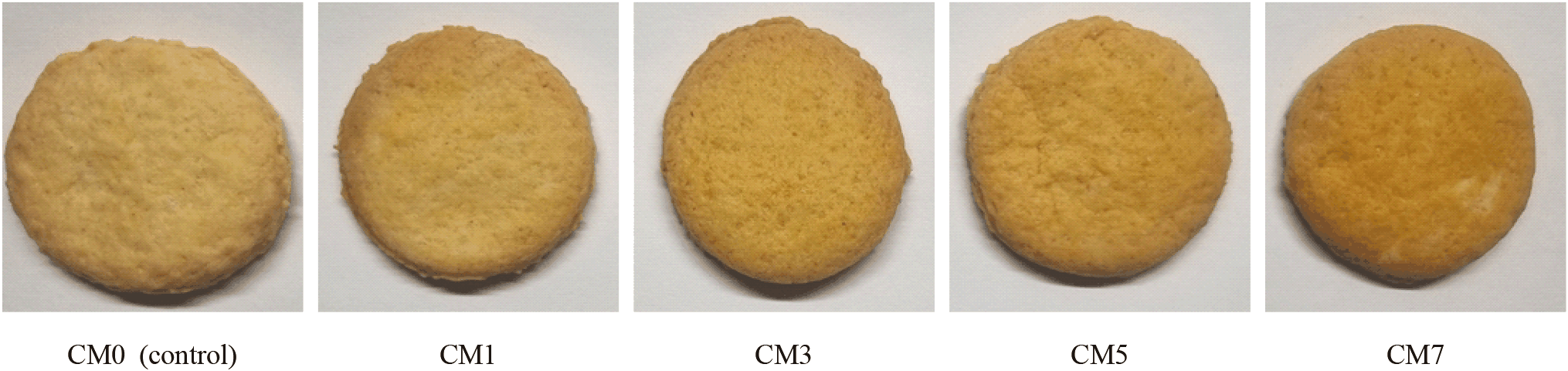
The color values of marigold extract powder and cookies supplemented with marigold extract powder are presented in Tables 2 and 3. The lightness (L* value) of the control cookie (CM0) was 78.24, and a significant decline in lightness was observed with increasing levels of marigold extract powder incorporation, with values of 76.37 in CM1, 72.27 in CM3, 67.98 in CM5, and 61.22 in CM7 (p<0.05). In contrast to the reduction in lightness, redness (a* value) showed a gradual increase from 1.56 in the control to 1.90, 2.47, 2.82, and 3.28 in CM1, CM3, CM5, and CM7, respectively, and all marigold extract powder-supplemented samples exhibited significantly higher a* values than the control (p<0.05). A similar increasing tendency was observed for yellowness (b* value), which rose significantly from 21.90 in the control to 33.59 in CM7 as the level of marigold extract powder increased (p<0.05). These variations in cookie color parameters are closely related to the intrinsic color characteristics of the marigold extract powder itself. As indicated in Table 2, marigold extract powder exhibited lower L* values and higher a* and b* values compared with wheat flour, and thus increasing its proportion in the formulation led to reduced lightness accompanied by enhanced redness and yellowness in the cookies. Comparable color trends, characterized by decreased L* values and increased a* and b* values, have been reported in cookies supplemented with persimmon peel powder (Lim and Cha, 2014) and pumpkin-sweet potato powder (Hwang and Park, 2022). In addition, marigold extract powder contains abundant carotenoid pigments, including lutein, which are responsible for its distinctive yellow-orange coloration (Bhattacharyya et al., 2010; Siriamornpun et al., 2012). Accordingly, the color changes observed in the present study are primarily attributed to the incorporation of pigment-rich marigold extract powder into the cookie matrix. These instrumental color differences were also visually confirmed in the appearance of the cookies (Fig. 1). As the level of marigold extract powder increased, the cookies exhibited progressively darker yellow-orange coloration compared with the control, which corresponds with the increase in redness and yellowness observed in the instrumental color analysis.
The hardness values measured for cookies containing marigold extract powder are summarized in Table 3. In this study, hardness was selected as the primary texture parameter because it is widely used as an indicator of the mechanical properties of cookies and is closely associated with consumer perception of crispness and texture quality (Pareyt and Delcour, 2008). The control sample (CM0) showed the lowest hardness value, recorded at 2,757.77 g, whereas progressive increases in hardness were observed with increasing levels of marigold extract powder incorporation. Specifically, hardness values increased to 2,883.52 g in CM1, 2,983.73 g in CM3, 3,548.60 g in CM5, and 3,892.68 g in CM7, with all differences among samples being statistically significant (p<0.05). These results indicate a clear concentration-dependent increase in cookie hardness following marigold extract powder addition, a tendency that agrees with previous findings reported for cookies supplemented with lotus root powder (Lee et al., 2011). Cookies are generally regarded as low-moisture cereal-based products, in which restricted water availability limits extensive starch gelatinization and continuous gluten network development. Under such conditions, textural properties are governed primarily by the interactions and spatial organization of solid constituents, including starch, proteins, lipids, and sugars, rather than by moisture content alone (Pareyt and Delcour, 2008). In this context, the increased hardness observed in the present study can be attributed to partial substitution of wheat flour with marigold extract powder, which increased the proportion of non-starch solids and dietary fiber, reduced free water mobility, and promoted the formation of a denser dough structure. This explanation is consistent with previous reports showing that enrichment with plant-derived powders increases non-starch solid content, restricts starch swelling and protein network formation, and consequently results in a more compact structure and increased hardness in baked products (Elleuch et al., 2011). In addition, changes in moisture content may also influence cookie hardness. Generally, in low-moisture bakery products such as cookies, a reduction in moisture content leads to a denser internal structure and increased mechanical strength, resulting in higher hardness (Pareyt and Delcour, 2008). In the present study, the moisture content of cookies tended to decrease as the level of marigold extract powder increased (Table 3), which may have partially contributed to the observed increase in hardness. Meanwhile, increased hardness in cookies may contribute to a crisp texture characteristic of low-moisture baked products; however, excessive hardness may adversely affect mouthfeel, suggesting that the level of marigold extract powder should be optimized to maintain desirable textural quality.
CM0 (control), cookie without marigold extract powder; CM1, cookie with 1% marigold extract powder; CM3, cookie with 3% marigold extract powder; CM5, cookie with 5% marigold extract powder; CM7, cookie with 7% marigold extract powder.
The DPPH radical scavenging activity of cookies supplemented with marigold extract powder is shown in Fig. 2A. The control sample exhibited the lowest scavenging activity at 8.61%, whereas cookies containing marigold extract powder showed progressively higher activities. The DPPH radical scavenging activity increased to 13.59% in CM1, 17.73% in CM3, 24.68% in CM5, and 29.60% in CM7, indicating a significant enhancement with increasing marigold extract powder addition (p<0.05).
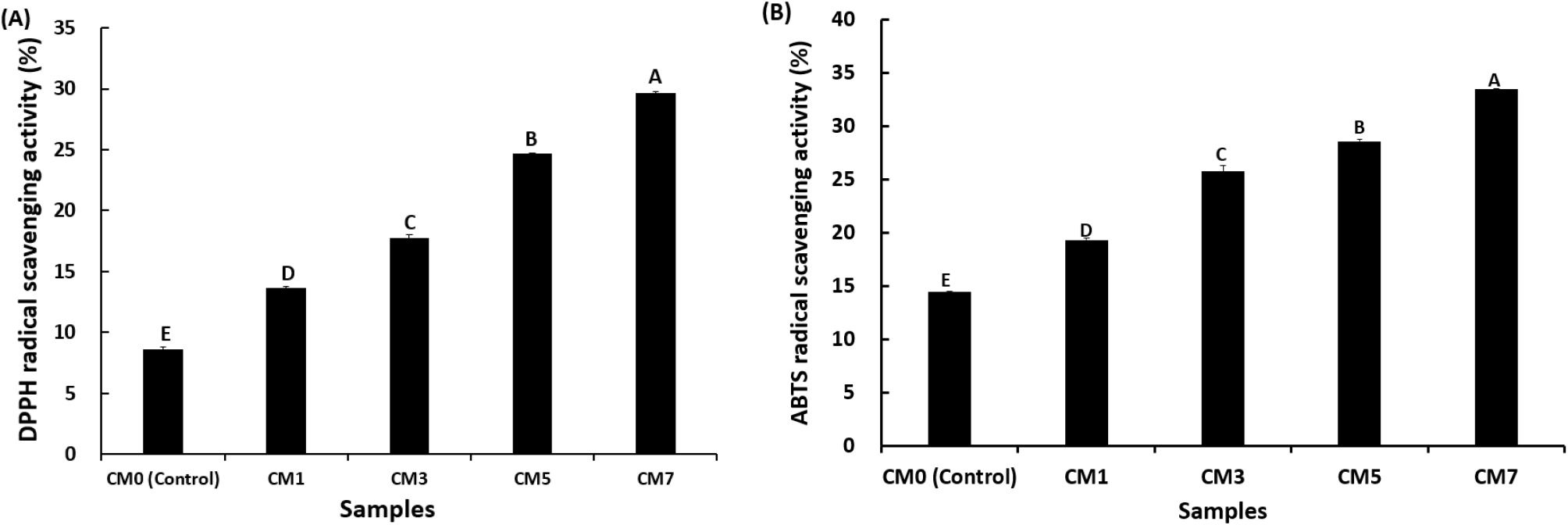
The ABTS radical scavenging activity is shown in Fig. 2B. Similar to the DPPH results, the control sample exhibited the lowest ABTS radical scavenging activity (14.42%). As the level of marigold extract powder increased, ABTS radical scavenging activity increased significantly to 19.28% in CM1, 25.72% in CM3, 28.53% in CM5, and 33.44% in CM7 (p<0.05). These results are consistent with previous studies reporting strong antioxidant activity of T. erecta extracts in DPPH and ABTS radical scavenging assays (Gong et al., 2012), as well as enhanced antioxidant activity in noodle products supplemented with marigold extract powder (Nam et al., 2021). The increase in radical scavenging activity is likely associated with the presence of phenolic compounds and carotenoids in marigold extract powder, which are known to act as effective hydrogen or electron donors capable of neutralizing free radicals (Bhattacharyya et al., 2010; Moliner et al., 2018). Similar increases in antioxidant activity have also been reported in cookies supplemented with plant-derived powders rich in phenolic compounds, such as vegetable powders and fruit by-product powders (Kausar et al., 2024; Lim and Lee, 2015). In addition, a recent study on high-fiber cookies fortified with bamboo flour and edible flowers also reported enhanced phenolic content and antioxidant activity in the fortified formulations (Grzelczyk et al., 2025). Overall, these results indicate that the addition of marigold extract powder significantly enhanced the antioxidant activity of cookies.
The total polyphenol and total flavonoid contents measured in cookies supplemented with marigold extract powder are summarized in Table 4, and the values are expressed on a sample basis. The control sample (CM0) contained 31.21 mg GAE/100 g of sample for total polyphenols, whereas a significant increase was observed as the level of marigold extract powder increased, reaching 43.51 mg GAE/100 g of sample in CM7 (p<0.05). A similar pattern was observed for total flavonoid content, with the lowest value recorded in the control sample (18.29 mg QE/100 g of sample) and progressively higher values detected in the marigold extract powder-supplemented cookies, including 19.48 mg QE/100 g of sample in CM1, 21.33 mg QE/100 g of sample in CM3, 25.16 mg QE/100 g of sample in CM5, and 28.43 mg QE/100 g of sample in CM7 (p<0.05). Marigold has been widely reported as a plant material rich in polyphenolic constituents, including flavonoids and phenolic acids (Gong et al., 2012; Moliner et al., 2018). In the present study, marigold extract powder itself contained high levels of phenolic compounds, with total polyphenol and flavonoid contents of 105.04±3.15 mg GAE/g and 86.33±1.66 mg QE/g, respectively (data not shown). In addition, extracts derived from Tagetes species have been shown to contain considerable levels of phenolic compounds, such as quercetin derivatives, which are closely associated with antioxidant activity (Bhattacharyya et al., 2010; Gong et al., 2012; Moliner et al., 2018). Supporting evidence has also been provided by Nam et al. (2021), who reported increased lutein content in fresh noodles with increasing marigold extract powder addition, and by Sik et al. (2024), who reported increased antioxidant activity and improved sensory attributes in biscuits fortified with edible flower powders, supporting the functional potential of flower-derived ingredients in baked products. Collectively, these findings indicate that the elevated total polyphenol and flavonoid contents observed in the present study are attributable to the incorporation of phenolic compounds originating from marigold extract powder. Pearson correlation analysis revealed strong positive correlations among total polyphenol content, total flavonoid content, and antioxidant activities (DPPH and ABTS), with correlation coefficients ranging from 0.986 to 0.996 (Table 5). These strong positive correlations suggest that the enhanced radical scavenging activities of the cookies were closely associated with the increased levels of phenolic compounds provided by marigold extract powder. Comparable relationships between phenolic compounds and antioxidant activities have also been widely reported in plant-derived foods, where total phenolic and flavonoid contents showed strong positive correlations with DPPH and ABTS radical scavenging activities (Muflihah et al., 2021; Kim et al., 2024).
CM0 (control), cookie without marigold extract powder; CM1, cookie with 1% marigold extract powder; CM3, cookie with 3% marigold extract powder; CM5, cookie with 5% marigold extract powder; CM7, cookie with 7% marigold extract powder.
The sensory evaluation results for cookies containing marigold extract powder, including color, flavor, sweetness, hardness, and overall acceptability, are summarized in Table 6. Regarding color preference, CM3, CM5, and CM7 showed higher mean scores than the control sample (CM0), although a significant increase relative to the control was observed primarily in CM5 (p<0.01), and CM7 showed a comparable tendency, which corresponds with the increases in yellowness (b* value) and redness (a* value) resulting from marigold extract powder addition and their influence on visual appeal. Flavor scores were likewise higher in CM3, CM5, and CM7 compared with the control, with significantly higher values observed in CM5 and CM7 (p<0.01), suggesting that the characteristic aroma and taste of marigold extract powder were favorably reflected in the sensory perception of the cookies. In contrast, sweetness preference was lowest in the CM7 sample (p<0.001), indicating that the reduced sweetness associated with higher levels of marigold extract powder negatively affected sensory acceptance. Sensory preferences for hardness were higher in CM5 and CM7 than in the control group (p<0.001). Cookies containing marigold extract powder exhibited higher hardness in the previous instrumental test, and sensory evaluations revealed a higher preference for cookies with higher hardness, suggesting that hardness characteristics are reflected in sensory preferences.
CM0 (control), cookie without marigold extract powder; CM1, cookie with 1% marigold extract powder; CM3, cookie with 3% marigold extract powder; CM5, cookie with 5% marigold extract powder; CM7, cookie with 7% marigold extract powder.
Among all formulations, overall acceptability reached its highest value in CM5 (p<0.001), implying that this level of marigold extract powder provided an appropriate balance between enhanced color and flavor attributes without causing an excessive reduction in sweetness. Similar sensory trends have also been reported in cookies supplemented with edible flower powders, where moderate supplementation improved color and flavor perception, whereas excessive addition negatively affected sweetness perception and overall sensory acceptance due to changes in texture and taste balance (Lee and Chung, 2018; Sik et al., 2024). In the present study, the enhanced color and flavor preferences observed in CM3 and CM5 may be attributed to the characteristic yellow pigment and aroma compounds present in marigold extract powder. However, higher levels of marigold extract powder may have negatively affected sweetness perception and sensory acceptance, which is likely related to the reduced soluble solids content and increased hardness observed in the physicochemical results.
4. Conclusions
In the present study, the incorporation of marigold extract powder into cookies resulted in distinct changes in physicochemical and functional characteristics. As the level of marigold extract powder increased, cookie moisture content decreased, while color parameters shifted toward lower lightness values accompanied by increases in redness and yellowness. In addition, both total polyphenol and total flavonoid contents increased significantly with higher levels of marigold extract powder, which was associated with enhanced DPPH and ABTS radical scavenging activities. These findings suggest that the bioactive compounds present in marigold extract powder play a key role in improving the antioxidant capacity and functional quality of cookies. Based on the overall physicochemical, antioxidant, and sensory results, the addition of approximately 5% marigold extract powder was considered the most appropriate level for improving cookie quality while maintaining consumer acceptability.


