

1. Introduction
Carrots (Daucus carota L.), originating from Afghanistan, are classified as dicotyledonous plants within the order Apiales and family Apiaceae (Singh et al., 2021). As a globally cultivated and consumed root vegetable, carrots exhibit various colors and forms depending on the cultivar; however, the orange variety is the most widely used worldwide (Bozalan and Karadeniz, 2011). Carrots are rich in β-carotene, a precursor to vitamin A, which plays a crucial role in maintaining ocular health, supporting growth and development, and boosting immune function (Ikram et al., 2024; Singh et al., 2021). Furthermore, they contain abundant biotin, which aids in fat and protein metabolism; vitamin K1, essential for blood coagulation and bone integrity; and potassium, which assists in regulating blood pressure by facilitating the excretion of sodium and waste products from the body (Singh et al., 2021). The dietary fiber present in carrots contributes to improved intestinal health and prevention of constipation (Ikram et al., 2024). Carotenoids serve as the primary pigments responsible for the orange, red, and yellow hues of carrots, encompassing compounds such as β-carotene, α-carotene, lutein, and lycopene (Bozalan and Karadeniz, 2011). The specific composition of carotenoids varies among carrot cultivars; for instance, orange carrots are characterized by high levels of β-carotene and α-carotene, whereas purple carrots contain elevated amounts of lutein (Bozalan and Karadeniz, 2011; Ko et al., 2017). The carotenoids and polyphenolic compounds found in carrots exhibit antioxidant and anticancer properties by scavenging reactive oxygen species, thereby preventing cellular damage and delaying aging. Additionally, their potassium and fiber content help stabilize blood cholesterol levels and relax vascular tension, which improves blood flow and contributes to the prevention of cardiovascular diseases and hypertension (Ikram et al., 2024).
Given the scientifically established excellent nutritional value and diverse functional properties of bioactive compounds found in carrots, active research has focused on leveraging these attributes to enhance food nutrition, improve functionality, and develop novel products. Previous studies have investigated the quality characteristics, bioactive compound contents, and antioxidant activities of various foods. These include Jeonggwa (Kim and Lee, 2014) and juice (Park et al., 2019) prepared using whole carrots, as well as Makgeolli (Park et al., 2017), dasaek (Han et al., 2015), cookies (Hwang and Hong, 2010), Maejakgwa (Ko et al., 2017), and Seolgitteok (Kim et al., 2021) incorporating carrot powder processed by hot-air or freeze-drying. In addition, yogurt containing carrot jam has also been reported (Park, 2024). Previous studies have primarily focused on the fortification of yogurt with relatively low levels of carrot powder, such as 1-3% in low-fat cow’s milk yogurt (Madora et al., 2016), or 0.75-2% in goat milk yogurt to enhance nutritional and antioxidant properties (Hafeez et al., 2025). In addition, encapsulated carrot coagulum powder has been used to monitor storage stability (Giri and Joshi, 2020), but such approaches were limited to specific processing techniques or low supplementation levels. In contrast, this study investigated the effects of higher concentrations of carrot powder (3, 6, and 9% relative to skim milk powder) on the physicochemical characteristics, fermentation behavior, and antioxidant activity of yogurt during incubation at 37°C for 24 h. This approach provides new insights into how substantial incorporation of carrot powder influences both the quality attributes and the functional potential of yogurt, thereby extending beyond the scope of previous studies.
Yogurt is a dairy product produced by fermenting milk with lactic acid bacteria (LAB) and is a globally ubiquitous and favored food item, recognized for its health-promoting attributes (Jung et al., 2011). Its classification is typically based on the manufacturing methodology and physical form, distinguishing between liquid and set varieties. Yogurt undergoes direct fermentation within its container, resulting in a characteristic gel-like consistency. This form frequently exhibits higher concentrations of milk solids and a greater viable count of live LAB than its liquid counterparts, thereby garnering increasing attention for its functional health benefits (Matela et al., 2019; Santas et al., 2024). Consequently, the consumption of probiotic-rich yogurt is often recommended for older adults, who are particularly susceptible to a reduction in beneficial gut microbiota. Increasing consumer interest in health enhancement and growing awareness of the benefits of probiotics have driven a sustained increase in yogurt demand (Santas et al., 2024). The primary health benefits of yogurt are attributed to its probiotic content and the diverse array of bioactive compounds generated during fermentation (Jeong et al., 2006). The documented benefits include the amelioration of gut health through the proliferation of beneficial bacteria, suppression of harmful microorganisms, modulation of immune function, vitamin synthesis, alleviation of constipation, reduction of blood cholesterol levels, and anticarcinogenic properties (Santas et al., 2024; Sung and Choi, 2014). While yogurt inherently possesses commendable health attributes, the incorporation of various supplementary ingredients can further augment its quality and functional properties. Recent studies have indicated that the addition of materials such as pumpkin powder (Jung et al., 2011), mulberry powder (Sung and Choi, 2014), black rice powder (Kang and Kim, 2022), and whole barley powder (Lee et al., 2025) during yogurt production can enrich yogurt nutritional composition and impart novel flavors, aromas, and textural qualities.
2. Materials and methods
Fresh carrots produced in Jeju Island, Korea were purchased online and used in this study. For yogurt production, milk (Seoul Milk), skim milk powder (Seoul Milk), and oligosaccharides (CJ Cheiljedang) were purchased from commercial supermarkets. Kefir starter (TSI Inc.) was obtained from an online shopping platform. Reagents such as Folin-Ciocalteu reagent, gallic acid, ascorbic acid, aluminum nitrate, FeCl3, potassium acetate, quercetin, 1,1-diphenyl-2-picrylhydrazyl (DPPH), FeSO4・7H2O (Iron(Ⅱ) sulfate heptahydrate), and potassium persulfate were supplied by Sigma-Aldrich Co. (St. Louis, MO, USA). MRS agar was purchased from DifcoTM (Becton, Dickinson and Company, Sparks, MD, USA). All remaining reagents were of analytical grade.
Carrots were cleaned by removing surface impurities, washing three times with tap water, and blotting. They were then sliced to a thickness of 2 mm, placed in aluminum containers, and frozen at −80°C. Subsequently, freeze-drying was performed using a freeze dryer (FDU-1200, EYELA, Tokyo, Japan). The resulting freeze-dried carrots were finely pulverized at high speed using a coffee grinder (PGR 002M, Supreme Electric Co. Ltd., Guangzhou, China).
The powder was then sieved through a No. 20 standard sieve to ensure a particle size of less than 850 μm and stored at −20°C until use in experiments.
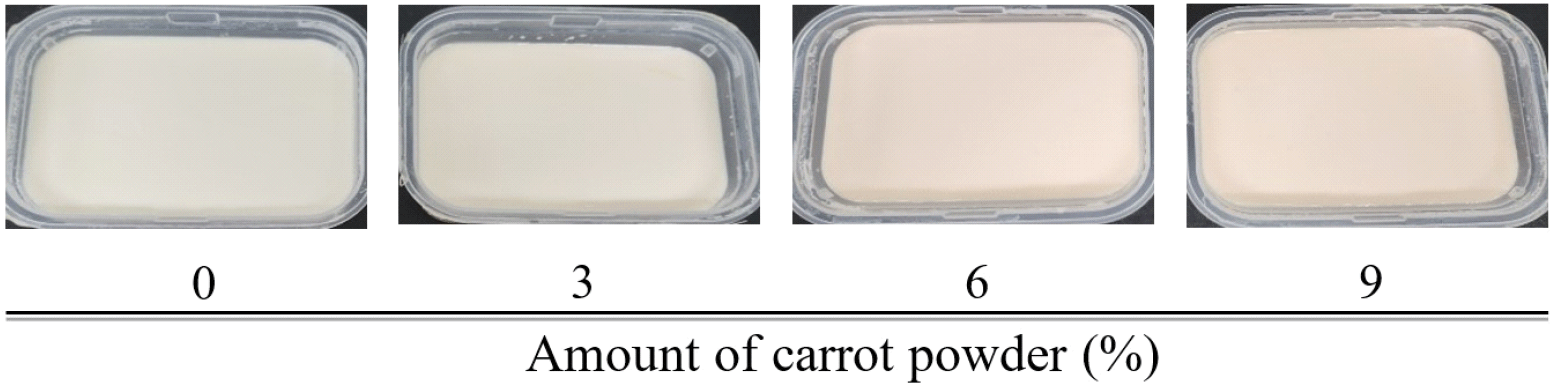
Yogurt samples were prepared according to the proportions detailed in Table 1, a methodology described in preliminary experiments, and with reference to a previous study (Hwang and Nguyen, 2024). Initially, milk and skim milk powder were mixed and sterilized at 85°C for 20 min using a high-pressure sterilizer (LAC-5060SD, Daihan Labtech Ltd Co., Namyangju, Korea). After cooling the mixture to 30°C, carrot powder was added at concentrations of 3%, 6%, and 9% (w/w, based on the weight of skim milk powder) and thoroughly blended. The blend was then inoculated with 0.4% (w/w) yogurt starter powder, which consisted of Lactobacillus acidophilus, Lactobacillus casei, Lactobacillus lactis, and yeast, relative to the total weight of the main ingredients (milk, skim milk powder, and carrot powder). Fermentation was carried out for 24 h in an incubator maintained at 37°C. To observe the quality characteristics of yogurt throughout the fermentation period, samples were collected at 0, 6, 12, and 24 h, and their respective quality attributes were analyzed. Yogurt prepared without carrot powder served as the control group. Yogurts fermented with varying amounts of carrot powder for 24 h are shown in Fig. 1.
| Ingredients (g) | Carrot powder1) (%) | |||
|---|---|---|---|---|
| 0 | 3 | 6 | 9 | |
| Carrot powder | 0 | 1.5 | 3 | 4.5 |
| Milk | 450 | 450 | 450 | 450 |
| Skim milk powder | 50 | 48.5 | 47 | 45.5 |
| Starter2) | 2 | 2 | 2 | 2 |
The pH of the yogurt was determined using a pH meter (SevenCompactTM PH/Ion S220, Mettler-Toledo, Columbus, OH, USA) after a 5-fold dilution of the sample. To determine total acidity, 5 mL of yogurt was homogenized with 20 mL of distilled water. This mixture was then titrated with NaOH (0.1 N) to a pH of 8.2, and the result was expressed as the percentage of lactic acid content.
The viscosity of yogurt was determined using a viscometer (DV3T, AMETEK Brookfield, Inc., Middleboro, MA, USA). A 50 g sample was placed in a container, and measurements were obtained using a No. 9 spindle at a rotation speed of 10 rpm. The viscometer was operated for 2 min, with readings recorded at 10-s intervals, and the average value was reported.
Yogurt samples were collected at various fermentation time points and serially diluted in 0.85% saline using the decimal dilution method. Aliquots of these dilutions were plated onto MRS agar and incubated at 37°C for 48 h. After incubation, the number of colonies formed on the plates was counted. The LAB count per milliliter of sample was subsequently calculated by multiplying the colony count by the dilution factor, and expressed as log colony forming units (CFU/mL).
Colorimetric analysis of the yogurt was performed using a Chroma Meter CR-300. The lightness (L*), redness (a*), and yellowness (b*) values were determined. The L*, a*, and b* values of the standard white plates were 97.10, +0.24, and +1.75, respectively.
For the extraction of bioactive compounds, 5 g of each sample was mixed with 20 mL of 95% ethanol. The mixture was homogenized using a vortex mixer for 15 s, followed by centrifugation at 13,500 ×g for 10 min to obtain the supernatant. The supernatant was subsequently used for the determination of total polyphenol and flavonoid content. The total polyphenol content was quantified using the Folin-Denis method (Vasco et al., 2008). An appropriately diluted sample aliquot was combined 1:1 with 2 N Folin’s reagent and allowed to react for 3 min at room temperature. Subsequently, three volumes of 2% sodium carbonate were added, and the mixture was incubated in the dark for 1 h. The absorbance of the final reaction mixture was measured at 760 nm. The total polyphenol content in each sample was expressed as gallic acid equivalent (GAE) using a gallic acid standard curve.
The total flavonoid content was determined following the method described by Woisky and Salatino (1998). An appropriately diluted sample extract was mixed in a 1:1 ratio with 2% aluminum chloride solution and allowed to react at room temperature for 15 min. After the reaction, the absorbance of the mixture was measured at 430 nm. The total flavonoid content of each sample was expressed in quercetin equivalents (QE) using a quercetin standard curve.
The carotenoid content of yogurt samples fortified with carrot powder was quantified as described by Hwang et al. (2012). For the extraction, 1 g of the freeze-dried sample was placed in a glass test tube (125 mm×15 mm) with 3 mL of ethyl acetate (containing 100 mg butylated hydroxytoluene/L). The mixture was homogenized using a vortex mixer for 1 min and then centrifuged at 3,000 ×g for 5 min. The carotenoid-containing supernatant was collected using a glass pipette and transferred to a clean glass test tube. This extraction procedure was repeated three times. The combined supernatants were concentrated under reduced pressure to completely remove the solvent. The concentrated carotenoids were then fully dissolved by adding 250 μL of diethyl ether and 750 μL of High Performance Liquid Chromatography (HPLC) mobile phase (methanol:acetonitrile:tetrahydrofuran, 50:45:5, v/v/v). This solution was filtered through a polyvinylidene chloride filter (0.48 μm) and transferred to a brown sample vial for HPLC analysis (Shimadzu Co., Tokyo, Japan). Carotenoid quantification was performed using a C18 Novapak column (3.9 mm×150 mm, 5 μm) maintained at 25°C, with a flow rate of 1 mL/min. Detection and quantification were performed at 480 nm using a Shimadzu Programmable Multi-wavelength detector (Shimadzu Co., Tokyo, Japan).
To assess DPPH and ABTS radical scavenging activities, 5 g of each yogurt sample was combined with 20 mL of 95% ethanol. The mixture was homogenized using a vortex mixer for 15 s then centrifuged at 13,500 ×g for 10 min to obtain the supernatant. The DPPH radical scavenging activity was determined according to the method described by Cheung et al. (2003). Briefly, 100 μL of the yogurt extract was mixed with 100 μL of 0.2 mM DPPH solution. The mixture was allowed to react at 37°C for 30 min, after which the absorbance was measured at 515 nm using a spectrophotometer. The percentage of DPPH radical scavenging activity was calculated as: (1 − Asample / Acontrol) × 100, where Asample is the absorbance of the sample-containing well and Acontrol is the absorbance of the control well (without sample).
ABTS radical scavenging activity was determined using the method described by Re et al. (1999). Twenty-four hours before the experiment, 7.0 mM ABTS and 2.45 mM potassium persulfate were allowed to react in the dark to generate ABTS radical cations. For the assay, 100 μL of sample extract was mixed with 100 μL of the ABTS solution. The mixture was incubated at 37°C for 30 min, after which absorbance was measured at 732 nm using a spectrophotometer. The percentage of ABTS radical scavenging activity was determined using the following equation: (1 − Asample / Acontrol) × 100, where Asample is the absorbance of the sample-containing well and Acontrol is the absorbance of the control well (without sample).
The reducing power of each sample was determined using the method described by Oyaizu (1986). A reaction mixture was prepared by combining 250 μL of sample extract with 250 μL of 0.2 M phosphate buffer (pH 6.6) and 250 μL of 1% potassium hexacyanoferrate. This mixture was incubated in a 55°C water bath for 20 min. To terminate the reaction, 1 mL of 10% trichloroacetic acid solution was added, followed by centrifugation at 1,500 ×g for 10 min to collect the supernatant. For the final step, 500 μL of the collected supernatant was mixed with 500 μL of distilled water and 40 μL of 0.1% ferric chloride. After reacting at room temperature for 10 min, absorbance was measured at 700 nm, which represents the reducing power.
All measurements were performed in triplicate and are reported as the mean±SD. Statistical analysis was conducted using R-Studio software (Version 3.5.1, Boston, MA, USA). Significance among the different treatment groups was determined using ANOVA, followed by Duncan’s multiple range test at p<0.05.
3. Results and discussion
Yogurt was prepared by incorporating the ingredients as specified in Table 1, followed by fermentation at 37°C for 24 h. Throughout this period, variations in pH and total acidity were measured and are summarized in Table 2. A consistent reduction in pH was noted across all yogurt samples, including both the control and experimental groups, over the 24-h fermentation duration. At the onset of fermentation, the control sample (without carrot powder) registered a pH of 6.49. Conversely, samples fortified with 3-9% carrot powder exhibited lower initial pH values, ranging from 4.58 to 4.90, relative to the control, with pH values inversely correlated with the amount of carrot powder added. After 6 h of fermentation, a continued decline in pH was observed from the initial measurement, a trend that persisted through the 12- and 24-h time points. Yogurt with 3% carrot powder had a pH value of 4.82 and 4.74 at 6- and 24 h, respectively, demonstrating a time-dependent decrease. For yogurts fortified with 6% and 9% carrot powder, the 24-h fermentation pH values were 4.51 and 4.43, respectively, suggesting that higher carrot powder concentrations may be associated with lower final pH values.
Throughout the 24-h fermentation period, the total acidity of yogurt samples, including both the control and those fortified with 3-9% carrot powder, consistently increased. Before fermentation, the total acidity of the control group (without carrot powder) was 0.21%. Yogurt fortified with 3% and 6% carrot powder exhibited an initial total acidity of 0.28%, surpassing that of the control. Yogurt fortified with 9% carrot powder had the highest initial total acidity (0.36%). As fermentation progressed, total acidity continued to increase. The total acidity in yogurt with 6% and 9% carrot powder increased more significantly than that in the control and 3% carrot powder groups (p<0.05). After 24 h of fermentation, these groups reached total acidity values of 0.40% (6% carrot powder) and 0.47% (9% carrot powder), respectively, indicating a distinct increase from their pre-fermentation and early stages.
The pH and total acidity of yogurt are recognized as the primary indicators for assessing its quality, both during the fermentation process and in the final product (Matela et al., 2019). The pH of carrot powder reported in both domestic and international studies ranges from 4.9 to 6.3, and its relatively high content of organic acids has been suggested to contribute to lowering pH and increasing acidity (Choi et al., 2022; Kim et al., 2014; Park et al., 2022). Yogurt fermentation is fundamentally a process where LAB convert lactose in milk into lactic acid, leading to a decrease in pH and a corresponding increase in total acidity (Matela et al., 2019). This acid generation is indispensable for the coagulation of casein, the milk protein that forms the characteristic gel structure of yogurt. Typically, the optimal pH range for yogurt is considered to be between 4.25 and 4.50 (Matela et al., 2019). Consistent with this, studies analyzing the quality attributes of commercially available yogurt in Korea have reported pH values ranging from 4.05 to 4.51 (Noh et al., 2020). Furthermore, research by Jung et al. (2011) indicated a desirable pH range for yogurt spanning from 3.27 to 4.53. The pH may correlate with the intensity of yogurt sourness; therefore, maintaining an appropriate pH is crucial because as an excessively low pH can result in an unpleasant sour taste and reduce consumer acceptance (Shin and Lee, 2018).
The total acidity, typically expressed as a percentage of lactic acid, quantifies the overall acid content of yogurt. The titratable acidity significantly influenced both the sourness and textural properties of the final product. The final pH and total acidity of yogurt depend on various factors, including the specific type and activity of the lactic acid bacterial starter, fermentation temperature and duration, and the nature and quantity of any added ingredients (Kim and Park, 1999). Consequently, when developing yogurt with functional substances, it is crucial to consider how these additives affect the acid-producing capacity of the LAB and the buffering capability of the mixture. This consideration is crucial for establishing optimal fermentation conditions and achieving the desired pH and acidity ranges. HPLC analysis of organic acids in carrots has revealed the presence of oxalic acid, malic acid, succinic acid, fumaric acid, with malic acid and succinic acid being the predominant organic acids (Kim et al., 2014; Shin and Lee, 2018). Therefore, it is posited that the increased addition of carrot powder leads to an elevated organic acid content in yogurt, which in turn results in a decrease in pH and a corresponding increase in total acidity. Consistently, in this study, yogurts fortified with 3-9% carrot powder exhibited slightly lower pH values and higher acidity compared to the control, suggesting that the organic acids present in carrot powder may influence the fermentation profile of yogurt.
Changes in yogurt viscosity over 24 h of fermentation at 37°C are provided in Table 3. Before fermentation, both control and experimental groups exhibited very low viscosity values, ranging from 22.47 to 24.08 cP, with no statistically significant difference observed between the control and carrot powder-added samples (p>0.05). A notable increase in viscosity was observed across all groups during the 6-24 h fermentation period. For yogurt fortified with 3% carrot powder, the viscosity progressively increased with fermentation time, reaching 3,333.33 cP at 6 h and 3,781.67 cP at 12 h. After 24 h of fermentation, the viscosity of the control group increased to 3,764.16 cP. In contrast, the yogurt fortified with 3-9% carrot powder exhibited higher viscosities, ranging from 4,091.67 to 4,553.33 cP, indicating that increased carrot powder content led to higher viscosity values compared to the control. These findings indicate that substituting skim milk powder with 3-9% carrot powder in yogurt production is positively associated with increased viscosity, which may contribute to a thicker yogurt texture.
Among the quality attributes of yogurt, texture, which encompass viscosity, significantly affects consumer preferences (Jung et al., 2006). The viscous nature of yogurt arises from the gel structure formed during fermentation; optimal viscosity, characterized by a smooth yet firm consistency, enhances palatability (Won et al., 2018). Conversely, insufficient viscosity or a thin texture can lead to whey separation, thereby compromising the product quality (Won et al., 2018). The viscosity of yogurt is influenced by a multitude of factors, including the type of LAB starter used, the total solid content of the milk, fermentation temperature and duration, and the type and quantity of various additives such as stabilizers, proteins, dietary fibers, and other functional ingredients (Jung et al., 2006; Jung et al., 2011). Consequently, a critical challenge in developing functional yogurt involves evaluating the impact of the type and quantity of added functional substances on the viscosity during fermentation and in the final product to achieve the viscosity range preferred by consumers. The findings from the current study suggest that incorporating carrot powder at levels of 3-9% in yogurt production can yield a product with higher viscosity than that in the control group.
Table 4 illustrates the changes in LAB counts during 24 h of yogurt fermentation at 37°C. Before fermentation, the LAB counts for both the control and 3-9% carrot powder-fortified groups were comparable, ranging from 4.93 to 5.04 log CFU/mL, showing no significant difference (p>0.05). As fermentation progressed, a rapid increase in the LAB count was observed in all samples, including the control and carrot powder samples. After 6 h of fermentation, LAB counts in the control group reached 5.72 log CFU/mL. In contrast, yogurt with 3% and 6% carrot powder exhibited higher LAB counts of 5.75 and 5.88 log CFU/mL, respectively, than those in the control. The 9% carrot powder sample showed 5.89 log CFU/mL, which may indicate a positive association between LAB counts and carrot powder concentration. LAB counts continued to increase as fermentation progressed from 12 to 24 h. Samples fortified with 3-9% carrot powder consistently showed higher LAB counts than those in the control group. For the final products after 24 h of fermentation, the control group reached 7.90 log CFU/mL, while the experimental groups with 3-9% carrot powder ranged from 7.94 to 7.98 log CFU/mL, demonstrating significantly higher values compared to those in the control.
The viability and activity of the starter culture are pivotal in determining changes in LAB populations during yogurt fermentation, influencing both the quality and probiotic attributes of the final product (Meybodi et al., 2020). LAB rapidly proliferate during yogurt fermentation and consumes lactose as their primary energy source. This process leads to lactic acid production, subsequent pH reduction, and reaching the peak viable cell count. Following this peak, the LAB population typically declines because of stress induced by the acidic environment (Mortazavian et al., 2020; Park and Lee, 2017). Our current investigation revealed an elevated LAB count in samples fortified with carrot powder, suggesting a favorable effect of carrot powder on the growth conditions and metabolic processes of LAB during fermentation. Carrots are abundant in soluble carbohydrates, specifically monosaccharides and disaccharides such as sucrose, glucose, and fructose, which can serve as crucial substrates or growth-promoting factors for LAB (Singh et al., 2021). These inherent sugars in carrots serve as primary energy sources, thereby accelerating their proliferation. Moreover, soluble dietary fibers such as pectin present in carrots can act as selective nutrients for certain LAB strains, demonstrating a prebiotic effect that fosters their growth (Jo et al., 2008). Additionally, carrots supply essential vitamins and minerals that function as cofactors in various LAB metabolic pathways, thereby supporting their overall growth and activity (Kang, 2013). Corroborating these observations, prior fermentation research using carrot juice indicated a positive influence of the carrot’s nutritional profile on LAB survival (Jo et al., 2008). Based on a comparative analysis of LAB counts across different carrot powder concentrations, it was concluded that adding carrot powder at levels between 3% and 9% (relative to skim milk powder weight) led to a statistically significant increase in LAB counts compared to those in the control.
Table 5 details the color characteristics of yogurt samples incorporating carrot powder. The control yogurt, prepared without any carrot powder, registered the maximum L* value (lightness) at 34.99. Conversely, lightness values declined from 24.87 to 18.48 as the carrot powder content increased from 3% to 9%. Regarding redness (a* value), the control group had the lowest reading at −1.46. An increase in a* value tended to be associated with higher carrot powder concentrations, ranging from −0.25 to 1.08.
The yellowness (b* value) was lowest in the control yogurt at 3.31. Yogurt with 3% carrot powder showed a b* value of 3.32, which was not statistically different from the control. The yellowness value for the 6% carrot powder yogurt was 3.28, indicating a decrease compared to that in the control. The highest b* value, 4.13, was recorded for the 9% carrot powder sample.
Carrots contain carotenoid pigments, which are responsible for their characteristic orange color (Bozalan and Karadeniz, 2011), and thus can influence the color of the products to which they are added. Consistent with our findings, previous studies on cookies (Hwang and Hong, 2010) and makgeolli (Park et al., 2017) prepared with carrot powder have reported similar trends: lightness values decreased, while redness and yellowness values were positively associated with higher carrot powder concentrations.
As shown in Table 6, total polyphenol, flavonoid, and carotenoid contents were measured in yogurt prepared with varying amounts of carrot powder. The total polyphenol content tends to increase with the concentration of carrot powder. Control yogurt, which did not contain carrot powder, had a total polyphenol content of 72.07 μg GAE/g. In yogurts with 3% and 6% carrot powder, the total polyphenol contents were 76.01 μg GAE/g and 80.42 μg GAE/g, respectively, corresponding to increases of approximately 1.05 times and 1.12 times compared to those in the control. The total polyphenol content for yogurt with 9% carrot powder was 85.09 μg GAE/g, showing a 1.18-fold increase relative to the control group.
The control group exhibited the lowest total flavonoid content at 8.17 μg QE/g. Yogurts formulated with 3% and 6% carrot powder contained 14.78 μg QE/g and 21.77 μg QE/g of total flavonoids, respectively. These values signify an increase of 1.81 times and 2.66 times, respectively, relative to the control. The total flavonoid content for the 9% carrot powder-added yogurt was 28.25 μg QE/g, which marked a 3.46-fold increase over the control group.
This study indicates that the total polyphenol and flavonoid contents of yogurt tend to rise with the increasing amount of carrot powder. This suggests that the carrot itself contains substantial amounts of polyphenols and flavonoid compounds, and their incorporation into yogurt via carrot powder may contribute to the final product composition. Carrots contain various phenolic acids, of which chlorogenic acid is the most abundant. Other significant phenolic acids found in orange carrots include caffeic, p-coumaric, and ferulic acids (Singh et al., 2021). Flavonoids are a crucial group of bioactive compounds present in orange carrots and include quercetin, kaempferol, luteolin, and apigenin, which are commonly found in their glycosidic form (Sabahi et al., 2024). Therefore, the observed increase in total polyphenol and flavonoid contents in yogurt upon carrot powder addition can be attributed to the transfer of these compounds, including chlorogenic acid and other phenolic acids, as well as quercetin, kaempferol, and other flavonoids, into the yogurt matrix. This enrichment of antioxidant compounds is expected to enhance the functional properties of yogurt and is likely closely associated with an increase in its antioxidant activity.
The carotenoid content of yogurts prepared with varying amounts of carrot powder was analyzed using HPLC, revealing the presence of lutein and β-carotene (Table 6). The carrot powder used for yogurt production contained 13.33 μg/g of lutein and 45.67 μg/g of β-carotene. Analysis of the carotenoid content in yogurt samples showed that neither lutein nor β-carotene was detected in the control group. However, both lutein and β-carotene were detected in all yogurts fortified with carrot powder. Lutein content increased from 0.04 to 0.42 μg/g as the carrot powder concentration in the yogurt increased from 3% to 9%. β-carotene levels rose to 1.67 μg/g and 2.23 μg/g when carrot powder was increased to 6% and 9%, respectively. These values represented 3.09-fold and 4.13-fold higher concentrations, respectively, than that in yogurt with 3% carrot powder.
Orange carrots contain a diverse array of carotenoid compounds, with α-carotene and β-carotene being the predominant constituents, accounting for the majority of the total carotenoid content (Bozalan and Karadeniz, 2011). The vibrant orange hue of these carrots is primarily attributed to the pigmentary properties of β-carotene and α-carotene (Bozalan and Karadeniz, 2011). These compounds function as vitamin A precursors, are capable of being converted to vitamin A within the body, and exhibit potent antioxidant activities. Consequently, the observed increase in the carotenoid content in yogurt following the addition of carrot powder can be interpreted as the effective transfer of abundant α-carotene and β-carotene from the carrot powder into the yogurt matrix. The augmentation of carotenoid compounds is believed to significantly enhance the nutritional value (as a vitamin A precursor) and functional properties (antioxidant activity) of yogurt.
As shown in Table 7, the antioxidant activities of yogurt samples prepared with varying carrot powder content were evaluated. Yogurt fortified with carrot powder consistently showed enhanced antioxidant activity compared to that in the control group. The DPPH radical scavenging activity of the control yogurt was 36.66%. This activity increased to 43.05%, 45.62%, and 54.67% for yogurt fortified with 3%, 6%, and 9% carrot powder, respectively, which translates to approximately 1.17 to 1.49-fold higher activity compared to that in the control yogurt.
Regarding ABTS radical scavenging, yogurt without carrot powder exhibited the lowest activity value at 33.10%. As the amount of carrot powder increased, the activity ranged from 37.08% to 46.01%, representing approximately 1.12 to 1.39 times higher activity than that of the control yogurt. This may indicate a positive association between ABTS radical scavenging activity and carrot powder concentrations.
The reducing power, quantified by the absorbance at 700 nm, exhibited a trend similar to that observed for the DPPH and ABTS radical scavenging activities. Yogurt without carrot powder showed the lowest reducing power of 0.42. This value increased to a maximum of 0.52 with the addition of 3%, 6%, and 9% carrot powder. The carrot powder used in this study possessed a reducing power of 0.93, suggesting that the reducing power of yogurt tends to increase with the amount of carrot powder incorporated during its preparation.
In this study, increases in total polyphenol, flavonoid, and carotenoid contents with higher carrot powder addition were associated with corresponding increases in antioxidant activity, with a moderate correlation observed between antioxidant component content and activity. Yogurts fortified with 3-9% carrot powder showed antioxidant activities similar to those reported for yogurts supplemented with Acanthopanax (Oh and Kang, 2015), bitter melon (Hwang and Nguyen, 2024) or tomato pomace (Son and Hwang, 2025). These results suggest that carrot powder may contribute to enhancing the antioxidant capacity of yogurt and could be used as a natural ingredient to modestly improve its functional properties.
The combined action of abundant β-carotene, α-carotene, chlorogenic acid, and quercetin in carrots is considered a primary driver of the observed antioxidant effects (Singh et al., 2021). Consistent with these findings, a previous study on Dasaek (Han et al., 2015) prepared with 5-20% carrot powder reported an increase in DPPH radical scavenging activity of 155-178% compared to that of the control group, showing similar results to the current study. Therefore, incorporating carrot powder into yogurt can serve as an effective strategy to augment the content of various antioxidant bioactive substances, including carotenoids, polyphenols, and flavonoids, thereby significantly improving the overall antioxidant activity of yogurt.
4. Conclusions
This study investigated the potential of incorporating carrot powder into yogurt production by substituting 3%, 6%, and 9% of skim milk powder with freeze-dried carrot powder. The fermentation process was monitored for 24 h at 37°C, assessing changes in acidity, pH, soluble solids, and LAB growth patterns. Additionally, the functional compound content and antioxidant activity of the final yogurt products were measured. Throughout fermentation, both the control and experimental groups exhibited a decrease in pH and an increase in acidity in association with fermentation time and carrot powder concentration. Yogurt viscosity increased with extended fermentation duration and tended to increase with the carrot powder content. LAB counts rapidly increased with prolonged fermentation time, and the yogurt fortified with 3-9% carrot powder generally showed higher LAB counts than the control. Colorimetric analysis of the 24-h fermented yogurts revealed that lightness decreased, whereas redness and yellowness tended to increase with the amount of carrot powder added. Furthermore, the content of total polyphenols, flavonoids, and carotenoids in yogurt generally increased with the addition of carrot powder. Similarly, antioxidant activities, as measured via DPPH and ABTS radical scavenging abilities and reducing power, were positively associated with the concentration of carrot powder.
These findings suggest that incorporating carrot powder into yogurt can enhance its antioxidant activity by increasing its polyphenol, flavonoid, and carotenoid contents. Considering the effects on yogurt acidity, viscosity, and LAB proliferation, it was concluded that adding carrot powder at a level of 3-9% (w/w, based on skim milk powder) enables the production of yogurt that effectively utilizes the functional properties of carrots.


