

1. Introduction
Rice is a widely produced agricultural commodity in the world. Data from Food and Agriculture Organization (FAO) estimates that 500-757 million tons of rice are produced worldwide (Baixinho et al., 2025; Chen et al., 2021). In several Asian countries, rice is a staple food (Andriani et al., 2022), including Indonesia, one of the world’s largest rice producers (Sahini and Mutegoa, 2023). Rice is produced from milled rice. The initial stage of rice milling is rice husk removal, followed by removing the bran layer to produce white rice (Tuncel, 2023).
Rice bran (RB) is a cuticle layer found between rice husks and rice grains (Aluthge et al., 2023). According to Agustina et al. (2024), rice milling produces three products: 16-28% rice husks, 2-4% RB, and 60% white rice. The white rice is the main product of rice milling, while rice husks and RB are byproducts. The rice milling process is estimated to produce large amounts of RB as a byproduct (Zaky et al., 2020). Colombo et al. (2023) estimated 29.3 million tons of RB may be produced per year.
RB has dense layer, bright appearance, bitter flavor, fine texture, and nutritious (Agustina et al., 2024; Tuncel, 2023). The bioactive components of RB comprise various antioxidants such as γ-oryzanol, tocopherols, tocotrienols, and phenolic acids (including ferulic, p-coumaric, and sinapic acids). In addition, RB contains sterols and other bioactive compounds. Andriani et al. (2022) explained that RB contains bioactive compounds, such as phenolics and γ-oryzanol. A similar statement was also conveyed by Baixinho et al. (2025), that RB is promising due to its γ-oryzanol content.
Liu et al. (2024) stated that γ-oryzanol has health effects in terms of its ability to inhibit inflammation and cancer growth, as well as prevent diabetes. In addition, RB also contains high levels of dietary fiber, essential fatty acids, and tocopherols, making it suitable as nutritional source (Bunmusik et al., 2023; Kreungngern et al., 2021; Sapwarobol et al., 2021; Spaggiari et al., 2021; Wu et al., 2022). RB has been shown to potentially reduce the risk of degenerative diseases, such as hypercholesterolemia, atherosclerosis, and cancer (Agustina et al., 2024). Gao et al. (2021) also reported the health benefits of RB, including reducing dyslipidemia and improving gut microbiota modulation. Thus, RB can be regarded a rich source of natural nutrients. (Li et al., 2023).
When RB is extracted, it can inhibit alpha-glucosidase activity, thereby reduce glucose absorption and lower blood sugar levels. Rice bran extract (RBE) has also been declared safe as a food additive (Sapwarobol et al., 2021). The RB extraction aims to maximize the bioactive effects in rice bran. Extraction techniques can be carried out with solvent chemical methods or with hydraulic physical methods. Solvent extraction is a common method used in RB extraction (Andriani et al., 2022; Sahini and Mutegoa, 2023). The solvent extraction can also be called maceration, through mixing RB and solvent at certain ratio. The RB:solvent ratio is related to diffusion, solubility, and contact area during extraction (Bunmusik et al., 2023).
Solvent selection is critical to the success of RB extraction, influencing the yield, total phenolic content (TPC), and antioxidant levels (Musa et al., 2024; Tan et al., 2023). In maceration, several solvents, such as methanol, ethanol, and acetone, are still used because of effective and efficient in terms of time, volume, and material management, compared to other solvents, such as toluene, benzene, chloroform, and hexane (Colombo et al., 2023). Several studies have examined RB maceration. Peanparkdee et al. (2019) found that RBE contain phenolic acids and flavonoids after maceration using ethanol and isopropanol. Another researcher found the presence of γ-oryzanol in RBE through methanol maceration with methanol:RB ratio of 10:1 (Pokkanta et al., 2019). Bunmusik et al. (2023) obtained an optimal solvent:RB ratio of 20:1, through the maceration method. Meanwhile, the optimal rice bran extraction conditions are at pH 2.99 and solvent:RB ratio of 8.91:1 (Chen et al., 2025). Ratanasongtham et al. (2024) found that the best extraction conditions were at a solvent:RB ratio of 6:1, showing the highest antioxidant activity.
The extraction process requires pretreatment to maximize extraction results. Pretreatment has been explored to enhance bioactive extraction and improve the functional properties of byproducts, such as RB (Colombo et al., 2023). According to Aluthge et al. (2023), pretreatment can facilitate a high amount of phenolics included during extraction. Several researchers have studied various pretreatment methods. Pretreatment with ohmic heating has positive effect on reducing extraction time by 70-75% and providing maximum extract yield (Nair et al., 2014). Ruen-Ngam et al. (2016) have studied several pretreatments, such as microwave heating, hot air heating, roasting, parboiling, autoclaving, and enzyme treatment. The results showed the highest extraction yield when pretreated with air heating at 70°C. The gamma ray irradiation-pretreated can also help increase the RBE yield, as well as enhancing the total phenolic content and antioxidant activity (Masamran et al., 2023).
Pretreatment can also be in the form of hydrolysis. Sombutsuwan et al. (2024) explained that certain pH conditions are essential to solvent-solute interaction, related to the cell wall breakdown of material. Weak acid conditions can lower the bioactive release from the substance by decreasing the efficiency of cell wall breakdown. In some cases, alkaline or acid hydrolysis was employed to release bound phenolics from the rice matrix, enabling efficient recovery of key antioxidants such as ferulic, p-coumaric, and vanillic acids for quantification by HPLC (Qiu et al., 2009). While Hartati et al. (2017) reported that hydrolyzed defatted RBE exhibits antioxidant potential, Widyastuti et al. (2023) found its antioxidant activity to be lower than that of non-defatted rice bran, indicating the need to explore extraction methods without defatting but incorporating hydrolysis to recover both bound and free bioactive components.
Information on hydrolysis pretreatment at varying pH levels remains limited in evaluating the antioxidant potential of solvent-macerated RBE. Therefore, this study aimed to identify the optimal pretreatment condition and solvent-to-RB ratio to maximize RBE quality in terms of yield, visual characteristics, and antioxidant activity. Pretreatment was conducted under strong, moderate, and weak acid conditions. This study offers novelty by systematically comparing low-, moderate-, and high-pH hydrolysis pretreatments. Unlike previous works that focus on a single hydrolysis condition, this study links pH-controlled hydrolysis directly to RBE brightness, yield, and antioxidant performance. As a result, it provides new practical and mechanistic insight for optimizing RB extraction without relying on defatting. We hypothesized that pretreatment under strong acid conditions would enhance RBE quality due to the rapid degradation of the rice bran cell wall.
2. Materials and methods
RB was obtained by milling IR-64 variety rice (Oryza sativa var. IR-64) from the Food Crop Seed Center, Sukoharjo Regency, Central Java, Indonesia. The 96% ethanol was purchased from traditional market in Sukoharjo Regency, Central Java, Indonesia. Chemical reagents, such as 2,2-diphenyl-1-picrylhydrazyl (DPPH), Folin-Ciocalteu reagent, Na2CO3, and gallic acid (GA), were obtained from Merck, Germany. The distilled water was also used in this study.
RB was dispersed in 4 M NaOH as an alkaline pretreatment medium, and the suspension pH was adjusted to 1 (HPH1), 3 (HPH3), or 5 (HPH5) using 37% HCl prior to shaking. The role of HCl in this procedure was solely to set the target final pH, whereas NaOH provided the alkaline matrix to facilitate sample solubilization during pretreatment.
Briefly, 10 g of RB was mixed with 120 mL of 4 M NaOH, adjusted to the target pH with 37% HCl (final pH verified using a calibrated pH meter), and shaken for 4 h in a temperature-controlled shaker (Julabo, Julabo GmbH, Seelbach, Germany). After pretreatment, 60 mL of 96% (v/v) ethanol was added, and the mixture was macerated for 3 h at room temperature followed by filtration. The solid residue was re-macerated under identical conditions, and the combined filtrates were concentrated under reduced pressure using a rotary vacuum evaporator (D-Lab RE 100-Pro, Dlab Scientific Co., Ltd, Jiangsu, China). As a no-pretreatment control (NH), 10 g of RB was extracted directly with 60 mL of 96% (v/v) ethanol using the same maceration-filtration procedure without the NaOH dispersion and pH-adjustment step. The resulting RBE was stored at 4°C in the dark until visual and antioxidant analyses, and the best-performing pretreatment was selected for subsequent extraction.
RB was macerated at three solvent-to-solid ratios (mL of 96% ethanol per g RB; mL/g): 5:1 (SR5), 6:1 (SR6), and 7:1 (SR7). Maceration was carried out for 3 h in a water-bath shaker at room temperature (Julabo, Julabo GmbH), followed by filtration using filter paper. The filtrate was concentrated under reduced pressure using a rotary vacuum evaporator (D-Lab RE 100-Pro, Dlab Scientific Co., Ltd) at room temperature until solvent removal. Ethanolic maceration was performed without further pH adjustment. The RBE was stored in the dark at 4°C prior to analyses [yield, visual appearance, TPC, diphenyl-1-picrylhydrazyl radical scavenging activity (DPPH RSA), and IC50].
RBE were presented in glass containers and aligned in an orderly manner. The RBE visual were taken with a digital camera. The RBE visual was focused at the extract yellowish-brown color.
The RBE yield is obtained by comparing the weight between extract and RB. The evaporated extract is then weighed on analytical balance (Ohaus, Ohaus Corporation, New Jersey, USA) to obtain the extract weight. The extract weight is then divided by RB weight, and then multiplied by 100% to obtain RBE extract equation (1).
The TPC measurement adopted from Sompong et al. (2011). The RBE (120 μL) was added to 600 μL of Folin-Ciocalteu reagent. Then, 960 μL of sodium carbonate solution was added to the mixture after 2 min-reaction. The absorbance of blue color was measured at λ: 750 nm after the reaction had lasted for 5 min at 50°C. GA was used as TPC standard, expressed as μg GAE per gram of RBE.
DPPH radical-scavenging activity (RSA) was determined according to Sompong et al. (2011) with minor modifications. Briefly, 1.5 mL of 0.1 mM DPPH solution (in methanol) was mixed with 300 μL of RBE solution in methanol, vortexed (Thermolyne, USA), and incubated for 45 min at room temperature in the dark. Absorbance was measured at 515 nm using a UV-Vis spectrophotometer (Genesys 10S UV-Vis, Thermo Scientific, Wisconsin, USA). Methanol was used as the blank, and RSA (%) was calculated as a percentage of DPPH RSA equation (2).
IC50 determination was performed according to Suhery et al. (2016). IC50 was defined as the extract concentration required to inhibit 50% of DPPH radicals. RBE working solutions were prepared in methanol at 1-10% (w/v) (equivalent to 10,000-100,000 μg/mL), and five concentrations within this range were used to construct the concentration-inhibition curve. DPPH inhibition (%) was measured using the same procedure described for the RSA assay. IC50 (μg/mL) was calculated from the linear regression of inhibition (%) (y) versus concentration (x) within the range encompassing 50% inhibition, by solving the regression equation at y = 50.
The study was conducted using a completely randomized design with three replications. Data tabulation was performed using Microsoft Office software (Microsoft, Redmond, WA, USA), supported by SPSS software version 25.0 (SPSS Inc., Chicago, IL, USA) to obtain information about differences between treatments. Further tests were performed and the one-way ANOVA method using the Duncan’s multiple range test (DMRT) at a 5% significance level.
3. Results and discussion
Hydrolysis is the breaking down process of chemical bonds due to reaction with water. The hydrolysis reaction is quite slow, but the acid or base presence can speed up the reaction rate (Cairns, 2004). In this study, hydrolysis pretreatment was conducted as an alkali-assisted treatment (4 M NaOH) with subsequent pH adjustment using 37% HCl to achieve the target pH (pH 1, 3, and 5), which facilitated cell-wall disruption and improved extractability of phenolic compounds (Dewi et al., 2007). The RBE obtained from all treatments exhibited a yellowish-brown appearance (Fig. 1), which is commonly attributed to endogenous rice bran pigments, including phenolic-related compounds and other naturally occurring chromophores (Ciulu et al., 2018). Accordingly, Fig. 1 showed that all treatments retained a broadly similar yellowish-brown hue, although differences in brightness were observed.

Based on visual inspection, extracts subjected to stronger pretreatment appeared slightly brighter (Fig. 1). This pattern is consistent with the role of low-pH conditions during pretreatment in depolymerizing cell-wall constituents and releasing bound phenolics, which may alter the chromophore composition of the extract and produce a lighter, yellowish-gold appearance (Deng et al., 2023; Irakli et al., 2018). In our study, the relationship between pretreatment and bioactivity was evaluated using TPC and DPPH radical-scavenging activity. While hydrolysis-assisted pretreatment can influence the release of bound phenolics (Das et al., 2024; Sani et al., 2012), our results indicate that higher visual brightness did not necessarily correspond to higher antioxidant activity, as the highest DPPH activity was observed in the NH. These results indicate that alkali-assisted hydrolytic pretreatment, particularly at lower final pH, can effectively improve the visual and functional quality of RBE.
In hydrolysis treatments, the alkali facilitates the release of phenolic acids that are tightly bound to cell-wall components such as arabinoxylans and lignin, thereby increasing the measurable antioxidant compounds in the extract. This mechanism aligns with findings reported by Hartati et al. (2015), who showed that phenolics associated with insoluble dietary fiber become more detectable after alkaline-assisted liberation. Based on Fig. 2, the DPPH RSA of RBE with hydrolysis pretreatment was lower than the RBE without hydrolysis. RBE NH had the highest antioxidant activity (70.77%). Among the hydrolysis treatments, RBE HPH3 and RBE HPH5 had lower antioxidant activity compared to RBE HPH1 (p ≤ 0.05) (Fig. 2). These results differ from the findings of another researcher, with RBE at pH 5 showed the highest DPPH radical scavenging activity (Peanparkdee et al., 2020). Extraction without prior alkali or acid use is thought to be able to create high purity of the extracted antioxidant compounds so that DPPH scavenging activity is maximized.
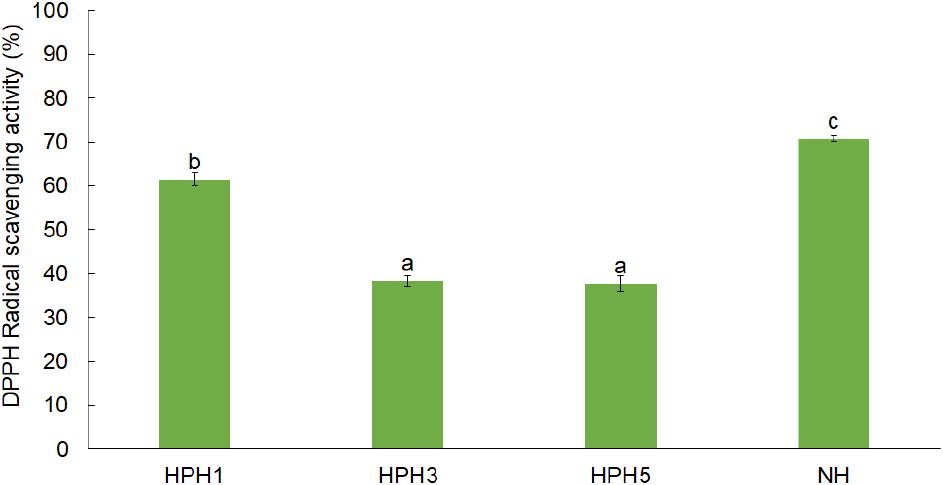
The pattern indicates that acid-controlled hydrolysis may reduce antioxidant activity because low-pH conditions can partially degrade or alter phenolic compounds, which is known to lower DPPH reactivity when hydrolysis is not optimized (Fan et al., 2022; Sani et al., 2012). The higher activity in NH and HPH1 likely reflects better retention of intact antioxidants, consistent with reports that excessive acid or alkali treatment can reduce free-radical scavenging even when phenolic release increases (Andriani et al., 2022). Overall, these results indicate that hydrolysis intensity must be carefully controlled to avoid losses of antioxidant functionality.
Based on the pretreatment results, pretreatment without hydrolysis was chosen for RB extraction in this study. Fig. 3 shows that RBE color in SR5, SR6, and SR7 was bright and tended towards light yellow. Maceration without prior hydrolysis has the advantage of being free from acidic and basic chemicals, thus not affecting the RBE color. These results are similar to the appearance of the extracts in the pretreatment in Fig. 1. The bright yellowish appearance of RBE is advantageous in terms of attracting consumer interest in consuming it or mixing it with other food ingredients.

The similar color across treatments suggests that changing the solvent ratio had only a minor effect on pigment extraction, which agrees with reports showing that pigment and phenolic solubility in high-ethanol systems depends more on solvent polarity than on solvent volume (Shi et al., 2022). The slightly more intense coloration seen in SR7 may correspond to marginally higher phenolic or lipid-soluble compound dissolution, as increased solvent volume can enhance diffusion and mass-transfer rates during maceration (Siddiqui et al., 2025). Overall, the visual similarity among treatments suggests that solvent ratio influences extraction efficiency subtly, with more pronounced effects requiring either changes in solvent polarity or application of assisted extraction techniques.
This study used a polar solvent (96% ethanol). According to Ribas et al. (2023), polar solvents have a higher boiling point than non-polar solvents, thus increasing extraction yield of RB. The results showed RB yield in SR6 and SR7 was higher compared to the SR5 condition (p < 0.05) (Fig. 4). The extraction yield range in this study was 6.13-6.72%. This finding is quite high compared to Arun et al. (2020), showing the RBE yield of 3.74%. However, these study results were much lower than the findings of several other researchers, with RBE yield of 18-24.45% (Baixinho et al., 2025; Junyusen et al., 2022; Ribas et al., 2023; Ribas et al., 2025). This gap may be due to differences in RB varieties, maceration conditions, and solute content in the RB.
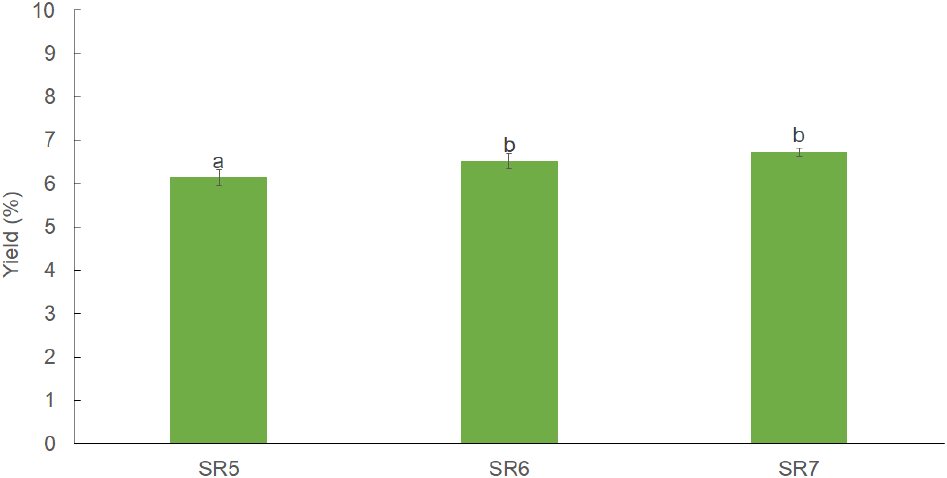
In general, increasing the solvent-to-rice bran ratio tended to increase extraction yield, likely by improving diffusion and mass transfer of soluble compounds into the solvent phase (Siddiqui et al., 2025). However, the yield difference between SR6 and SR7 was not significant (Fig. 4), suggesting diminishing returns at higher solvent volumes within the tested range. Consistent with the general extraction concept that yield may approach a plateau as equilibrium is reached (Rifai et al., 2018; Shi et al., 2022), our results suggest that the system may be approaching saturation near SR7. However, additional solvent-to-solid ratios would be required to confirm the true saturation point. Overall, SR7 produced the highest yield (6.72%).
Antioxidants are active compounds that could reduce free radicals (Sahini and Mutegoa, 2023). Antioxidants can overcome the reactive oxygen species (ROS) formation, which are pathogenic and pathophysiological in chronic diseases, such as heart disease, diabetes, and inflammation (Colombo et al., 2023). Tocols and oryzanol are the main antioxidant compounds contained in RB (Kreungngern et al., 2021). Antioxidant activity measurement usually uses the DPPH method because of its stability during analysis (Andriani et al., 2022). In addition, TPC test is also used to assess antioxidant properties of material. According to Widarta and Arnata (2014), TPC has a linear correlation with antioxidant activity. Therefore, the higher the TPC, the higher the antioxidant activity.
Phenolic compounds are divided into several subgroups, such as phenolic acids, flavonoids, tannins, coumarins, and quinones. In phenolics, the presence of hydroxyl groups in aromatic rings can stabilize free radicals, thus having a positive effect as antioxidants (Andriani et al., 2022; Rungratanawanich et al., 2018). The antioxidant effect of phenolics is correlated with their ability to scavenge radical species through electron transfer from phenolics to radical compounds (Colombo et al., 2023). Ferulic and coumaric acids are among the phenolic compounds found abundantly in RB (Tuncel, 2023).
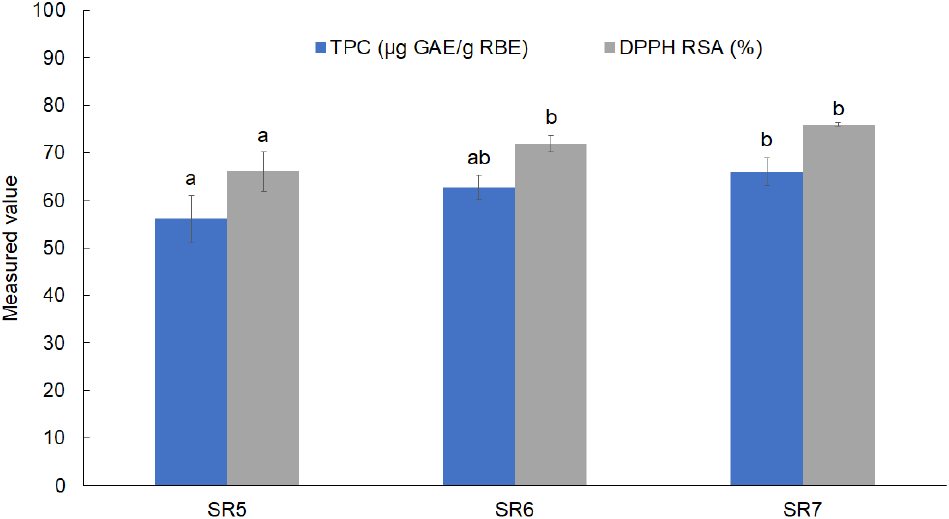
The results showed that RBE SR7 had the highest TPC content (65.97 μg GAE/g RBE), compared to SR5 (p < 0.05) (Fig. 5). However, this finding is still much lower than the results of several other researchers, who obtained TPC of RBE of 2,060-13,360 μg GAE/g RBE (Aluthge et al., 2023; Bunmusik et al., 2023). The use of ethyl acetate and methanol solvents also were able to produce RBE with high TPC (6,500 μg GAE/g RBE) (Arun et al., 2020). On the other hand, hexane solvent was able to produce RBE with TPC of 3620 μg GAE/g RBE (Ribas et al., 2025). So far, deep eutectic solvent has been the superior solvent in extracting RB with the highest TPC of 25,490 μg GAE/g RBE (Ratanasongtham et al., 2024). The choice of solvent type is crucial in extracting RB, might be related to the interaction between solvent and antioxidant compounds present in RB.
The relatively low TPC obtained in this study is largely attributable to the extraction conditions applied. Highly polar solvents such as methanol, ethyl acetate, and deep eutectic solvents are known to recover far higher phenolic levels than 96% ethanol (Arun et al., 2020; Ratanasongtham et al., 2024). In addition, assisted extraction techniques generally enhance phenolic release compared with simple maceration (Aluthge et al., 2023; Bunmusik et al., 2023). Hydrolysis conditions may also influence outcomes, as certain acid or alkaline treatments can degrade phenolics and reduce Folin-detectable values (Sani et al., 2012). Finally, differences in RB variety and stabilization further contribute to inter-study variability (Fan et al., 2022).
Antioxidant activity assessment by DPPH RSA is carried out using the idea of purple color fading dependent on DPPH scavenging degree. If the purple color fades, it indicates high DPPH scavenging ability. The purple color intensity is measured by absorbance observation using spectrophotometer. In RB, the antioxidant components commonly present are tocopherol and γ-oryzanol, that have the ability to scavenge free radicals (Liu et al., 2019), one of which is the DPPH radical. Fig. 5 shows that RBE in SR7 and SR6 have higher DPPH scavenging activity (71.80-75.93%), compared to SR5 (66.01%) (p < 0.05). The use of more solvent can extract more antioxidant compounds in RB, leading to increased DPPH scavenging activity. This result is relatively higher than the findings of Widarta et al. (2013), which had a DPPH RSA of 49.14%. On the other hand, Ratanasongtham et al. (2024) had a higher DPPH scavenging activity (83.75%).
Fig. 5 shows a consistent pattern in which higher TPC corresponds to stronger DPPH radical-scavenging activity (RSA), with SR7 exhibiting both the highest TPC (65.97 μg GAE/g RBE) and RSA (75.93%), followed by SR6 and SR5. This positive association aligns with widely reported evidence that phenolic compounds are key contributors to antioxidant capacity due to their hydrogen-donating and radical-stabilizing abilities (Shi et al., 2022). The modest increase in TPC across solvent ratios appears sufficient to drive a proportional increase in RSA, supporting the principle that extraction efficiency for phenolics directly influences DPPH activity in plant extracts (Siddiqui et al., 2025). Overall, the data indicate that even small improvements in phenolic recovery through a higher solvent-to-RB ratio can enhance antioxidant performance, consistent with the mechanistic role of phenolics in free-radical neutralization.
IC50 is the substance concentration required to inhibit 50% of DPPH radicals. IC50 determination is carried out through a linear regression equation. Because RBE SR7 showed the most favorable overall performance in the screening step (highest TPC, high DPPH RSA, and a relatively high yield), IC50 was determined only for SR7. The inhibition (%)- concentration relationship produced the regression equation y = 5.3318x + 13.39 (R2 = 0.9671), where x is the RBE concentration expressed as % (w/v). From this equation, the IC50 was obtained at x = 6.87% (w/v), which corresponds to 68,700 μg/mL (given that 1% w/v = 10,000 μg/mL). According to the criteria reported by Jun et al. (2003) (IC50 > 500 ppm, approximately equivalent to 500 μg/mL), this value would be classified as very weak antioxidant activity. The high IC50 may be associated with the relatively low TPC of the extract (Fig. 5), although differences in phenolic composition and matrix effects in crude extracts may also affect DPPH-based IC50 estimates. Previous studies have reported stronger antioxidant activity in RBE, with IC50 values of 250.14 ppm (Arun et al., 2020) and 398.13 ppm (Bunmusik et al., 2023). In contrast, our IC50 (68,700 μg/mL) is markedly higher and would be classified as very weak according to Jun et al. (2003) (IC50 > 500 ppm ≈ 500 μg/mL). This may be associated with the relatively low TPC (Fig. 5) and, potentially, with the extraction conditions used (maceration in 96% ethanol), which may limit the recovery of more polar phenolic compounds compared with protocols reported to improve phenolic extraction (Andriani et al., 2022; Bunmusik et al., 2023). Prior studies suggest that weak DPPH activity in crude RBE can arise from limited release of phenolics and matrix interference (Embashu and Nantanga, 2019; Laokuldilok et al., 2011; Walter et al., 2013), and processing may further reduce recoverable phenolics (Oboh and Ademosun, 2011). Extracts dominated by γ-oryzanol but low in free phenolics have also been linked to higher IC50 values (Chamba et al., 2014; Ti et al., 2014). Accordingly, the high IC50 observed in this study may be influenced by phenolic recoverability and matrix effects, although phenolic composition was not directly evaluated.
4. Conclusions
This study applied hydrolysis pretreatment at pH 1, 3, and 5 and compared with no hydrolysis before RB extraction. The unhydrolyzed pretreatment of RBE had bright appearance and high DPPH RSA (70.77%) so it was chosen in the RB maceration. In the maceration process, the solvent-to-RB ratio of 7:1 (SR7) provided the best overall performance, yielding 6.72% extract with TPC of 65.97 μg GAE/g RBE and DPPH RSA of 75.93% (at the tested concentration). However, SR7 showed a high IC50 (68,700 μg/mL), indicating relatively weak antioxidant potency. This result indicates the minimum antioxidant potential when applying solvent maceration with a solvent:RB ratio of 7:1 without hydrolysis. This technique needs to be modified in purpose of antioxidant activity improvement. One of the technique modification efforts is to combine ethanol solvent with deep eutectic solvent which has high potential to maximize yield as well as antioxidant activity of RBE. Besides, antioxidant activity may be enhanced by modifying the maceration process through the use of more polar solvent systems (e.g., 50-80% aqueous ethanol), increasing the solvent-to-RB ratio, and applying mild heating or ultrasound to improve phenolic release. It may also be strengthened by incorporating an optimized hydrolysis step prior to maceration and by minimizing oxidative and thermal degradation during solvent removal.


